Historic Sites in Malaga 2026: Complete Guide to Monuments and Museums
Reader Supported & Transparent
We keep Let's Go Malaga free by using affiliate links. If you found our guides helpful, booking your hotels or tours through our links earns us a small commission at absolutely no extra cost to you. It directly supports our local team!
Malaga's historic centre is one of the most layered in Andalusia. Phoenician, Roman, Moorish, and Renaissance history sit within a few hundred metres of each other in the old town – and most of it is walkable in a single morning. Whether you're planning a half-day or a full circuit, this guide to Malaga covers every major historic site with current hours, ticket prices, and the most practical visiting order for 2026.
Quick Takeaways
- ✓Alcazaba: ~€3–5 entry, open 09:00–20:00 summer · combo with Gibralfaro ~€5–7
- ✓Roman Theatre: free to view from street, Tue–Sat 10:00–18:00
- ✓Picasso Museum: ~€9–12, free last 2hrs on Sundays – check museum site
- ✓Cathedral rooftop: ~€7–10, dress modestly, last entry 45 min before closing
- ✓Full old town historic circuit: 4–5 hours at a relaxed pace
- ✓Best visiting times: 09:00–11:00 or 17:00–19:00 – avoid midday in summer
The Alcazaba and the Roman Theatre are a natural first stop – they sit next to each other at the foot of the hill, five minutes from Plaza de la Constitución.
Historic Sites in Malaga
🏰 1. Alcazaba de Malaga
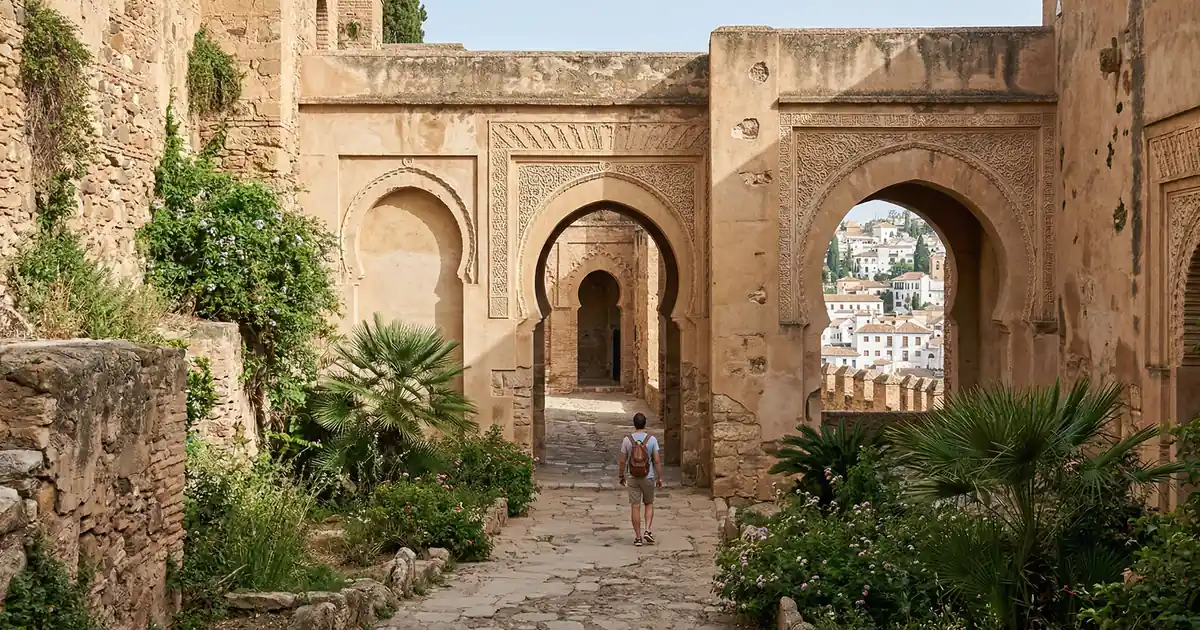
The finest Moorish fortress in Malaga and one of the best-preserved in Spain. Built in the 11th century on the site of an earlier Roman fortification, the Alcazaba is a palace-fortress with lush gardens, marble fountains, tiled courtyards, and rampart terraces with sweeping views over the city and port. It takes 45–90 minutes to explore properly.
Entry is on Calle Alcazabilla, a 10–15 minute walk uphill from Plaza de la Constitución. The full Alcazaba guide covers what to see inside and how to make the most of a visit.
Choose this if...
Choose this if: you want Malaga's best Moorish architecture and garden terraces with port views – this is the highlight of the old town for most visitors.
Avoid this if...
Avoid this if: you're visiting at midday in July or August – the uphill walk and exposed terraces are punishing in the heat. Go early morning or late afternoon.
2. Roman Theatre of Malaga
One of the oldest surviving structures in Malaga, dating from the 1st century BC. The theatre was built during the reign of Augustus, fell into disuse, and was then buried under the Alcazaba for centuries before being rediscovered in 1951. The orchestra, stage backdrop, and surrounding Roman-era walls are well preserved and clearly visible from the viewing area at street level.
Entry is free from the street – the theatre sits right at the base of the Alcazaba hill on Calle Alcazabilla, making it a natural first stop before climbing up to the fortress. A small fee (typically €1–3) may apply for full interior access depending on current city management – check before visiting.
3. Castillo de Gibralfaro
The military fortress above the Alcazaba, connected by a walled walkway called the coracha. Built by Yusuf I of Granada in the 14th century on the site of a Phoenician lighthouse, Gibralfaro has watchtowers, rampart walks, and a small museum inside. The 360-degree views from the walls – city, port, coastline, and the Alboran Sea – are among the best in Malaga.
The Gibralfaro Castle guide covers the full visit in detail, including the best photo spots on the ramparts.
Choose this if...
Choose this if: you want the best panoramic views in Malaga with the context of a military fortress – the combo ticket with the Alcazaba makes both worth doing together.
Avoid this if...
Avoid this if: you only want the view and not the castle – the free Mirador de Gibralfaro right next to it gives you most of the same panorama at no cost.
4. Malaga Cathedral (La Manquita)
The most recognisable building in Malaga's skyline – and the most famously unfinished. Construction started in 1528 and was never completed, leaving the south tower truncated and giving the cathedral its nickname "La Manquita" (the one-armed lady). Inside: richly decorated Renaissance-Baroque chapels, a carved cedar choir, and a cloister. The rooftop offers a unique close-up view of the famous asymmetric towers and the old-town roofscape below.
Full practical information in the Cathedral guide.
5. Picasso Museum Malaga
One of the most visited museums in Andalusia, housed in the 16th-century Palacio de Buenavista on Calle San Agustín. Over 200 works by Pablo Picasso span his entire career – early oils, ceramics, sculptures, and works on paper – displayed across the elegant Renaissance palace rooms. A genuinely good museum, not just a name on a tourist map.
The full Picasso Museum guide covers what to see and how long to spend.
Choose this if...
Choose this if: you have an interest in Picasso or 20th-century art – the collection is substantial and the building itself is worth seeing. Allow at least an hour.
Avoid this if...
Avoid this if: you're short on time and have already seen the Alcazaba and Cathedral – the Picasso Museum is best when you can spend at least an hour rather than rushing through.
6. Plaza de la Merced and Picasso's Birthplace
The square where Picasso was born in 1881. The building on the north side of the plaza – Casa Natal de Picasso – is signposted and partially open as a small exhibition space, though it is not a full museum. The square itself is free, always open, and one of the more pleasant spots in the old town for a coffee before or after visiting the main museum nearby.
7. Plaza de la Constitución and Calle Larios
The historic heart of Malaga – a 19th-century arcaded square surrounded by ornate facades and connected to Calle Marqués de Larios, the city's main pedestrian boulevard. Both are free, always accessible, and the natural starting and ending point for any historic circuit of the old town. See the old town guide for the full walking route.
8. Plaza de Toros (Bullring)
La Malagueta bullring sits at the seafront edge of the old town, a five-minute walk from Plaza de la Constitución. The exterior – a classical 19th-century ring in yellow and red – is freely viewable from the street. Interior guided tours are offered periodically, typically for around €4–7 depending on format and availability.
Suggested Visiting Order
The compact layout of the old town makes it easy to combine several sites in one morning. The most logical sequence:
Roman Theatre (free, 20 min) → Alcazaba (45–90 min) → Gibralfaro if time allows (45–75 min, bus 35 back down) → Cathedral (30–60 min) → Picasso Museum (60–90 min) → Plaza de la Merced (15 min)
Allow 4–5 hours for the full circuit at a relaxed pace, not including Gibralfaro. Add another hour if you include the castle.
Practical Tips
All prices are approximate and may vary by season – confirm on official sites before visiting. For transport between the old town and Gibralfaro, bus 35 from Alameda runs regularly and saves the 20-minute uphill walk.
For a full day plan that incorporates the historic sites into a broader city visit, the 3-day Malaga itinerary and weekend itinerary both give a practical structure.
FAQ – Historic Sites in Malaga
What are the most important historic sites in Malaga?+
How much does it cost to visit historic sites in Malaga?+
What is the best order to visit historic sites in Malaga?+
Is there a combo ticket for Malaga historic sites?+
Is the Roman Theatre in Malaga free?+
When is the Picasso Museum free in Malaga?+
How long should I spend at the Alcazaba in Malaga?+
Plan Your Historic Day in Malaga
Malaga's historic sites are compact enough to do properly in a single day without rushing. Start at the Roman Theatre, work your way up the hill to the Alcazaba, come back down via bus for the Cathedral and Picasso Museum, and finish with a walk through Plaza de la Merced and Casco Antiguo. That's two thousand years of history covered on foot, mostly for under €20.
Sources: Official site websites, Junta de Andalucia listings, Malaga tourism office.