The short version
Updated September 2026- Best months
- May–June and September–October – beach weather without July/August prices
- Where to stay
- Golden Mile for five-star; Old Town for boutique + food; Nueva Andalucía for villas
- How long you need
- Two to three nights for the resort itself; longer if you use it as a base
- Villa cost
- Mid-range ~€6,000–7,500 a week in summer; beachfront estates €12,000+
- Beach clubs
- Sunbeds from ~€30; reservations days ahead in July and August
- Nearest day trip
- Ronda ~1h10 by road; Caminito del Rey is the standout half-day
Explore Marbella
Beaches, beach clubs, things to do & sights
Marbella Nightlife: The Club Every List Still Says Is Open
Read guideGuideMarbella Old Town: The Casco Antiguo, Honestly
Read guideActivitiesMarbella With Kids: Beaches, Boats and the Bits That Actually Work
Read guideBeachesMarbella's Blue Flag List Changed This Year – Eight Beaches, and One Loss
Read guideActivities15 Best Things to Do in Marbella (Zero-Fluff Local Guide 2026)
Read guideHotelsBoutique Hotels in Marbella Old Town: How Small They Really Are
Read guideGuideMarbella Beach Clubs: Prices, Pools and the Ones That Won't Quote
Read guideWhere to Stay
5-star hotels, luxury villas & boutique stays
Marbella Villa Rental: What a Week Costs and How Not to Get It Wrong
Read guideHotelsMarbella Family Hotels: Which Ones Actually Run a Kids Club
Read guideHotelsMarbella Adults-Only Hotels: Only One Publishes an Actual Age
Read guideHotelsWhere to Stay in Marbella: The Area Decides the Trip
Read guideHotelsMarbella's 5-Star Hotels: How Much Evidence Is Behind Each Score
Read guideVillasMarbella Luxury Villas: Two of the Best Are Not in Marbella
Read guideLuxury Experiences
Yachts, supercars, golf & VIP Marbella
Marbella Boat Trips: Getting on the Water Without Chartering a Yacht
Read guideActivitiesGolf in Marbella: Which Courses a Visitor Can Actually Play
Read guidePracticalMarbella Car Hire: Book It at the Airport, Not in Town
Read guideActivitiesSupercar Hire Marbella 2026: Ferrari, Lamborghini & Real Prices
Read guideActivitiesMarbella & Puerto Banús Yacht Charter: Prices, Boats & Hidden Fees (2026)
Read guideFood & Drink
Restaurants, rooftop bars & where locals eat
Plan Your Trip
Itineraries, weather, transport & practical info
More Guides
Other Marbella articles
Marbella for Couples: Romantic Enough, If You Book the Right End
Read guideGuideMarbella Hen Party: What It Costs and How to Book It Yourself
Read guideGuideIs Marbella Worth Visiting? The Honest Answer
Read guideGuidePuerto Banús: What It Actually Is, and Whether to Stay There
Read guideActivitiesThree Different Catamarans Leave Puerto Banús, at Three Different Prices
Read guideActivitiesJet Ski Marbella & Puerto Banús 2026: Tours, Prices & Tips
Read guideDay TripDay Trips from Marbella: Eight Destinations, Honestly Ranked
Read guideMarbella is the Costa del Sol's premium address – a resort that has spent sixty years living up to its reputation and, by most measures, pulling it off.
The marina at Puerto Banús still draws the kind of superyachts you come to photograph; the Golden Mile still concentrates more five-star rooms per kilometre than anywhere else in Spain; and the whitewashed Old Town runs a parallel life of €3 croquetas and orange-tree squares that most visitors find by accident and immediately prefer.
This is the overview – what to do, where to sleep, when to come and how long to stay.
Things to do in Marbella
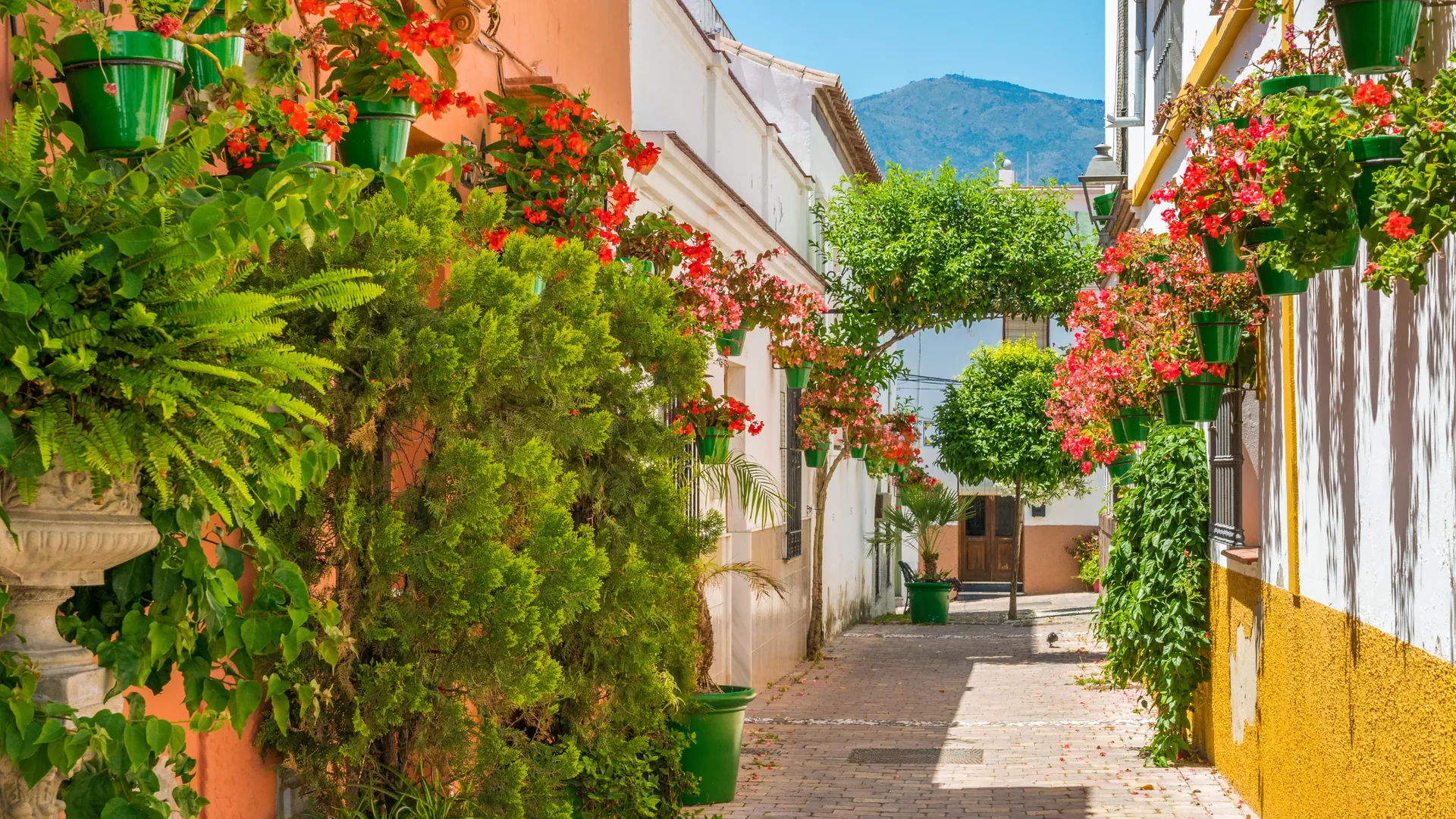
Start in the Old Town before the heat builds. The Casco Antiguo is compact – the whole quarter covers in about 90 minutes on foot. The Plaza de los Naranjos at its centre is one of the more photogenic squares on the coast: orange trees, a 16th-century town hall and outdoor tables that fill quickly after 10:00.
The 9th-century Moorish walls, the Iglesia de la Encarnación and the narrow white lanes are worth an unhurried morning before the day-trippers arrive. The Marbella Old Town guide covers it as a place to stay, not just to walk.
On the way toward Puerto Banús, Avenida del Mar is lined with ten bronze Salvador Dalí sculptures – free to see, regularly missed. The Paseo Marítimo connects the two ends of Marbella on foot along 7 km of flat promenade; at the Puerto Banús end it opens into the marina.
For the full ranked list with booking windows, prices and what to skip, see things to do in Marbella. For a structured beach-club day – Ocean Club, Nikki Beach and the rest – the Marbella beach clubs guide covers prices, dress codes and which slots book out first.
Marbella's beaches
Marbella has 27.9 km of coast and 24 beaches, and the quality varies. In the town centre, Playa de la Fontanilla and Playa de Venus are the most convenient – walkable from the Old Town, well-serviced and busy in summer. The Nagüeles and Casablanca beaches to the west, nearer the Golden Mile, are broader and quieter. East of the centre, La Bajadilla is calmer and popular with families.
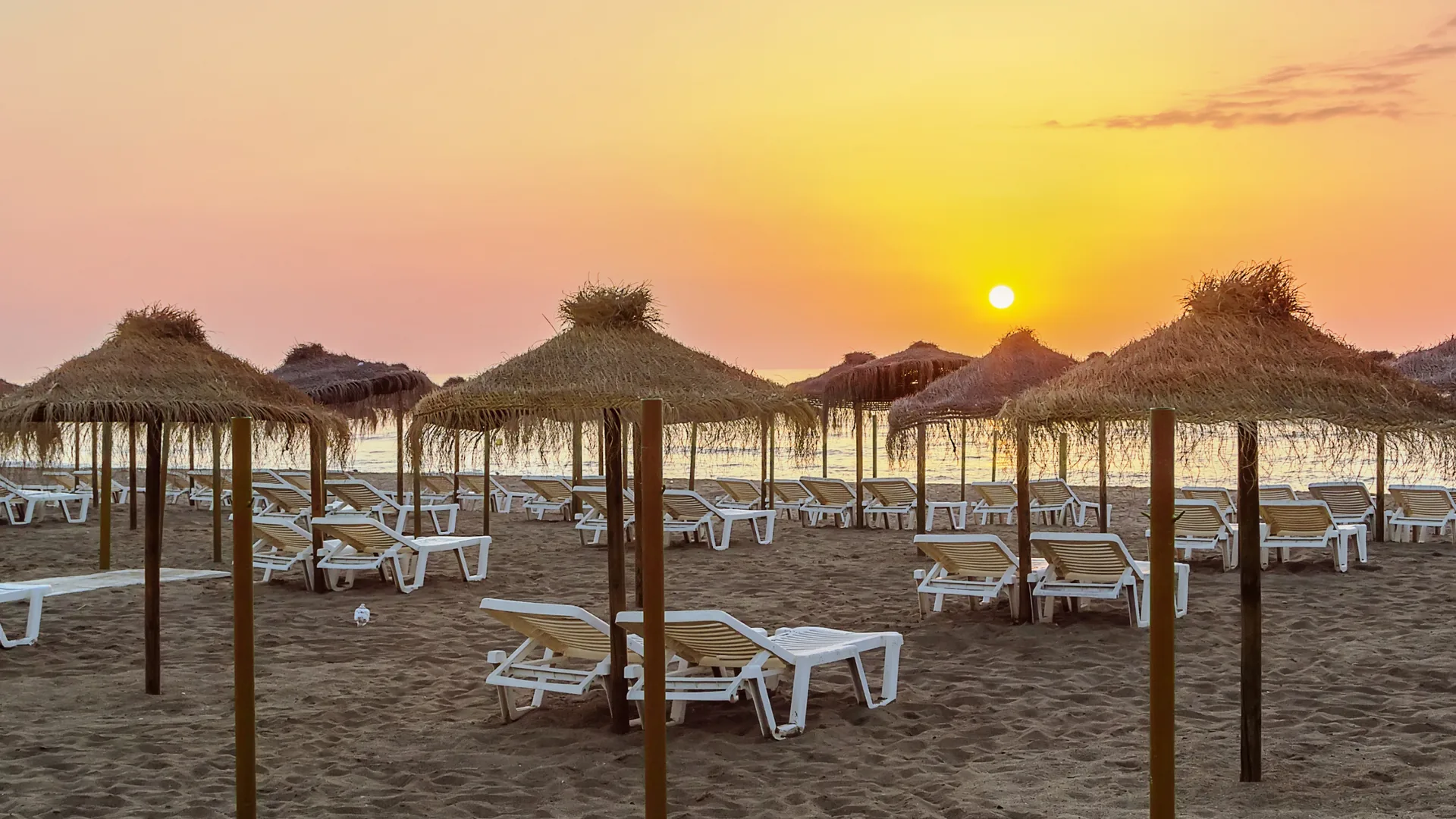
The choice on almost every beach is the same: a free strip of sand with basic facilities, or a beach-club sunbed that starts from around €30 and can go considerably higher. Neither is wrong – the chiringuito at one end and the DJ set at the other are both Marbella. The Marbella beaches guide has the ranked list by sand quality, facilities and parking.
On the water rather than beside it: common and bottlenose dolphins live off this coast year-round, a shared catamaran starts at around €35 and a small-group dolphin sail at around €60. The Marbella boat trips guide has every option, and a jet-ski session from Puerto Banús puts you in the same water as the yachts without the charter cost.
Puerto Banús – yachts, supercars and nightlife
Puerto Banús is 7 km west of central Marbella, and it runs by its own logic – the Puerto Banús guide covers the marina, the parking and the Saturday market in full.
The marina holds around 915 berths and fills in summer with boats ranging from practical sailing yachts to vessels large enough to require a crew. The quayside is free to walk, and the spectacle – the boats, the cars parked along the front, the parade of people dressed for a magazine shoot – costs nothing to observe.
For something more than observation: a shared catamaran trip runs from around €35 and a luxury small-group catamaran from around €85 a head, while a private day charter starts from around €2,000 for a skippered motor yacht and climbs to about €6,500 for a crewed superyacht – the Puerto Banús yacht charter guide has the full boat-by-boat pricing. Supercar hire – Ferrari, Lamborghini, Porsche – starts from around €500 a day, and the roads between Marbella and Ronda are genuinely good driving, provided the car itself was booked at Málaga Airport rather than in town.
After dark, Puerto Banús runs late. The bars along the marina fill from 22:00, the clubs until 06:00, and roughly May to October is the season – outside it, much of the strip simply shuts. The Marbella nightlife guide has the clubs, the door and the dress codes, and the rooftop bars guide covers the quieter alternative.
Where to stay in Marbella
The address matters more in Marbella than almost anywhere on the coast. Four zones each suit a different kind of stay.
The Golden Mile runs from central Marbella to Puerto Banús and contains the property the resort was built around: the Marbella Club, the Puente Romano and a cluster of five-star hotels where rates start high and the facilities justify most of it. If you are spending on the room, this is where the money goes furthest in terms of what surrounds it.
The Old Town has a smaller supply of accommodation – mainly boutique hotels converted from old townhouses, with more character per square metre than anything on the Golden Mile. The boutique hotels in Marbella's Old Town are the best option for a trip more focused on food and walking than beach days.
Nueva Andalucía and the hills behind Puerto Banús are where the villas sit. A private pool is effectively the standard here rather than an upgrade. A mid-range villa runs roughly €6,000–15,000 a week across the summer, with beachfront well above that; how the refundable deposit works and why half the villas sold as Marbella are not in Marbella is in the villa rental guide, and the luxury villas guide has the curated picks.
Adults-only hotels are scattered across all three zones and concentrated along the Golden Mile. For a full zone-by-zone breakdown with price ranges, start with where to stay in Marbella.
Marbella for families, couples and groups
Who is travelling changes which zone and which page to read next. Marbella with kids makes the case for a town that reads as adults-only but runs a flat 7 km promenade and calm town-centre beaches; pair it with the family hotels that actually publish a kids' club rather than just a children's pool. Marbella for couples works the opposite angle – the Old Town and the Golden Mile barely touch, so basing yourself in the right one turns the marina into an evening out rather than a neighbour. For a hen or stag weekend, the hen-party guide prices out what the villa-plus-boat-plus-table packages actually cost against booking each piece separately.
How many days do you need in Marbella?
Two days is the workable minimum: one for the Old Town and the Paseo Marítimo, one for Puerto Banús and a beach or beach club. Three days is the sweet spot – it adds a proper beach afternoon, a dolphin or catamaran trip and an evening of restaurant-standard food rather than marina-front convenience pricing.
Four or five days is where a day trip fits without rushing. Ronda is about an hour and ten minutes by road and the most rewarding day out from Marbella; Gibraltar is doable in a full day and unlike anything else on the coast. Beyond five days, the area has enough – golf in the Golf Valley, hiking on La Concha, coastal villages – to fill a week without strain.
Day-by-day plans for one, two, three and seven days, with what each length costs, are in the Marbella itinerary guide. If the open question is whether the town justifies the trip at all, is Marbella worth visiting takes the reputation and the price argument head-on.
The best time to visit Marbella
May to June and September to October are the best months: warm enough for the beach (24–28°C), not yet at peak prices, and considerably less crowded than high summer. The sea reaches its warmest in August and September, so beach-first trips tolerate July and August better than culture-first ones.
July and August are peak in every sense – prices climb, beach clubs require reservations days ahead, and Marbella's narrow roads become genuinely difficult. The trade-off is that the marina and the nightlife are at full intensity, and evening temperatures are reliably comfortable.
November to February is a different destination: quieter, cooler (14–18°C by day) and significantly cheaper, with most beach clubs closed. Golf is good year-round, and the better restaurants are easier to book without weeks of forward planning. For a month-by-month breakdown of temperatures, rainfall and what is open, see Marbella weather by month.
Where to eat and drink
Marbella's food range is wider than its reputation suggests. The cheapest good eating is in the Old Town backstreets – Bar El Estrecho on Calle San Lázaro is the shorthand reference – where tapas run €2–4 and the terrace fills with locals by 13:30. The Paseo Marítimo has a string of chiringuito-style restaurants that do grilled fish well and without the marina premium.
At the top end, Skina – now on Avenida Cánovas del Castillo at the edge of the Old Town – holds two Michelin stars across four tables; booking months ahead is realistic in season. The Golden Mile hotels all carry fine-dining options, most with terraces facing the sea.
For the full list of what is worth booking, what is riding the address rather than the cooking and where locals actually eat, the Marbella restaurants guide covers it by area and price.
Day trips from Marbella
Ronda is the clearest day trip from Marbella – about an hour and ten minutes by road, a clifftop old town split by the Tajo gorge and the 18th-century Puente Nuevo. It is doable without a car on the Avanza bus, around an hour and a half from Marbella's bus station.
For the rest – Nerja, Gibraltar, Granada and the ferry to Tangier – the day trips from Marbella guide has the logistics.
Caminito del Rey – the restored cliff-edge boardwalk through El Chorro gorge, about an hour and ten minutes from Marbella – requires an early start and advance booking, but it is the standout half-day on the whole Costa del Sol. Full booking details and trail information are in the Caminito del Rey guide.
Marbella or Málaga?
The right choice depends on what the trip is actually for.
Choose Marbella if the priorities are beach days, a marina, luxury accommodation, golf and an evening that starts at 22:00. Marbella does those things better than anywhere else on the coast, and at a consistently high level of execution. The trade-off is that it is not a city – the cultural depth, the museum concentration and the day-trip logistics are all better handled from Málaga.
Choose Málaga for the Alcazaba, the Picasso Museum, the old-town tapas scene and an airport connected to the city centre by train. Málaga is also the stronger base for day trips to Ronda and the Alhambra if those are on the itinerary.
Many trips combine both: two or three days in Málaga, then a few slower ones in Marbella. The 60 km between the two is about 45 minutes by road and they share the same airport – but only a small number of the daily Avanza departures each way are express, and the rest take about an hour and a half. The Marbella and Málaga comparison has the bus problem in full.