The short version
Updated September 2026- Best months
- October – warm, swimmable sea, thin crowds; May–June similar with fewer visitors
- How long you need
- 2 full days for the essentials; 3–4 to add a day trip to Ronda or Casares
- Estepona or Marbella
- Estepona for authenticity and value; Marbella for beach clubs and five-star choice
- Known for
- 70+ old-town murals, flower-planted streets, the Orchidarium, a working fishing port
- Do you need a car?
- No for the old town, seafront and marina; yes for Selwo, Sierra Bermeja and day trips
- From Marbella
- ~30 min by road, with regular Avanza buses
Explore Estepona
Old town, beaches, attractions & experiences
Selwo Aventura Estepona 2026: Tickets, Animals & Honest Tips
Read guideActivities15 Best Things to Do in Estepona (Zero-Fluff Local Guide 2026)
Read guideBeachesEstepona Beach Clubs: From a €4 Hamaca to €69 at Hacienda del Mar
Read guideBeachesEstepona Has No Blue Flag Beach in 2026 – Only the Marina Kept One
Read guideGuideEstepona Marina 2026: Restaurants, Boat Tours & Evening Guide
Read guideGuideEstepona Runs Three Markets at Once on Sunday Morning
Read guideGuideEstepona Old Town: 64 Murals, and a Flower Colour per Street
Read guideActivitiesEstepona Orchidarium 2026: Tickets, Opening Hours & Honest Review
Read guideFood & Nightlife
Restaurants, tapas bars & where to go after dark
Where to Stay
Villas, hotels & the best areas
Plan Your Trip
Weather, day trips, transport & comparisons
Estepona Car Hire 2026: Airport Hack, Prices & No Deposit Options
Read guideDay TripDay Trips from Estepona: Five Places, Ranked by What They Give Back
Read guideWeatherEstepona Weather by Month: 28°C in August, Not 33°C
Read guideTransfersMalaga Airport to Estepona: Taxi, Bus and the Real Toll Cost
Read guideMore Guides
Other Estepona articles
Estepona did something almost nobody else on this coast managed: it stayed Spanish. While Marbella and Torremolinos built themselves around resort infrastructure, Estepona kept a working fishing port, a flower-filled old town where residents still outnumber tourists on the streets, and 21km of coastline that only gets crowded in a handful of spots. It calls itself the "Garden of the Costa del Sol," and the 70-plus commissioned murals and coordinated flower-pot streets earn the name rather than just claiming it. This is the overview – what to do, where to sleep, when to come and how it stacks up against its glossier neighbour.
Things to do in Estepona
Start in the old town before the heat builds. The Casco Antiguo is a working neighbourhood rather than a preserved exhibit – narrow whitewashed lanes, over 70 giant murals covering entire building facades, and a main square, Plaza de las Flores, where locals genuinely have their morning coffee. The old town guide has the full mural route and walking map.
Five minutes from the old town, the Orchidarium is the town's most underrated attraction: three glass domes, a 17-metre indoor waterfall and over 1,300 orchid species for around €3 entry – one of the best-value paid attractions on the entire coast. Families and safari fans head 15 minutes out of town to Selwo Aventura, a 2,000-animal safari park with ziplines and treehouse stays. For a harder afternoon, the Sierra Bermeja mountain behind the town has a red-rock hiking trail to the 1,449m Los Reales peak with views to Gibraltar and, on a clear day, Morocco. The things to do guide ties all of it into a proper itinerary.
Estepona's beaches and beach clubs
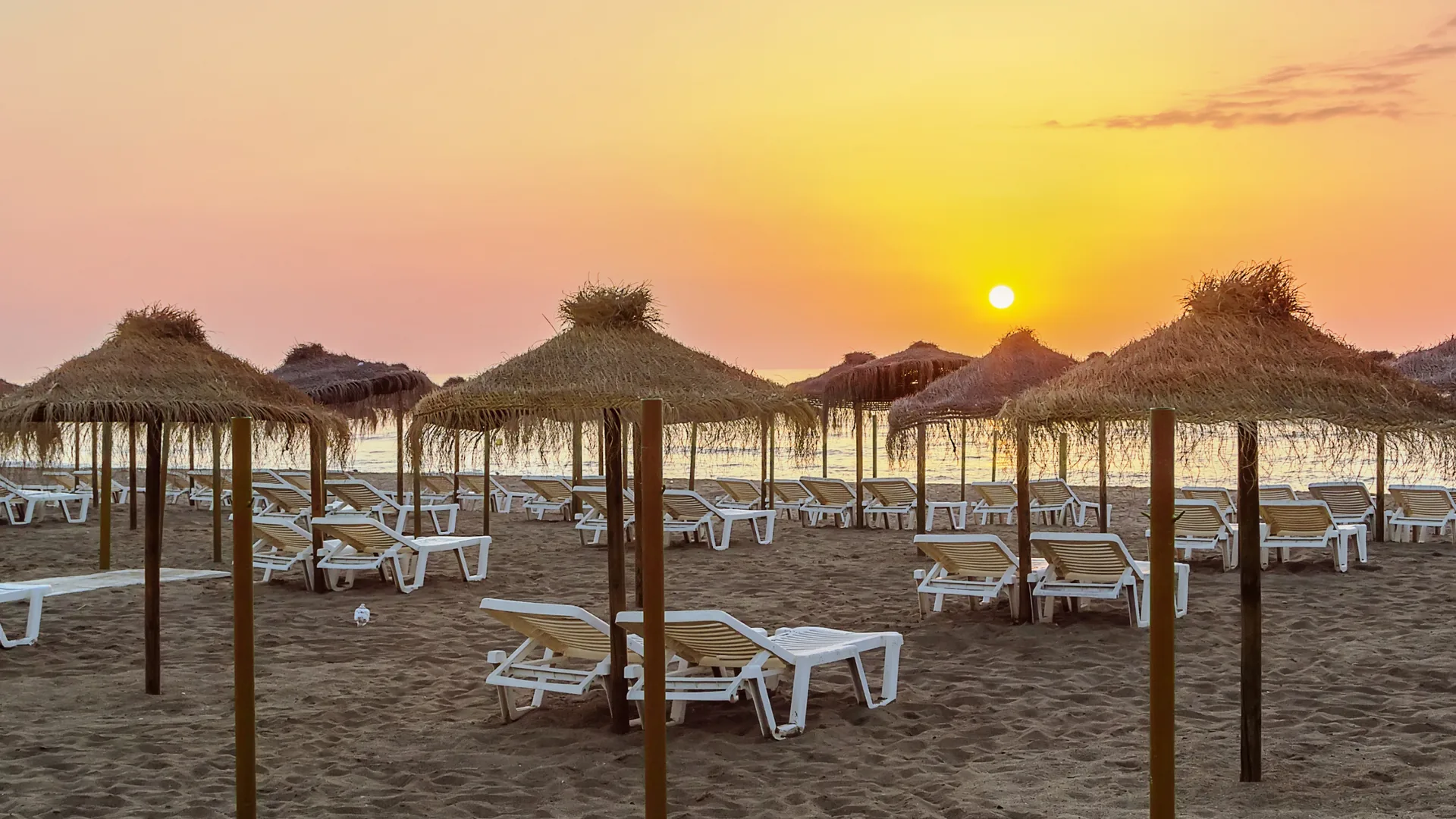
Estepona has around 21km of coastline across 17 named beaches, running from the New Golden Mile in the east to wild, rocky coves in the west near Casares. Playa de la Rada, the town-centre beach, is the all-rounder – wide, fully serviced, backed by one of the better promenades on the coast. Playa del Cristo, a sheltered cove just west of the fishing port, runs 2–3°C warmer than the exposed beaches and is the default choice for families and non-swimmers. The beaches guide runs the full coastline east to west, including Playa Costa Natura, Spain's first official naturist beach.
For a beach club day, the scene here is lower-key than Marbella's – no €150 minimums or 3pm DJ sets. Sublim on the Blue Flag Playa del Padrón is the best pure beach-club format, and Spiler at the Kempinski hotel is the luxury end. The beach clubs guide compares all eight, chiringuitos included.
The marina, the fishing port and market days
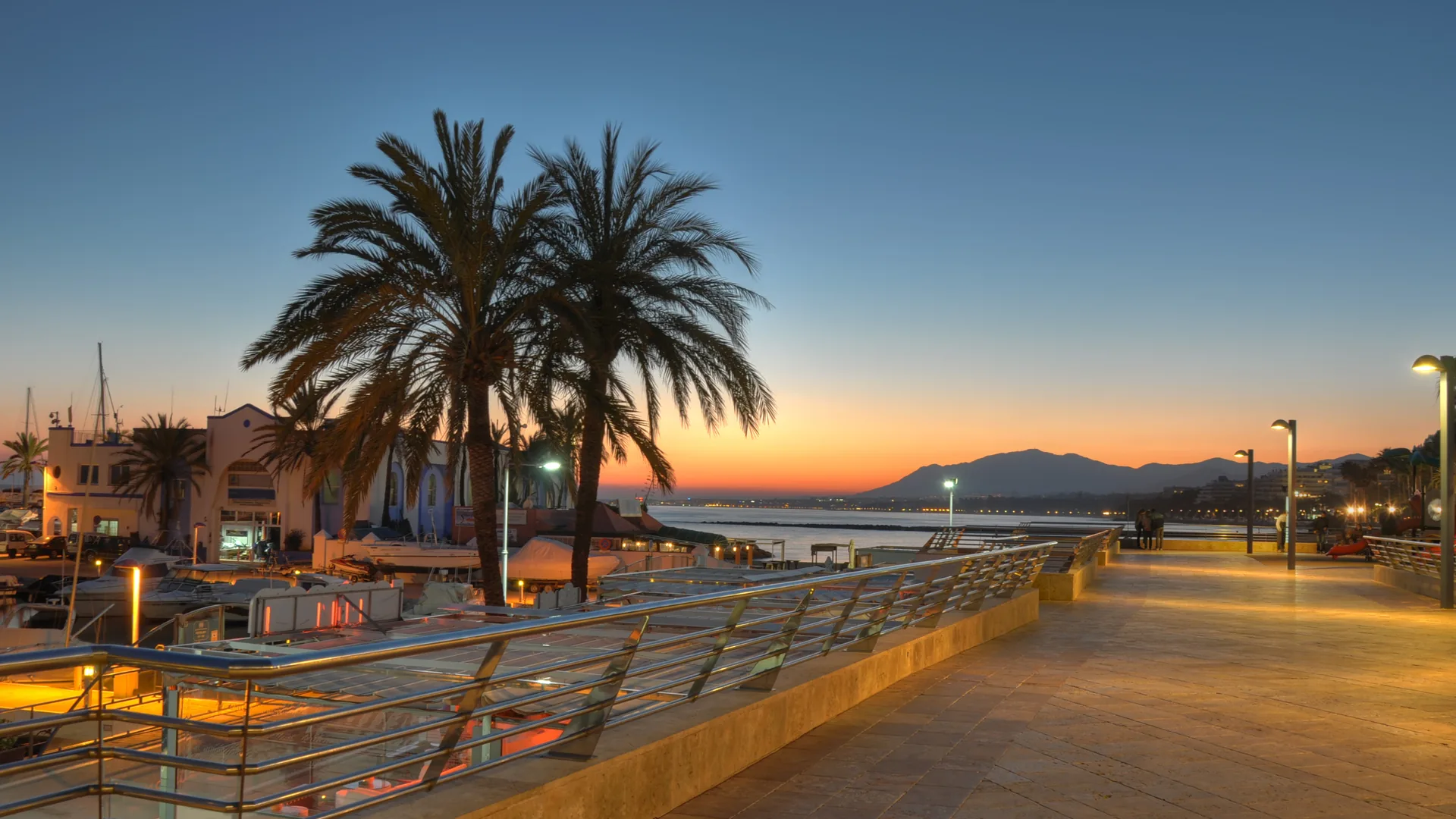
Estepona's waterfront splits cleanly in two: the Puerto Deportivo (leisure marina), with its restaurants, bars and evening paseo, and the Puerto Pesquero – a genuine working fishing port 200m east – where the daily catch is auctioned each morning and the best seafood restaurant in town, La Escollera, actually sits. The marina guide covers both sides and the dolphin-watching boats that depart for the Strait of Gibraltar.
Market days add another layer: a 250-stall Wednesday street market where residents actually shop, and three separate Sunday markets running simultaneously – a marina market for gifts, a Rastro flea market at the old bullring, and a small organic producers' market. The markets guide has the full weekly breakdown.
Where to stay in Estepona
Four areas cover very different trips. The old town and port suit anyone without a car who wants to walk to dinner – though branded hotels are scarce there, with the nearest proper options a short drive along the coast. The central seafront at Playa de Guadalobón puts you directly on the beach without leaving Estepona itself.
The New Golden Mile, the stretch toward Marbella and San Pedro, holds almost all of the area's big resorts – Kempinski, Ikos Andalusia and the adults-only Exe Estepona Thalasso among them. West of the centre, near Selwo and Costa Natura, self-catering apartments outnumber hotels for a quieter, family-oriented stay. For anyone considering a villa instead, the beachfront villas guide covers verified frontline rentals with private pools. The where to stay guide breaks down all four areas with specific hotel picks.
Where to eat and drink
The working fishing port means Estepona's seafood is genuinely fresh rather than just marketed that way, and the old town cluster around Calle Caridad – ALMA de Miguel, Las Gitanillas, Abanico – rates among the best on the western Costa del Sol, at prices 20–30% below comparable quality in Marbella. The restaurants guide has the ten worth booking, with what to order at each.
After dinner, Estepona's nightlife is the deliberate opposite of Puerto Banús: no table minimums, no dress code, and a marina strip that runs until 6–7am in summer without ever feeling like a performance. The nightlife guide covers the old town's cocktail bars and the marina's late-night scene.
When to visit Estepona
Estepona gets around 325 days of sunshine a year, sheltered by the Sierra Bermeja from cold northern air. October is the best month overall – 25°C, a still-swimmable 23°C sea and crowds a third lower than August – while May and June offer the same warmth with fewer people than peak summer. Winter (December–February) averages a mild 17°C, good for walking and day trips even without beach weather. The weather guide has the full month-by-month breakdown.
The calendar is built around two patron processions and a summer feria: Semana Santa in late March or early April, the week-long Feria Mayor in early July, and the Virgen de los Remedios procession through the old town every 15 August. The events calendar has verified dates and what each one actually involves.
Day trips and getting around
Estepona sits closer to Gibraltar, Tarifa and the western hill towns than any other Costa del Sol base. Casares, the closest whitewashed village, is 25–30 minutes away; Gibraltar is around 50 minutes, noticeably closer than from Marbella; and Ronda, still the single best day trip on this coast, is just over an hour. The day trips guide covers all five, including Sotogrande's marina and golf and the ferry to Morocco from Tarifa.
There is no train station, so a hire car is worth having for anything beyond the old town, seafront and marina – all walkable on their own. The car hire guide covers the Málaga Airport booking hack that beats hiring locally.
Estepona or Marbella?
The choice depends on what the trip is for. Estepona is quieter, more authentically Spanish and noticeably cheaper – the old town, the fishing port and the beach-club scene all work without the performance element Marbella built its reputation on. Marbella answers a different brief: bigger beach clubs, Puerto Banús, a wider spread of five-star hotels and more nightlife options at the top end.
Plenty of trips do both – based in Estepona for value and atmosphere, with a day or evening in Marbella for the contrast. The full breakdown, including which towns suit which travellers, is in the Estepona vs Marbella comparison.