The short version
Updated October 2026- Airport
- ~20 min by car, and on the Cercanías train – one of the easiest resort towns to reach
- Best beach
- La Carihuela for seafood and atmosphere; all four beaches hold Blue Flag status
- Family or party?
- Both – family resorts and Aqualand on one side, the centre and La Nogalera for nightlife; the two rarely overlap
- Torremolinos or Benalmádena
- Torremolinos is louder with a longer beach; Benalmádena adds a cable car and a hilltop village
- Do you need a car?
- No for the town – beach, hotels and nightlife are walkable; only for inland day trips
- La Nogalera
- One of Europe’s most concentrated gay districts, a block back from the beach
Beaches
La Carihuela, El Bajondillo, Playa de los Álamos & more
Best Beaches in Torremolinos: Which of the Four to Pick
Read guideFood & DrinkBeach Clubs and Chiringuitos in Torremolinos: Which Beach for Which
Read guideGuideLGBTQ+ Torremolinos: La Nogalera, Pride and the Gay-Friendly Beaches
Read guideFood & DrinkWhere to Eat in Torremolinos: From the Old Town to La Carihuela
Read guideGuideThings to Do in Torremolinos: Beaches, Parks, Old Town and Night
Read guideWhere to Stay
Hotels, all-inclusives & apartments for every budget
Nightlife & Entertainment
The Strip, beach clubs, bars & live music
Things To Do
Activities, sights & day trips from Torremolinos
Plan Your Trip
Getting there, getting around, weather & practical info
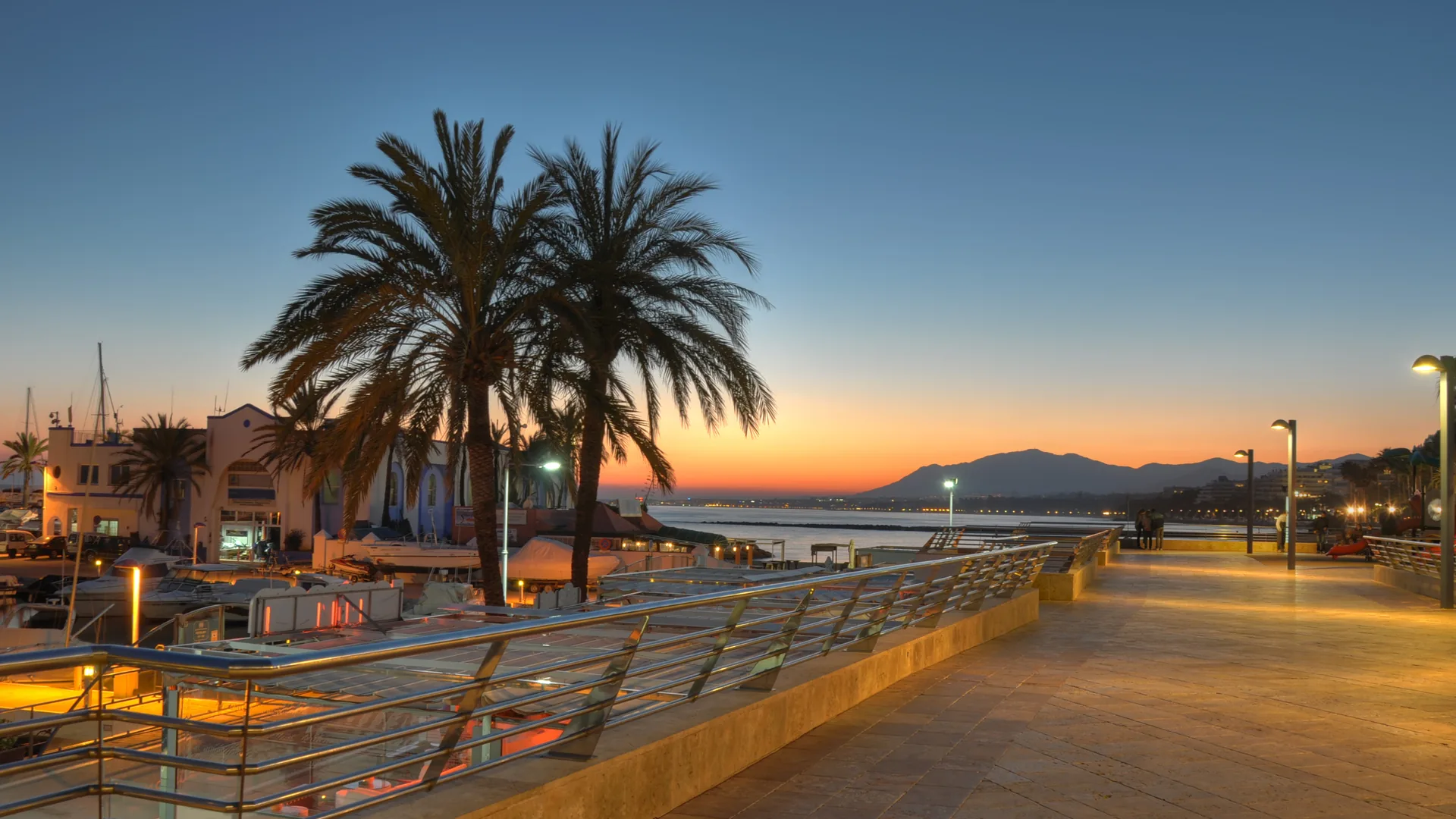
Torremolinos is the Costa del Sol's original resort town: seven kilometres of sandy beach, the coast's most famous nightlife strip and hotels at every price point, all barely 20 minutes from Málaga Airport. It was the town that put southern Spain on the package-holiday map in the 1960s, and it has kept reinventing itself since – today it is as much a family beach base as a party destination, with one of Europe's most established gay districts sitting a few streets from a promenade lined with fish restaurants. This is the overview, with a deeper guide linked at every step.
The town splits neatly into zones, and picking the right one matters more here than in most Costa del Sol resorts. La Carihuela in the west keeps its fishing-village character and a slower pace; the centre around Calle San Miguel and Bajondillo carry the nightlife and the main hotel strip; and Los Álamos, at the eastern edge before the coast runs into Benalmádena, is the quiet option with fewer crowds. Most first-time visitors try to do all of it on foot along the seven-kilometre promenade that connects every stretch – it works, but budget a full morning if you want to walk end to end.
Torremolinos' beaches
The beach runs almost unbroken from La Carihuela in the west to Los Álamos in the east, and each stretch has a different character. La Carihuela is the old fishing quarter – the longest single stretch at 2.1 km, narrower sand, the best espeto chiringuitos on the coast, and a slower pace than the rest of town. Bajondillo and Playamar sit in front of the main hotel strip and are the busiest of the four, backed by the town centre and the promenade.
All four of Torremolinos' main beaches held the Blue Flag in 2026, with lifeguard cover from June through September – the full breakdown of which suits which group, including playgrounds and access, is in our guide to the best beaches in Torremolinos. Los Álamos, at the Málaga end, is the widest and the only one the municipality rates at medium rather than high occupancy, so it is the pick for space over proximity to restaurants. For the difference between a casual grill and a paid beach club, see beach clubs and chiringuitos. Sunbeds and parasols are widely available for hire on every stretch, but the sand itself is free and public along the roughly six kilometres of beach, same as everywhere on this coast.
Nightlife and La Nogalera
Turismo Torremolinos calls the town one of the most tolerant in Europe, and La Nogalera – a large pedestrian square in the centre, with many bars and discothèques – is what the tourist board calls the heart of night-time leisure and a reference for LGTBI tourism. Along the Los Álamos–Playamar promenade, beach clubs and chiringuitos add the town's daytime-into-evening scene. Our nightlife guide maps the streets by scene, and LGBTQ+ Torremolinos covers La Nogalera in full – by day and by night.
Where to stay
Three areas cover almost every trip. La Carihuela suits couples and quieter stays, close to the best seafood and a short walk from the centre. The stretch around Playamar and Bajondillo is the family and beachfront choice, with resorts stepping straight onto the sand. The centre, near Calle San Miguel, puts nightlife on your doorstep at the cost of some noise. Our where to stay guide breaks down all three with a hotel pick for every budget.
For a specific brief, we keep dedicated shortlists: beachfront hotels for rooms that step onto the sand, family resorts and waterparks for kids' clubs and splash pools. Adults-only and budget options are in the where-to-stay guide above.
Things to do beyond the beach
Aqualand Costa del Sol is the headline attraction: 100,000 m² of slides, a wave pool and a lazy river, and our Aqualand guide covers tickets and how to dodge the worst queues. Beyond the water park, family activities rounds up the other solid options for a full day with kids, and parks and green spaces maps three parks, a botanical garden and a promenade that doubles as a linear garden – all free.
For the full ranked list, the 10 best things to do in Torremolinos runs from the water park to one of Spain's most dramatic gorge walks nearby, and our self-guided walking tour takes you from the beach through the old fishing quarter to the cliffside old town, with the history most visitors miss.
Food and drink
La Carihuela is the place for espetos – sardines grilled over an open fire on the sand – and award-winning chiringuitos line the seafront there. The centre has a wider spread of restaurants, and our guide to where to eat in Torremolinos covers the Old Town, the promenade and La Carihuela area by area, including the tasting-menu restaurants for a special evening and a short section on the markets.
Day trips and getting around
Torremolinos makes a genuinely good day-trip base – the nine best day trips include Ronda, Caminito del Rey and Mijas, with guided tour prices and driving times compared. If you need a car, skip the town-centre desks: our car hire guide lays out the ten-minute Cercanías hop to Málaga Airport, where competition between suppliers typically cuts the price by 30–40% compared with hiring locally. For everything else – transport that actually works, honest safety notes and the common first-timer mistakes most guides skip – see our practical tips.
You do not need a car for the town itself. The Cercanías C-1 line runs Torremolinos to central Málaga in about 25 minutes and to the airport in around 10, and local buses cover the rest. A car only earns its keep once you start planning day trips inland, where public transport gets thin.
When to go
AEMET's record for Málaga Airport, the nearest official station, gives the area about 2,900 hours of sunshine a year, and the town changes with the seasons: summer is at its busiest and loudest, spring and autumn keep the warmth with fewer people, and winter is mild and quiet. Our Torremolinos weather guide gives the month-by-month breakdown and the events calendar lists the recurring festivals and fairs with exact dates.
Just up the coast, Málaga makes a strong add-on for culture and museums, while Marbella and Estepona suit a slower, more upmarket few days if you want to see more of the coast on the same trip.
How Torremolinos compares
Torremolinos is the loudest and most central of the Costa del Sol resorts, and that is exactly why people choose it: nowhere else on the coast puts an airport, a nightlife strip and a family beach within the same twenty-minute radius. Fuengirola, one stop further down the line, is calmer and better suited to a quiet week; Benalmádena sits in between, with a marina and cable car that Torremolinos does not have. If you want the energy without the airport-adjacent crowds, book a hotel in La Carihuela or Playamar rather than the centre – both are a fifteen-minute walk from the nightlife but feel like a different town after dark.