Begur vs Lloret vs Tossa de Mar: Which Part of Costa Brava Should You Stay In? (2026)
Begur and Lloret de Mar are 40 minutes apart by car and feel like different countries. Begur is a medieval hilltop village with private coves and no nightlife. Lloret de Mar is a full-scale resort with waterparks, a packed sandy beach and bars open until 4am. Choosing the wrong one is the most common mistake people make when booking a Costa Brava holiday — and it's entirely avoidable.
This guide compares all seven areas honestly: Begur, Lloret, Tossa de Mar, Cadaqués, Palafrugell, Platja d'Aro and Roses. Who each one is for, what the beaches are actually like, what you'll pay, and how far you are from Girona airport.
Quick Takeaways
- ✓Best for couples & luxury: Begur — medieval hilltop village, private coves, authentic atmosphere, from €125/night.
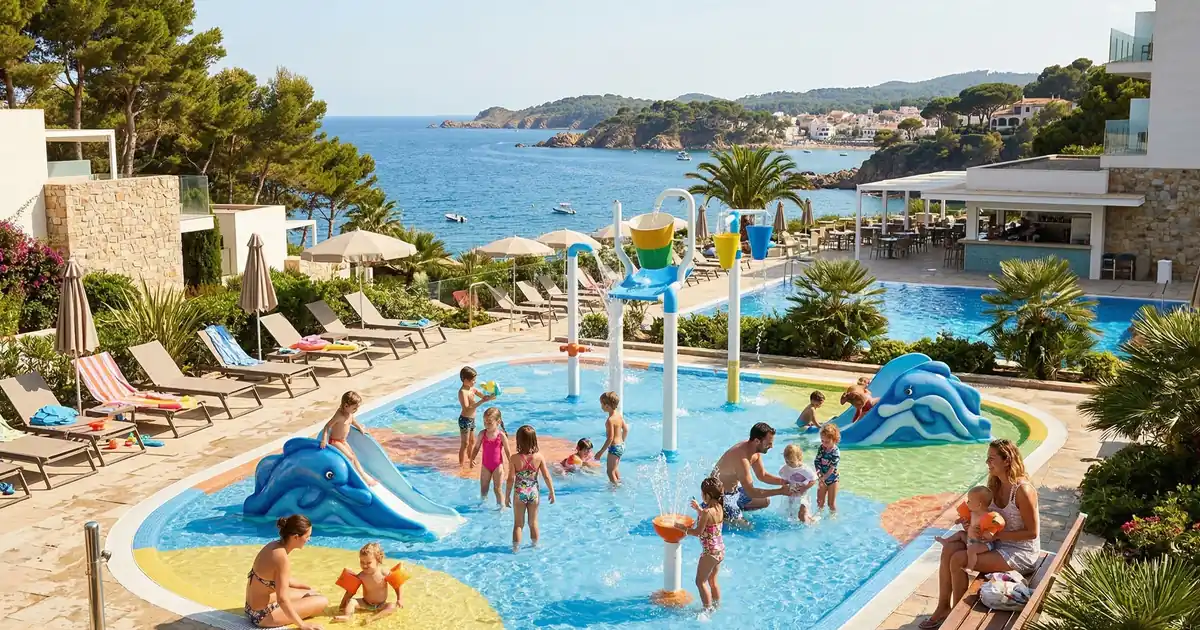
- ✓Best for families with children: Tossa de Mar — safe sandy beach, medieval castle, family hotels from €100/night, 31 min from Girona.
- ✓Best for budget: Lloret de Mar — from €80/night, longest sandy beach, most amenities, 40 min from Girona.
- ✓Most unique: Cadaqués — Dalí country, whitewashed harbour, no mass tourism, rocky coves, from €120/night.
- ✓Closest to Girona Airport: Tossa de Mar at 31 minutes — best choice if minimising transfer time matters.
Quick Comparison: Costa Brava Areas at a Glance
| Area | Best For | Beach Type | From/Night | Girona Airport |
|---|---|---|---|---|
| 🏆 Begur | Couples, luxury | Sandy coves | €125 | 60 min |
| 💰 Lloret de Mar | Families, budget | Long sandy | €80 | 40 min |
| 🎯 Tossa de Mar | Families, couples | Sandy + coves | €100 | 31 min |
| Cadaqués | Couples, culture | Rocky coves | €120 | 62 min |
| Palafrugell / Calella | Families, couples | Sandy coves | €120 | 46 min |
| Platja d'Aro | Luxury, families | Long sandy | €150 | 37 min |
| Roses | Families, water sports | Long sandy | €100 | 48 min |
Jump to: Begur · Cadaqués · Tossa de Mar · Lloret de Mar · Palafrugell · Platja d'Aro · Roses · FAQ
The 7 Best Areas to Stay in Costa Brava
Begur
The luxury address on the Costa Brava — medieval village, private coves, no crowds
Begur is where people end up after they've tried the busier resorts and want something different. A medieval hilltop village with castle ruins, whitewashed streets, excellent restaurants — and within 10 minutes by car, some of the most beautiful coves on the entire Spanish coast: Sa Riera, Aiguafreda, Sa Tuna, Aiguablava. None of them have been overwhelmed by hotels.
The beaches here are sandy coves rather than long resort beaches — intimate, sometimes rocky at the edges, surrounded by pine trees. Not the right choice for families who need a flat sandy beach with lifeguards and sunloungers stretching for a kilometre. Exactly the right choice for couples, small groups, or anyone who wants to feel like they've found somewhere rather than been directed to it.
Top 3 things to do: Explore Begur Castle and the medieval streets in the evening — the views over the coast at dusk are worth the walk. Hike the Camí de Ronda coastal path to Aiguablava, one of the most photographed coves on the Costa Brava. Snorkel in Sa Tuna — clear water, rocky seabed, far fewer people than the beaches further south.
Cadaqués
Dalí's village — the most distinctive town on the Costa Brava
Cadaqués is the one that doesn't look like anywhere else. White houses stacked around a harbour, the Cap de Creus peninsula making it feel like the edge of the world, and the Dalí House-Museum in Port Lligat as the anchor attraction. Salvador Dalí lived here for most of his adult life — the town is why.
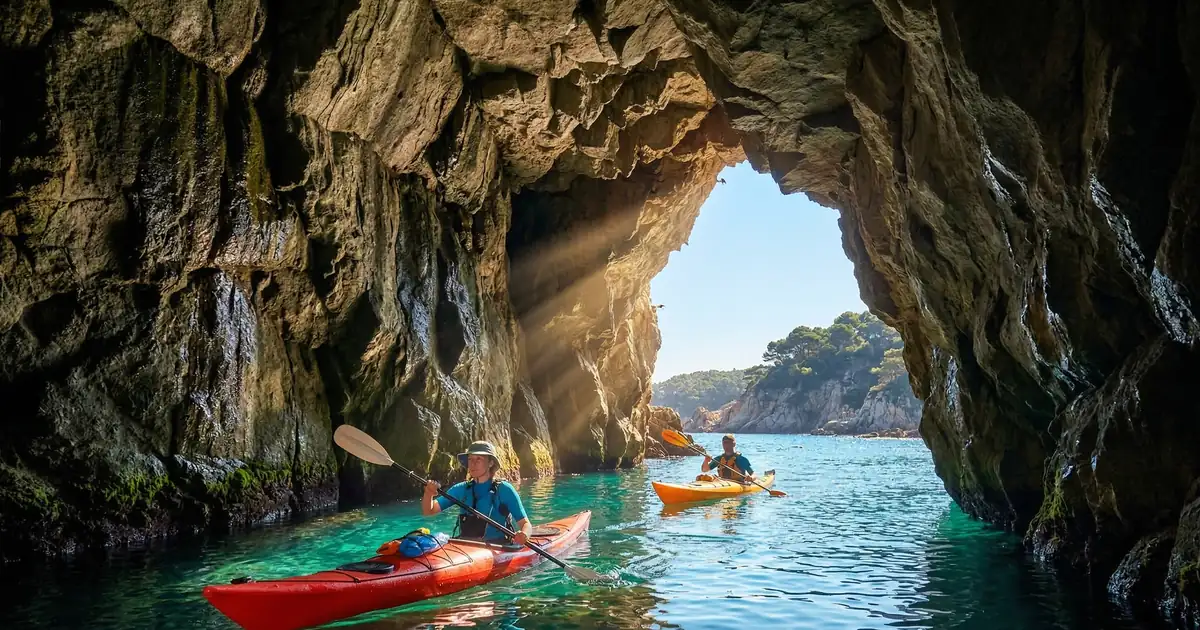
The beaches are rocky coves rather than sandy beaches, and the water is clear and cold. It takes 62 minutes from Girona airport and the road in is winding — which is part of why it has stayed relatively unspoiled. Cadaqués has restaurants and bars, not nightclubs. It has galleries and walking paths, not waterparks. The icing on the cake: the Tramuntana wind comes in from the north regularly, which makes it one of the best spots on the coast for kayaking and sailing.
Top 3 things to do: Visit the Dalí House-Museum in Port Lligat — book ahead, capacity is limited and it sells out. Kayak Cap de Creus Natural Park — the most dramatic coastal scenery on the Costa Brava, best experienced from the water. Walk the whitewashed old town in the morning before day-trippers arrive from Figueres.
Dalí House-Museum in Port Lligat has limited daily capacity — book tickets before you travel, not when you arrive. In summer it sells out weeks ahead.
Tossa de Mar
The best all-rounder on the Costa Brava — closest to Girona, medieval castle, sandy beach
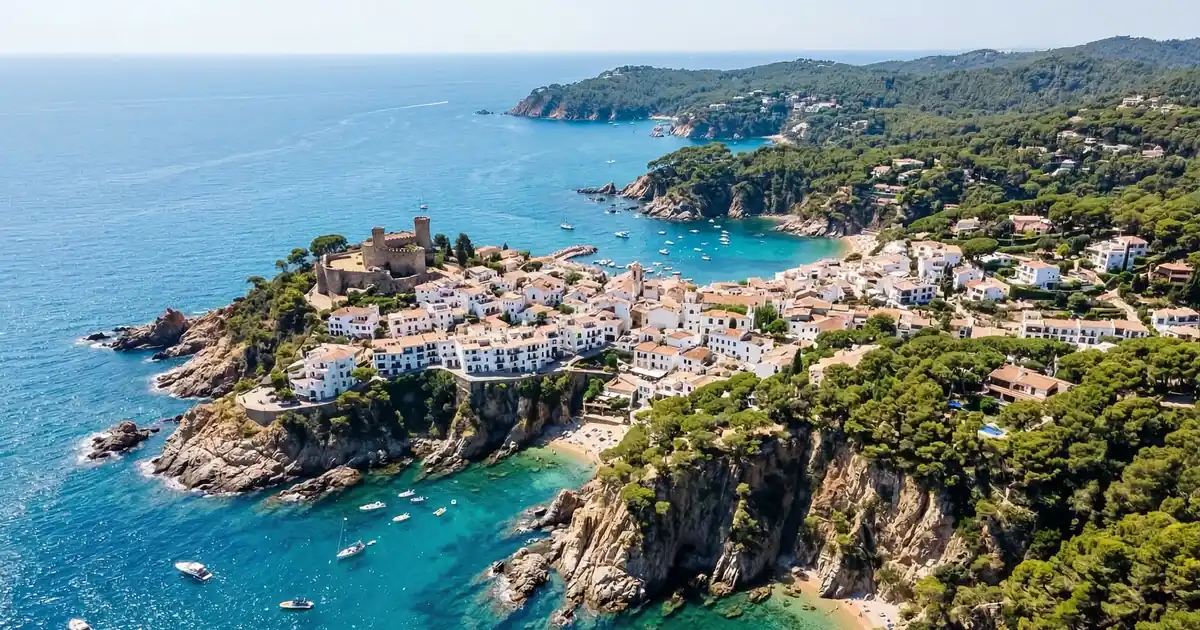
Tossa de Mar is the answer when someone asks "where should we go on the Costa Brava?" without further specification. A medieval walled town on a headland — the only intact fortified medieval town on the Catalan coast — with Platja Gran, a wide sandy beach, directly below it. Safe, photogenic, accessible, and 31 minutes from Girona airport.
It works for families because of the beach. It works for couples because of the old town. It works for everyone because the restaurant and hotel range is broad, the crowds are manageable compared to Lloret, and the surrounding coves — Cala Pola, Cala Giverola — are reachable by coastal path or short drive.
Top 3 things to do: Tour Vila Vella — the walled old town is free to enter and takes 45 minutes to explore properly. Walk to Cala Pola — 40 minutes on the Camí de Ronda coastal path, one of the best short hikes on the Costa Brava. Swim from Platja Gran in the morning before the beach fills up.
Lloret de Mar
Costa Brava's biggest resort — best value, most amenities, liveliest atmosphere
Lloret de Mar is the most commercially developed town on the Costa Brava — and that's exactly why some people choose it. The longest sandy beach, the most hotel options at the lowest prices, waterparks, shopping, nightlife, and bus connections to Barcelona and Girona that make it the most accessible town on this list without a car.
It's not the Costa Brava of postcards — the medieval old town here is modest compared to Tossa or Begur. But for families who want maximum amenities, a flat sandy beach that works for young children, and a budget that doesn't stretch to €200/night, Lloret delivers more value per euro than anywhere else on this list.
Top 3 things to do: Visit Water World waterpark — one of the largest in Catalonia, 10 minutes from the town centre. Explore Santa Clotilde Gardens — Modernist terraced gardens above the sea, surprisingly quiet considering how close they are to the resort. Walk the beach promenade in the evening — Lloret's seafront is lively and genuinely enjoyable after the heat of the day.
Lloret de Mar in September costs 30–40% less than August and the beach is noticeably quieter — same weather, fraction of the crowds. Best value month on the Costa Brava.
Palafrugell / Calella de Palafrugell
The Costa Brava's best-kept coastal village — fishing boats, coves and the Camí de Ronda
Palafrugell is the inland market town; Calella de Palafrugell, Llafranc and Tamariu are the coastal villages it connects. Together they form the stretch of coastline that most people who know the Costa Brava well consider the best of it — whitewashed fishing villages, sandy coves, seafront restaurants that have been excellent for decades, and the Camí de Ronda coastal path linking all of them.
Calella de Palafrugell specifically has a beach promenade — Port Bo — that looks like a painting and has restaurants and bars operating at the right pace. Not rushed, not dead. The area is popular with Catalan and French families who return every year, which tells you something about what it delivers.
Top 3 things to do: Walk the Camí de Ronda between Calella, Llafranc and Tamariu — one of the best 2-hour coastal hikes on the Costa Brava with cove swimming stops along the way. Eat at the seafront in Calella de Palafrugell — Port Bo at sunset is one of the best restaurant terraces on the coast. Swim at Canadell or Llafranc beach — sandy, calm, with shallow water suited to families.
Platja d'Aro
Glamorous resort with golf, spa and a long sandy beach — the upmarket alternative to Lloret
Platja d'Aro sits between Calella de Palafrugell and Sant Feliu de Guíxols — well-positioned for exploring the southern Costa Brava — with a long promenade, upscale shops, direct beach access and golf and spa facilities that make it the most resort-complete town on this list. Less characterful than Begur or Tossa, more polished than Lloret.
The beach is long, sandy and backed by a promenade that works for families and couples equally. The town has enough restaurants and boutiques to keep a group occupied on a non-beach day. Golf courses are within 15 minutes. It's the choice for people who want a proper resort experience without Lloret's volume or Lloret's price-end reputation.
Top 3 things to do: Walk the seafront promenade — long enough for a proper evening walk, lined with restaurants and shops. Golf at one of the courses within 15 minutes — PGA Catalunya is 30 minutes north. Explore the Coves d'en Daina megalithic burial site nearby — an unexpected piece of prehistory 10 minutes from the beach.
Roses
Long sandy bay, water sports and ancient ruins — the northern Costa Brava's family base
Roses sits at the top of the Gulf of Roses — a wide, sheltered bay with long sandy beaches, consistent wind for water sports, and the Aiguamolls Natural Park just north of town. The Ciutadella de Roses — a fortified citadel with Greek, Roman and medieval layers — gives it more historical depth than most resort towns on the coast.
It's 48 minutes from Girona airport and further north than the other areas on this list, which means it sees fewer British and German package tourists and more Spanish families. Prices reflect that — from €100/night for decent hotels on the bay. The consistent wind from the north makes Roses one of the best places on the Costa Brava for windsurfing and kitesurfing.
Top 3 things to do: Explore the Ciutadella de Roses — the layered ruins cover 2,500 years of occupation and take a morning to do properly. Windsurf or kiteboard on the bay — the Tramuntana wind makes conditions reliable from spring through autumn. Walk into Aiguamolls Natural Park — flamingos, herons and wetland trails, 20 minutes north of Roses town.
FAQ
For the full picture on where to stay in Costa Brava — from budget hotels to villa estates — start at our Costa Brava hub. Part of the Spain travel guide.