Best Beaches in Estepona 2026: Complete Guide by Area
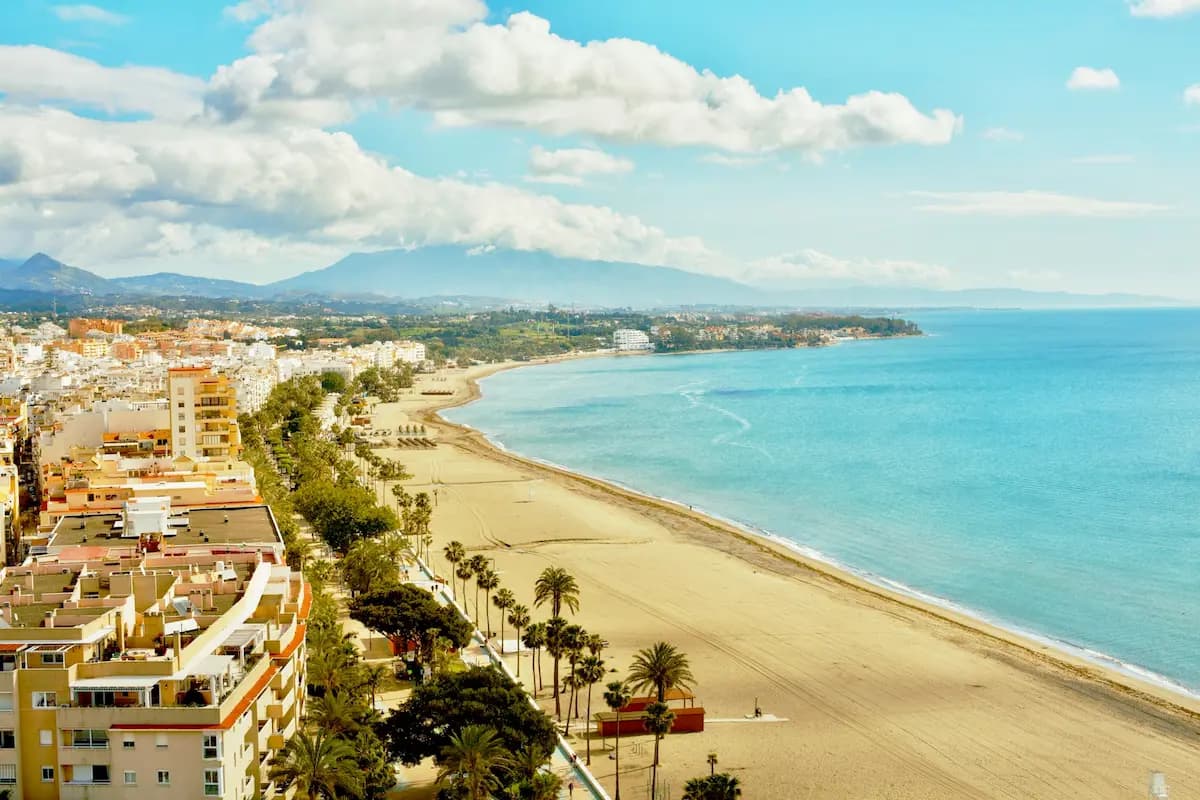
Estepona has 21km of coastline and 17 beaches — more than most visitors realise. From the wide urban sands of Playa de la Rada in the town centre to wild rocky coves in the west with crystal-clear water. Here is every beach worth knowing about, from east to west.
Estepona has 21km of coastline — more than almost any other town on the Costa del Sol — spread across 17 beaches with genuinely different characters. The town centre beach (Playa de la Rada) is wide, well-equipped and backed by a long promenade with chiringuitos and restaurants. Playa del Cristo is the most sheltered cove, consistently 2–3°C warmer than exposed beaches and the best choice for families with young children. Further west, the beaches get progressively wilder, rockier and emptier, with clearer water and almost no facilities.
The Senda Litoral — a coastal path running along most of Estepona's 21km shoreline — connects the beaches on foot or by bike, making it possible to explore the entire coastline in a single day without a car for the central section.
This guide goes east to west — from the New Golden Mile boundary with Marbella to the far western beaches beyond Costa Natura.
Jump to: Eastern Beaches · Town Centre Beaches · Western Beaches · Naturist Beach · Best for Families · Best Chiringuitos · Beach Map · FAQ
Quick Pick by Type
| Type | Beach | Why |
|---|---|---|
| Best overall | Playa de la Rada | Full facilities, long promenade, great chiringuitos |
| Best for families | Playa del Cristo | Sheltered, shallow, warmest water |
| Best Blue Flag | Playa del Padrón | Blue Flag, luxury beach clubs |
| Best for snorkelling | Playa Arroyo Vaquero | Crystal clear water, rocky bed |
| Nudist beach | Playa Costa Natura | Spain's first official naturist beach |
| Quietest | Playa de la Galera | Almost wild, minimal facilities |
| Longest | Playa del Saladillo | 3km, dark fine sand, full facilities |
| Best for kitesurfing | Playa de Guadalmansa | Consistent wind, open exposure |
Eastern Beaches
The eastern beaches sit on the New Golden Mile — the stretch of coastline between Estepona town and the Marbella boundary, flanked by luxury residential developments and some of the Costa del Sol's most expensive real estate.
Playa del Saladillo
📍 Eastern outskirts · 3km · Fine dark sand · Full facilities
Playa del Saladillo is the longest beach in the Estepona municipality — 3km of fine dark sand running along the eastern coastal strip. Full facilities throughout: showers, toilets, beach bars and sunbed hire. The beach is wide enough that it never feels overcrowded even in peak August, and the length makes it good for long morning walks before the sun gets intense. Backed by residential urbanisations rather than the town promenade, it has a quieter feel than the central beaches despite good infrastructure.
Pro tip: Playa del Saladillo is the best beach for an early morning walk on the Senda Litoral — the coastal path here is well-maintained, the light is good heading east, and you have 3km of beach before the town centre beaches start. Start at the western end and walk east with the morning sun behind you.
Visitors staying in the eastern urbanisations, anyone wanting a long beach with full facilities but fewer crowds than the town centre. Good for families who want space without sacrificing infrastructure.
Visitors based in the old town centre who want to walk to the beach — Playa del Saladillo requires a car or bus from the town centre. The central beaches are more convenient for town-based stays.
Playa del Padrón
📍 Near Laguna Village, Km 159 · 1.5km · Fine dark sand · Blue Flag · Luxury beach clubs
Playa del Padrón is Estepona's Blue Flag beach and the location of the town's best beach clubs — Sublim and Laguna Beach are both here. Fine dark sand, good water quality and a more upscale atmosphere than the town centre beaches. The proximity to Laguna Village shopping centre means facilities and parking are good. The beach itself is attractive — wide, clean and with the Sierra Bermeja mountains visible in the background on clear days.
Pro tip: Sublim and Laguna Beach on Playa del Padrón both require advance reservations for sunbeds in peak season — book during the week for weekend availability. The beach is also good for an independent visit without the beach clubs: the public beach section has free access and the water quality is among the best in Estepona. See our Estepona beach clubs guide for full Sublim details.
Visitors who specifically want a Blue Flag beach or a luxury beach club day. Playa del Padrón has the best combination of sand quality, water quality and upscale beach infrastructure in Estepona.
Walk-in visitors from the town centre without a car — Playa del Padrón is 4km east of town and not walkable from the centre. Bus or taxi required.
Playa de Atalaya and Playa de Casasola
📍 Far east, near Marbella boundary · 900m–1km · Mixed sand and gravel
The easternmost Estepona beaches, bordered by luxury resort hotels. Playa de Atalaya has good hotel beach bar access. Playa de Casasola is wide and better for walking than swimming — the sand-and-gravel mix is less comfortable underfoot than the finer western beaches. Both are quiet by virtue of being away from the main tourist concentration.
Town Centre Beaches
The town centre beaches are the most practical for visitors staying in or near the old town — walkable from the marina, the restaurants and the market, with the promenade connecting them all.
Playa de la Rada
📍 Town centre, Paseo Marítimo · 2.6km · Fine grey sand · Full facilities · Best overall
Playa de la Rada is Estepona's main beach and the heart of the town's coastal life. 2.6km of fine grey sand backed by the Paseo Marítimo promenade, with playgrounds, public WiFi, showers, toilets and the highest concentration of chiringuitos and beach bars in Estepona. The beach is wide enough to absorb the summer crowds without feeling impossibly packed — though by 11am in August the popular central section is busy.
The promenade behind the beach is one of the best on the Costa del Sol: palm trees, beach bars, the summer night market running until midnight from June to September, and an easy walking connection to the marina at the eastern end and the beach clubs further west.
The espetos here — sardines grilled on bamboo skewers over open fires at Chiringuito Bahía Beach and Chiringuito Tropical — are the definitive Estepona beach food experience. This is where the tradition is best observed and best eaten.
Pro tip: The western end of Playa de la Rada (towards Costa Natura) gets noticeably less crowded than the central section in front of the town. Same sand, same water, 40% fewer people in peak season. Walk 10–15 minutes west along the promenade from the main beach access and the crowd density drops significantly.
Everyone staying in Estepona town centre — Playa de la Rada is the default choice for good reason. Full facilities, excellent chiringuitos, easy connection to the old town and marina, and long enough to always find space. The best all-round beach in Estepona.
Visitors specifically looking for quiet or uncrowded beaches — in July and August, Playa de la Rada's central section is busy. For quiet, head to the western beaches beyond Costa Natura or to Playa del Saladillo in the east.
Playa del Cristo
📍 West of the fishing port, Calle Virgen del Carmen · 700m · Fine golden sand · Sheltered · Best for families
Playa del Cristo is the most protected beach in Estepona — a natural horseshoe-shaped cove sheltered from the Levante wind that can affect the more exposed town beaches. The water is consistently 2–3°C warmer than Playa de la Rada, the currents are weaker, and the shallow entry makes it safer for young children. The sand is notably finer and lighter than the grey sand of the central beaches.
This is the beach that parents with young children choose over Playa de la Rada, and for good reason. The EVA Greek Beach Club provides sunbed hire and food service. The sheltered position means it is usable on days when the wind makes the main beach uncomfortable.
Pro tip: When the Levante wind picks up from the east — which happens regularly in spring and autumn — Playa del Cristo remains calm while Playa de la Rada becomes choppy and unpleasant. If you arrive on a windy day, come here rather than the main beach. The water temperature difference is also real — noticeable from May onwards.
Families with young children, anyone who wants warmer and calmer water, and visitors arriving on windy days. Playa del Cristo is the safest and most sheltered swimming beach in Estepona. The golden sand is also noticeably nicer underfoot than the grey sand of the main beaches.
Visitors wanting a long beach for walking or the social atmosphere of Playa de la Rada. At 700m, Playa del Cristo is a compact cove rather than a full beach experience.
Western Beaches
West of Costa Natura, the character of Estepona's coastline changes completely. The beaches become rockier, narrower and quieter. Facilities are minimal. The water is clearer. These are the beaches for snorkelling, solitude and an entirely different experience from the town centre.
Playa Costa Natura
📍 Km 151, A-7 · 400m · Sand and rocks · Naturist
Playa Costa Natura is Spain's first official naturist beach, adjacent to the Costa Natura residential resort — Spain's first nudist resort, established in the 1970s. Marked and recognised as a naturist area. Sunbed hire available, showers on site. The beach itself is relatively small — 400m — and the mix of sand and rocks is not the finest on the Estepona coastline. But for visitors specifically looking for Estepona's naturist beach, this is it: official, well-established and completely unsurprising to everyone there.
Pro tip: Costa Natura beach is explicitly designated and signposted as naturist — there is no ambiguity about what to expect. Clothing-optional etiquette applies: textiles are tolerated but nudism is the norm. The beach is relaxed and unpretentious. The rocky sections in the water make water shoes useful.
Naturist visitors and anyone curious about Estepona's nudist beach. Costa Natura is the only officially designated naturist beach in the Estepona municipality and has been operating as such for decades.
Visitors who are not comfortable with nudism or who have children likely to be confused. The beach is explicitly naturist — it is the wrong choice for anyone who did not come specifically for that purpose.
Playa Arroyo Vaquero
📍 Near Costa Natura · 600m · Gravel and rocks · Basic facilities
Playa Arroyo Vaquero has the clearest water of any beach in Estepona — the rocky and gravel bed keeps the water clean and transparent in a way that fine sand beaches cannot match. Excellent snorkelling directly from the beach: sea urchins, small fish and good visibility without needing a boat. Basic facilities only (showers, toilets) and no beach clubs. The trade-off for the clear water is a less comfortable beach surface — water shoes are strongly recommended.
Pro tip: Bring snorkelling equipment — mask and fins are enough to make Playa Arroyo Vaquero one of the best snorkelling experiences available without a boat on the Costa del Sol. The clearest water is typically in the morning before any wind develops. The beach is small enough that arriving later means finding space regardless of season.
Snorkellers, underwater enthusiasts and anyone who prioritises water clarity over beach comfort. Playa Arroyo Vaquero's water quality is genuinely exceptional — worth the gravel discomfort if you are going in the water rather than lying on the beach.
Beach-lying visitors or families with young children who need comfortable sand and full facilities. This is a snorkelling beach, not a sunbathing beach.
Playa de la Galera
📍 Far west · 900m · Dark stony sand · Minimal facilities · Quietest beach
Playa de la Galera is as far as you can get from the tourist infrastructure of Estepona town — a quiet, almost wild stretch of dark stony beach at the western end of the municipality. Almost no facilities, minimal visitors, a natural atmosphere that is completely different from the promenade beaches. The Senda Litoral coastal path reaches here, making it accessible on foot or by bike from the town. For visitors who want to find a quiet section of Costa del Sol coastline that feels genuinely untouched, Playa de la Galera delivers.
Visitors seeking solitude and a wild coastal atmosphere away from any resort infrastructure. Playa de la Galera is the antidote to Playa de la Rada — completely quiet, minimal facilities, and a reminder that the Costa del Sol coastline has not been entirely manicured.
Visitors who need facilities, families with young children or anyone who wants a comfortable beach day with food and drink service. Playa de la Galera has almost nothing in terms of infrastructure.
Naturist Beach
Estepona has one official naturist beach: Playa Costa Natura at Km 151 on the A-7, approximately 3km west of the fishing port. It is Spain's first officially designated naturist beach, established alongside the Costa Natura resort in the 1970s, and has operated continuously since. Signposted, recognised and well-established — there is no uncertainty about its status. See the Playa Costa Natura section above for full details.
Best for Families
Playa del Cristo is the clear first choice for families with young children:
- Sheltered horseshoe cove — minimal currents
- Water 2–3°C warmer than exposed beaches
- Shallow entry, safe for small children
- Fine golden sand (more comfortable than grey sand)
- Protected from Levante wind
Playa de la Rada is the second choice for older children who want more space, playgrounds and the promenade atmosphere. The playground facilities on La Rada are good and the promenade behind the beach keeps everyone entertained between swims.
For Estepona weather by month and the best family travel windows, see our weather guide.
Best Chiringuitos
The best traditional chiringuitos are on Playa de la Rada — specifically Chiringuito Bahía Beach (live music, espetos, cocktails) and Chiringuito Tropical (classic espetos, paella, no fuss). Both are on the town promenade and accessible without a reservation. The espetos — sardines grilled on bamboo over open wood fires directly on the beach — are the definitive Estepona food experience.
For upscale beach dining, Playa del Padrón has Sublim beach club. Playa del Cristo has EVA Greek Beach Club with pool access. See our Estepona beach clubs guide for the full comparison.
Beach Map
East to West along the A-7:
Marbella →
Playa de Atalaya
Playa de Casasola
Playa del Saladillo (longest, 3km)
Playa de Guadalmansa (kitesurfing)
Playa del Velerín
Playa del Padrón (Blue Flag, beach clubs)
Playa de la Rada (town centre, best overall)
Playa del Cristo (families, sheltered)
← Fishing Port / Marina ←
Playa Costa Natura (naturist)
Playa Arroyo Vaquero (snorkelling)
Playa Bahía Dorada
Playa de la Galera (quietest)
→ Gibraltar
All central beaches (La Rada, Cristo) are walkable from the old town. Eastern and western beaches require a car or bus via the A-7. The Senda Litoral coastal path runs along most of the coastline and is walkable or cyclable.
FAQ
What is the best beach in Estepona? Playa de la Rada for the overall experience — full facilities, best chiringuitos, promenade connection, close to the old town. Playa del Cristo for families. Playa del Padrón for Blue Flag quality and beach clubs. Playa Arroyo Vaquero for snorkelling.
Are there sandy beaches in Estepona? Yes — the town centre beaches (Playa de la Rada, Playa del Cristo) have fine sand, and Playa del Saladillo in the east has 3km of fine dark sand. The western beaches beyond Costa Natura become progressively rockier and stonier.
Is there a naturist beach in Estepona? Yes — Playa Costa Natura at Km 151 on the A-7, approximately 3km west of the port. Spain's first official naturist beach, established in the 1970s alongside the Costa Natura resort. Officially designated and signposted.
Which Estepona beach has Blue Flag status? Playa del Padrón holds Blue Flag status — the EU certification for water quality, facilities and environmental management. It is east of the town centre near Laguna Village.
How do I get to Estepona beaches from the town centre? Playa de la Rada and Playa del Cristo are walkable from the old town and marina. For Playa del Padrón and the eastern beaches, take the local bus east on the A-7 or drive. For Costa Natura and the western beaches, drive or take the bus west. The Senda Litoral coastal path connects most beaches on foot or by bike.
What are the best beaches in Estepona for snorkelling? Playa Arroyo Vaquero — the clearest water in Estepona due to its rocky and gravel bed. Playa Bahía Dorada also has good visibility and rock formations. Both are west of Costa Natura. Bring your own equipment as there is no hire available at either beach.
Is Estepona beach good for swimming? Yes — the Mediterranean here is calm, with minimal waves and no strong currents on most beaches. The best swimming beaches are Playa del Cristo (sheltered, warm, shallow) and Playa de la Rada (long, full facilities, lifeguards in summer). Sea temperature reaches 24–25°C in July–September.