Malaga Festivals 2026: Dates, Tips and What to Expect
Malaga has one of the richest festival calendars in Andalusia – and unlike many Spanish cities, the events here are genuinely local rather than performed for tourists. Semana Santa fills the streets with silent processions and mournful hymns. Feria turns the city into a flamenco-and-fireworks party for eight nights. Carnaval buries a sardine on the beach with confetti and chaos. This guide covers every major festival in 2026 with exact dates, practical tips, and what to actually expect when you arrive.
Quick Takeaways
- ✓Semana Santa: 29 March–5 April 2026 – free street viewing, paid seats from ~€10–30
- ✓Carnaval: 7–15 February 2026 – free street events, dress-up encouraged
- ✓Feria de Malaga: 15–22 August 2026 – day fair free, night fair from ~€5–20
- ✓Noche en Blanco: 16 May 2026, 20:00–01:00 – museums open late, mostly free
- ✓Malaga Film Festival: 6–15 March 2026 – screenings from ~€6–12
- ✓Book accommodation early for Semana Santa and Feria – both fill the city completely
Plan your trip around one of these and Malaga will feel like a completely different city to the one in the guidebooks.
Malaga Festivals at a Glance
🎭 Carnaval de Malaga – 7–15 February 2026
Malaga's winter festival is satirical, colourful, and slightly chaotic in the best possible way. Costumed locals parade through Plaza de la Constitución and Calle Larios, competing comparsa groups perform musical satire at the Cervantes Theatre, and the whole thing ends with the Burial of the Anchovy on Malagueta Beach – a confetti-drenched mock-funeral for a symbolic sardine.
Key events:
- 7 Feb: Opening ceremony – God and Goddess of the Carnival crowned, street carnival launches
- 8 Feb: Children's parade and costume contests
- 13–14 Feb: Drag coronations and Battle of the Flowers
- 15 Feb: Grand Boqueroná and Burial of the Anchovy on Playa de la Malagueta
Location: Plaza de la Constitución and Calle Larios for the main events, Playa de la Malagueta for the finale. Cervantes Theatre for ticketed comparsa competitions.
Cost: Most street events are free. Comparsa contest tickets at the Cervantes Theatre typically €10–25.
Choose this if...
Choose Carnaval if: you want a genuine local winter festival with colour, satire, and zero tourist performance – this is exactly what Malaga does for itself every February.
Avoid this if...
Avoid if: you're visiting purely for beach and sun – February evenings are cool (8–12°C) and the beach finale is a daytime event, not a summer party.
🎬 Malaga Film Festival – 6–15 March 2026
Spain's main Spanish-language cinema festival brings red carpets, premieres, and celebrity sightings to the historic centre for ten days every March. The Golden Biznaga awards are the Spanish equivalent of the Goya – a big deal locally and increasingly internationally.
What happens: New Spanish and Ibero-American films screen at Teatro Cervantes, Albéniz cinema, Echegaray theatre, and María Victoria Atencia. Opening and closing galas with red-carpet arrivals. Some outdoor screenings are free.
Cost: Single screenings typically €6–12. Galas and opening-night events often over €20. Festival passes work out cheaper if you plan to see more than 3–4 films.
✝️ Semana Santa – 29 March–5 April 2026
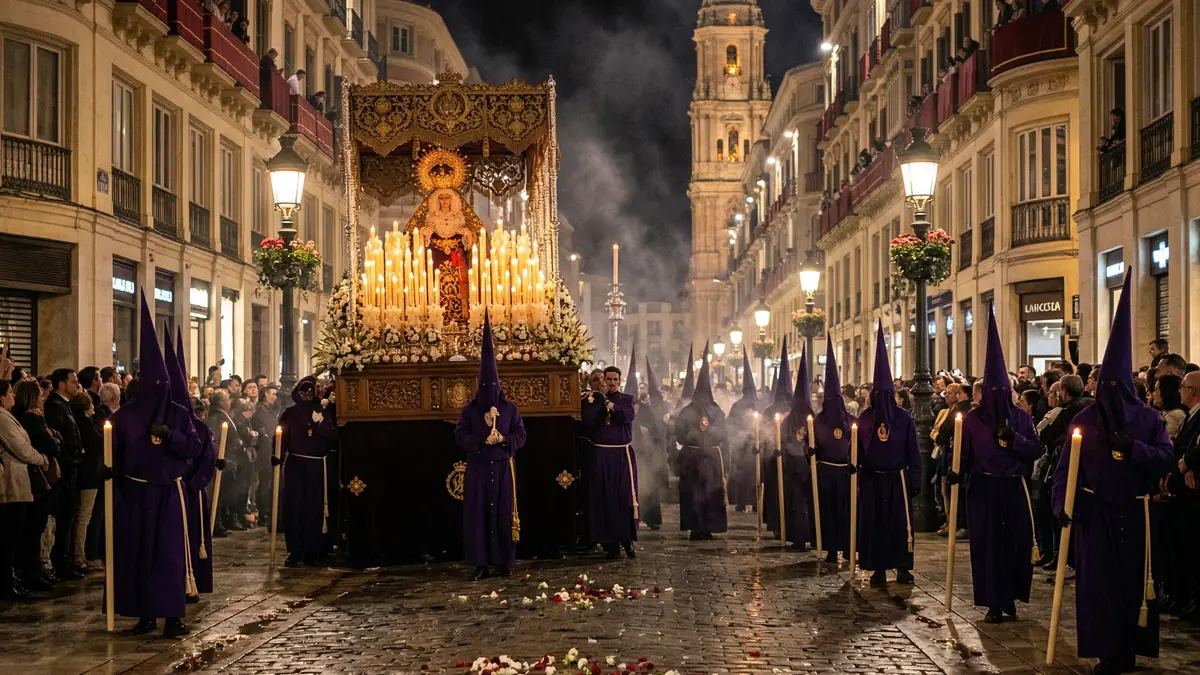
The most intense week in Malaga. More than 40 processions move through the historic centre over seven days – hooded penitents carrying massive wooden floats bearing statues of Christ and the Virgin, accompanied by marching bands and the kind of silence that makes a city hold its breath. This is not a tourist event. It is the emotional centrepiece of the Malaga calendar and nothing else comes close.
The highlight: The Spanish Legion procession – soldiers carrying the Cristo de la Buena Muerte float with military precision – is one of the most striking scenes in all of Holy Week Spain. The Prisoner Release (Pedrá) ceremony at the Cathedral on Good Friday is another.
Main route: Plaza de la Constitución → Calle Larios → Cathedral → Port. Most processions branch into surrounding streets – the whole historic centre becomes the stage.
Cost: Street viewing is free. Paid seating (butacas) along Calle Larios costs typically €10–30 depending on position and night.
Pros
- One of the most atmospheric events in Spain – genuinely moving
- Most viewing is free – just arrive early for a good spot
- Historic centre transforms completely – extraordinary atmosphere
- Palm Sunday and Good Friday processions are world-class
Cons
- City fills completely – book accommodation months ahead
- Traffic and metro disruptions on key nights
- Calle Larios extremely crowded – arrive 1–2 hours early
- Not suitable if you want beach or relaxed sightseeing
What to wear: Dress respectfully – no shorts or beachwear. Locals typically wear black or smart-casual. The atmosphere demands it and you'll feel out of place otherwise.
🌙 Noche en Blanco – 16 May 2026 (20:00–01:00)
One night a year, Malaga's museums, churches, galleries, and historic buildings stay open until 01:00 with free concerts, light installations, guided tours, and open-stage performances. It's a genuinely excellent evening – the Picasso Museum, Carmen Thyssen, Pompidou, and dozens of smaller spaces all participate.
Location: Historic centre – Calle Larios, Plaza de la Merced, Alameda Principal, and the port area.
Cost: Most activities free. Some special exhibitions or guided museum tours may cost €5–15.
Museums open late
Picasso Museum, Carmen Thyssen, Pompidou and smaller galleries open doors. Download the official programme in advance – it lists exact opening times and activities per venue.
Street performances and installations
Pop-up concerts, light shows, and open-stage performances across the historic centre and port. Best explored on foot – follow the crowds or the programme map.
Late-night galleries and closing events
Smaller galleries and churches stay open to midnight. Queues at the major museums thin out – this is the best window for the Picasso Museum if you haven't been yet.
💃 Feria de Malaga – 15–22 August 2026
The city's biggest party of the year. Eight days of flamenco, fairground rides, live music, and late-night dancing – split across two very different zones. The day fair in the historic centre is relaxed and family-friendly; the night fair at Cortijo de Torres is where the party actually lives.
Feria de día (day fair): Street performances, flamenco casetas, children's activities, and encierros charros (mock bull-running events) in the historic centre around Plaza de la Merced and the port. Mostly free. The atmosphere is festive but manageable.
Feria de noche (night fair): At Recinto Ferial del Cortijo de Torres – a short metro or bus ride from the centre. Huge fairground, live music tents, crowded dance areas, and bars open until dawn. Entry to the fairground from around €5–20 depending on the tent and night.
Choose this if...
Choose Feria if: you want to experience Malaga at its most uninhibited – flamenco dresses, live music until sunrise, and a city that genuinely lets go for a week. Go to both the day and night fairs for the full picture.
Avoid this if...
Avoid Feria if: you're planning a quiet cultural trip – August in Malaga is hot, crowded, and expensive even without the fair. If you want Semana Santa-style atmosphere, that's a different event entirely.
What to wear: Many women wear trajes de flamenca (flamenco dresses) – both locals and visitors. Men go smart-casual or similarly dressed up. Comfortable shoes are essential: the fairground is large and you'll be on your feet for hours.
Practical Tips for Malaga Festivals
FAQ – Malaga Festivals
What is the biggest festival in Malaga?+
When is Semana Santa in Malaga in 2026?+
When is Feria de Malaga in 2026?+
Is Carnaval in Malaga worth visiting?+
What is Noche en Blanco in Malaga?+
What should I wear to Semana Santa in Malaga?+
How far in advance should I book a hotel for Malaga festivals?+
Plan Your Festival Visit to Malaga
Each of Malaga's major festivals offers something genuinely different – the solemn intensity of Semana Santa, the satirical chaos of Carnaval, the flamenco-and-fireworks energy of Feria. None of them require spending much money to experience. But all of them require planning ahead. For everything else the city offers outside festival season, the things to do guide and the old town guide cover the full picture.
Sources: Malaga city council festival listings, official event programmes.