Best Instagram Spots in Malaga 2026: Where to Take the Best Photos
Malaga is one of the most photogenic cities in southern Spain – and almost every shot worth taking is free. The old town is dense with good light, layered architecture, and narrow streets that frame the Cathedral towers perfectly. This guide covers the 12 best photo locations in Malaga for 2026, organised by neighbourhood, with the best times and practical tips for each.
Quick Takeaways
- ✓Golden hour is 1–2 hrs before sunset – best for Cathedral, Alcazaba, Calle Larios
- ✓Blue hour (just after sunset) is best for Muelle Uno and port reflections
- ✓Soho murals: midday for crisp colour, golden hour for warm surrounding light
- ✓Gibralfaro viewpoint: arrive 30–45 min before sunset – it fills up in summer
- ✓Almost all spots are free – only Alcazaba (~€3–5) and Gibralfaro (~€4–6) have entry fees
- ✓Pedregalejo and El Palo at sunrise: fewest crowds, best light on fishing boats
The best light in Malaga is at golden hour and blue hour. Plan your shots around those two windows and the city does the rest.
Old Town – Casco Antiguo
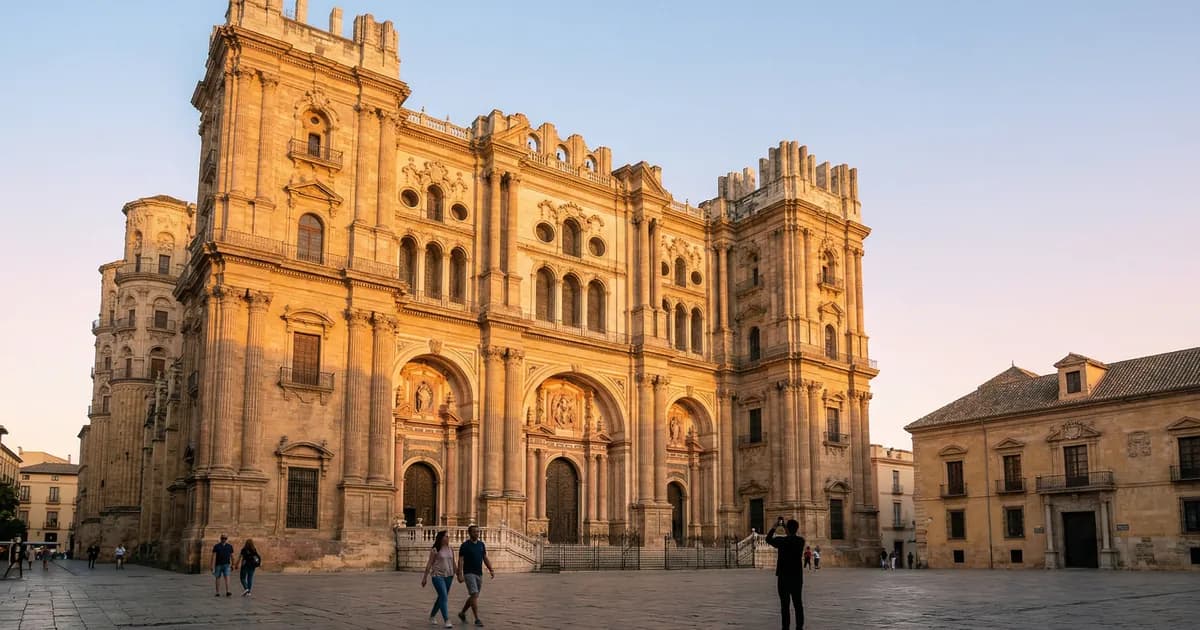
1. Malaga Cathedral (La Manquita)
The most iconic facade in Malaga. The twin towers, arched entrance, and surrounding palm and orange trees make this one of the most photographed buildings in Andalusia. The exterior is always free – the interior costs ~€4–6 and the rooftop ~€7–10.
Best time: Golden hour (late afternoon) for warm light on the ochre stone. Blue hour just after sunset when the cathedral is lit against the darkening sky.
Tips: Walk to Calle San Agustín for narrow-street leading lines toward the towers. Avoid harsh midday light in summer – the contrast between sun and shadow blows out easily. Full practical info in the Cathedral guide.
2. Calle Salinas and Calle San Agustín
Two narrow cobbled streets running alongside the Cathedral that create a "tunnel-vision" framing effect toward the towers. Free, always accessible. One of the most effective compositions in the old town – wide angle lens recommended for the full perspective effect.
Best time: Golden hour when the light hits the cathedral stone from the west.
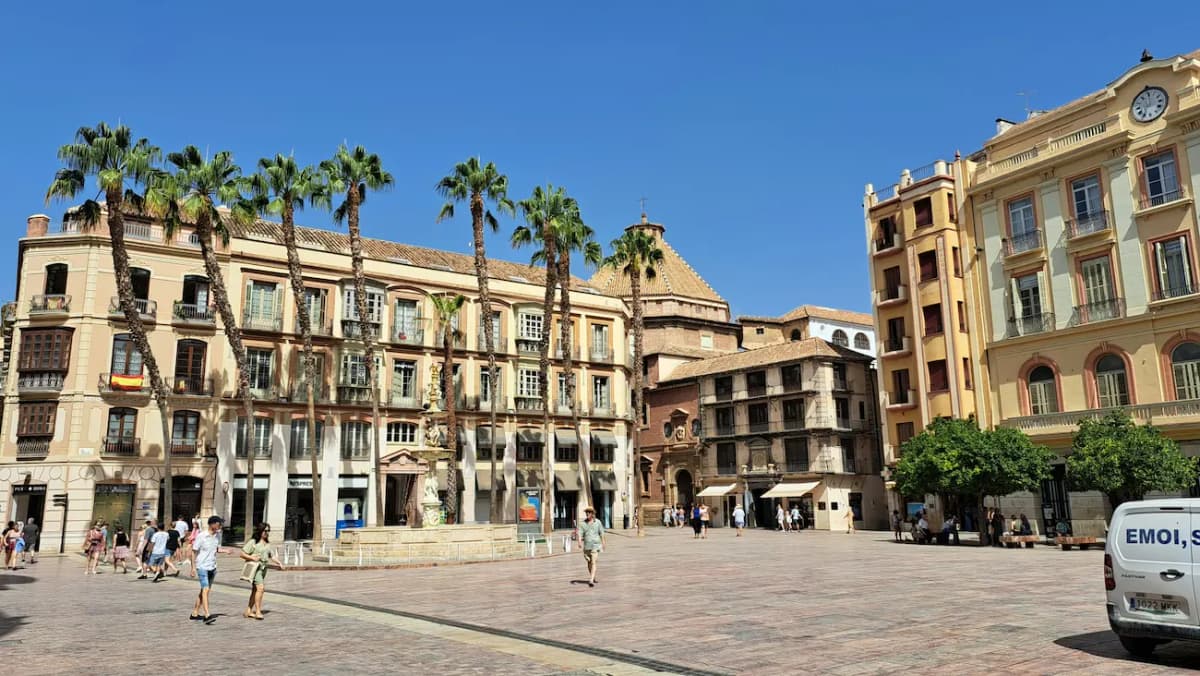
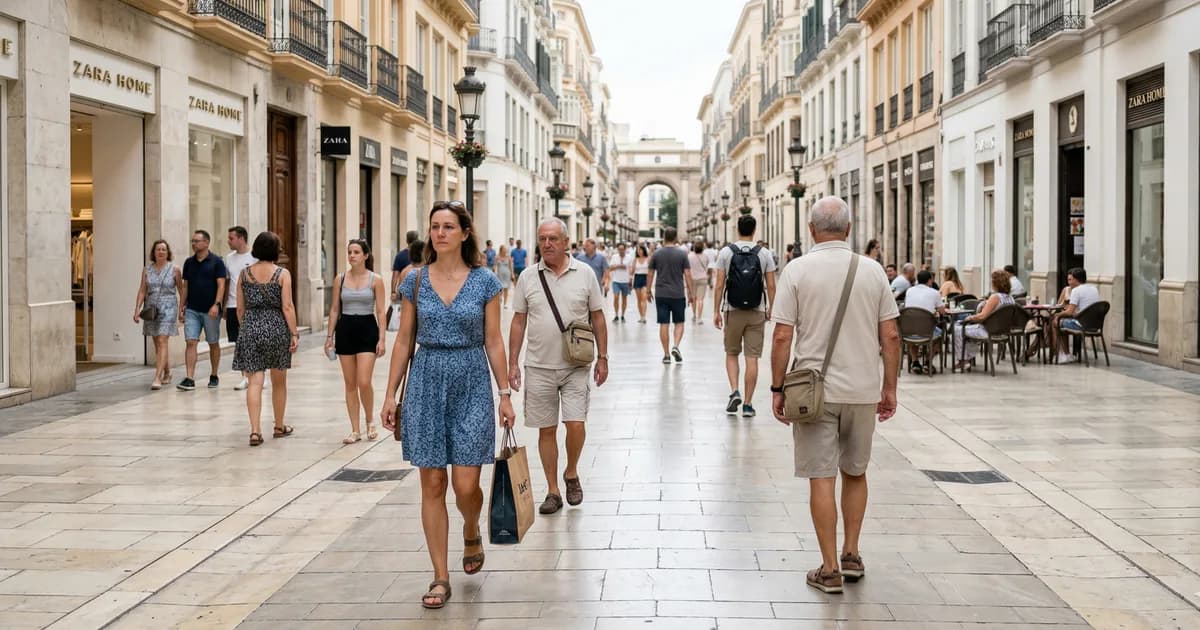
3. Plaza de la Constitución and Calle Larios
The symmetrical arcaded square and the wide pedestrian boulevard leading south from it. Colourful facades, 19th-century colonnades, and festive decorations during Christmas and Semana Santa make both endlessly photogenic. Always free, always open.
Best time: Golden hour for soft light on the balconies and facades. Blue hour when the surrounding buildings glow with warm interior lights. Shoot from the centre of the square for a symmetrical composition.
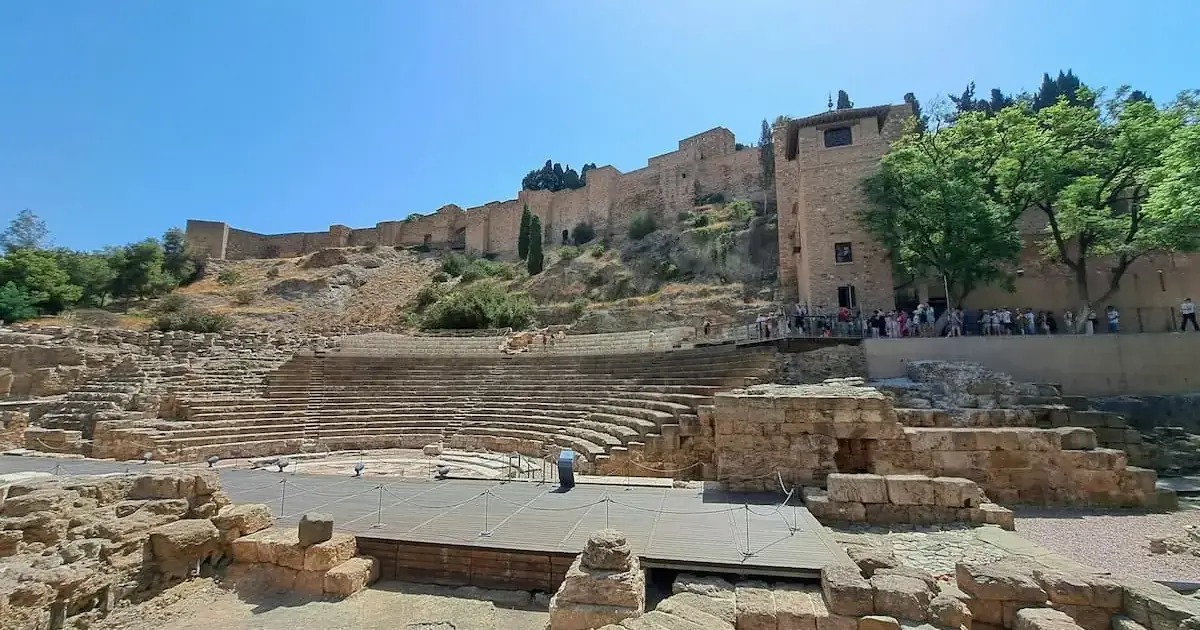
4. Alcazaba
Moorish courtyards, fountains, orange trees, and rampart terraces with framed views of the city and sea. Entry ~€3–5. The upper terraces give you both architectural foreground and a panoramic backdrop in the same shot.
Best time: Early morning for soft light and no crowds. Golden hour for warm light on the Moorish walls. Avoid harsh midday in summer – the contrast between shadowed arches and bright sky is difficult to expose for correctly. See the Alcazaba guide for what to see inside.
5. Plaza de la Merced and Picasso's Birthplace
A lively old-town square with good symmetry and a relaxed local atmosphere. The birthplace building and the surrounding cafe facades photograph well in morning light. Free, always accessible. Two minutes from the Picasso Museum.
Best time: Morning for soft directional light on the square's north-facing facades.
Soho and Lagunillas – Street Art District
6. Soho Murals
Malaga's street art neighbourhood is one of the best in southern Spain – large-scale commissioned murals by international artists cover entire building facades along Avenida del Comandante Benítez and the surrounding streets. The D*Face mural on the García Lorca school is one of the most shared images in the city. All free, always accessible.
Best time: Midday for the crispest colours on large murals. Golden hour for warm light on the surrounding buildings. Wide angle lens for full-wall compositions; low angles for dramatic perspective.
7. Plaza de la Judería (Hidden Street Art Square)
A quiet square near the Arab baths in the old town with a street art wall, fountain, and tree cover. Less visited than the Soho district – the fountain and trees give you natural foreground elements to frame the mural behind. Free, always accessible.
Best time: Golden hour for soft light on the murals and the historic square surroundings.
Port Area – Muelle Uno and La Farola
8. Muelle Uno Promenade
Modern sculptures, wave-like white structures, palm-lined walkways, and yacht reflections make the port one of Malaga's most versatile photo locations. Free to walk at any hour. Drinks at port terraces from around €8–15 if you stop.
Best time: Sunset for golden light on yachts and architecture. Blue hour for long exposures with port lights reflecting in the water. Shoot from the far end near the lighthouse for a long-shot composition with the port receding into the background.
9. La Farola de Malaga (Lighthouse)
The white lighthouse at the end of Muelle Uno gives you panoramic views of the Mediterranean, the city skyline, and the port in a single frame. Free, always accessible.
Best time: Sunset for dramatic light on the white structure. Blue hour when the lighthouse is lit and the port glows behind it. Wide angle from the side includes both the lighthouse and the port in one shot.
10. Plaza de la Marina and Palmeral de Las Sorpresas
The fountain at Plaza de la Marina and the palm-lined promenade of the Palmeral de Las Sorpresas (Paseo de las Sorpresas) run between the old town and the port – a natural connector with good leading lines and reflecting surfaces. Free, always accessible.
Best time: Sunset for soft light on the fountain. Use slow shutter speeds to blur the fountain water against a sharp background.
Viewpoints
11. Mirador de Gibralfaro
The best panoramic shot in Malaga – 360-degree views of the city, port, La Malagueta beach, the bullring, and the Mediterranean all in one frame. Free public viewpoint, open 24 hours. The castle next to it costs ~€4–6 and gives slightly different framing from the rampart walls.
Best time: 30–45 minutes before sunset to secure a spot and get the golden-hour light. Blue hour when the city lights come on and the sea darkens. Tripod useful for long exposures at dusk. Full guide in the best viewpoints article.
Beach Areas
12. Pedregalejo and El Palo
Traditional fishing neighbourhood east of the city with wooden chiringuitos, colourful boats, and espeto grills on the sand. The least tourist-facing beach area in Malaga – at sunrise the light is excellent and the beach is nearly empty. Bus 11 or 21 from Alameda. See the beaches guide for the full area overview.
Best time: Sunrise for the softest light and empty beach. Golden hour for warm light on the fishing boats and chiringuito structures. Long-exposure wave shots work well here at blue hour.
Practical Tips for Photographers in Malaga
All prices are approximate and may vary by season – check official websites before visiting. and within walking distance of each other in the old town and port area. The two paid sites worth including for photography – Alcazaba and Gibralfaro Castle – both have strong visual payoff relative to the entry cost. For a full day of shooting, combine the old town and Cathedral in the morning, Soho murals at midday, and Muelle Uno and Gibralfaro at golden hour and blue hour.
FAQ – Instagram Spots in Malaga
What is the most photogenic spot in Malaga?+
When is the best time to photograph Malaga?+
Where is the street art in Malaga?+
Are there free Instagram spots in Malaga?+
Where is the best sunset view in Malaga for photos?+
What lens should I use for Malaga street photography?+
Plan Your Photography Day in Malaga
A full photography day in Malaga works well in three blocks: old town and Cathedral in the morning, Soho murals and hidden gems at midday, Muelle Uno and Gibralfaro at golden hour and blue hour. That covers architecture, street art, panoramic views, and port reflections in a single day – almost all of it free.