Malaga Old Town 2026 — Complete Guide to Casco Antiguo
Malaga Old Town — the Casco Antiguo — is the reason most people come to this city, even if they don't know it yet. Within roughly one square kilometre: a Moorish fortress, a Roman theatre, the birthplace of Picasso, a cathedral missing one tower, and more tapas bars per street than you'll manage in a week.
This guide covers what to see, what to skip, the best streets and squares, where to eat, and how to avoid the rookie mistakes.
Quick Takeaways
- ✓The Old Town is walkable in 2–3 hours at a casual pace — all main sights are within 10 minutes of each other on foot.
- ✓Go early (before 10am) or late afternoon (after 5pm) — midday in summer is brutal and the streets are at their most crowded.
- ✓Alcazaba (€7) and Picasso Museum (€13) both need advance booking in summer — don't assume you can walk up.
- ✓Calle Larios is the spine of the old town but the best streets run off it — explore Granada, Marqués de Larios and the alleyways behind the cathedral.
- ✓Plaza de la Merced is where locals actually sit. Plaza de la Constitución is where tourists take photos. You want both.
- ✓A guided walking tour is the fastest way to understand the layers of history — Roman, Moorish, Christian and modern all exist on top of each other.
| Sight | Ticket | Time needed | Book ahead? |
|---|---|---|---|
| 🏆 Alcazaba | €7 (or €9.50 + Gibralfaro) | 45–60 min | Yes — summer |
| 🏆 Picasso Museum | €13 | 1–2 hrs | Yes — Apr–Sep |
| 💰 Cathedral | €6 | 45 min | No |
| 🎯 Roman Theatre | Free | 20 min | No |
Jump to: What is the Old Town? · Key Streets · Top Sights · Best Squares · Tapas & Restaurants · Shopping · Where to Stay · Practical Tips · FAQ
The Old Town sits at the natural centre of the city — 15 minutes from the train station, 10 minutes from the port, and a straight walk to the beach.
What is Malaga Old Town?
The Casco Antiguo is the historic heart of Malaga — roughly bounded by the port to the south, the Alcazaba hill to the east, and the Alameda Principal boulevard to the west.
What makes it unusual is the density of history. The Romans built a theatre here in the first century BC. The Moors built a fortress above it in the 11th century. The Christians built a cathedral in the 16th century — and ran out of money before finishing the second tower, which is why it's been called La Manquita (the one-armed woman) ever since.
Picasso was born in a flat on the main square in 1881. All of this is within comfortable walking distance of a glass of cold Málaga wine and a plate of anchovies.
Key Streets
Calle Larios
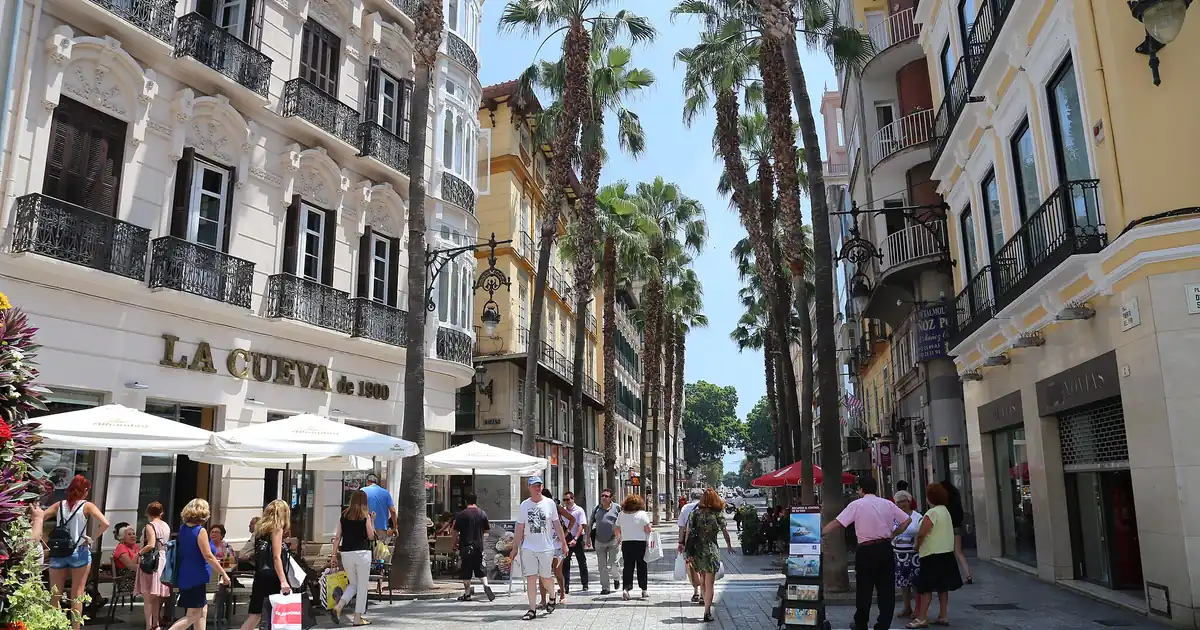
The main artery — a wide, marble-paved pedestrian street running from the Alameda Principal up to Plaza de la Constitución. It's where the Christmas lights go up in December (genuinely spectacular), where the Semana Santa processions pass, and where every visitor ends up eventually.
It's also lined with chains — Zara, H&M, the usual. Good for orientation, less good for shopping if you want something local.
Calle Granada
One block east of Larios, and considerably more interesting. Bars, independent restaurants, ceramics shops, a few small galleries. The quality of places goes up the further from the tourist core you get.
Calle Marqués de Larios & the Cathedral Streets
The streets immediately around the cathedral — Calle Molina Lario, Calle Santa María, the lanes behind the Bishop's Palace — are some of the best in the city. Old buildings, decent bars, and a quieter atmosphere than the main drag.
The streets behind the cathedral to the northeast — Calle Cañon, Calle Fresca — have some of the better local tapas bars. Three minutes from the tourist centre, prices reflect it.
Soho (Just South of the Old Town)
Technically not the Casco Antiguo, but directly adjacent. The street art district around Calle Lagunillas and Calle Tomás Heredia has murals from international artists and an increasingly decent bar scene. Ten minutes from the cathedral — worth the detour.
Top Sights
Alcazaba
The 11th-century Moorish fortress above the old town is the most atmospheric thing in Malaga. Ticket is €7 (or €9.50 combined with Gibralfaro Castle).
The views from the upper terraces over the city and port are excellent. The palace rooms give a genuine sense of the Moorish court that existed here before the Reconquista. Allow 45–60 minutes. Go early — by 11am in summer it's significantly busier.
Full guide at Malaga Alcazaba.
In summer (June–September) both the Alcazaba and Picasso Museum regularly sell out same-day. Book online before your visit — don't assume you can walk up on the day.
Roman Theatre
Free, and directly at the foot of the Alcazaba. The first-century BC theatre was only rediscovered in 1951 — it had been built over and forgotten, only found during construction work.
Walk around the perimeter for free; there's a small visitor centre too. Takes 15–20 minutes. Worth it, costs nothing. Roman Theatre Malaga
Picasso Museum
The collection spans 233 works across Picasso's career — ceramics, sculpture and the paintings you'd expect. Tickets are €13; book in advance during spring and summer. The museum is housed in the 16th-century Buenavista Palace, which is itself worth seeing.
If you're not a committed Picasso person, an hour is enough. If you are, budget two. Full guide at Picasso Museum Malaga.
Malaga Cathedral (La Manquita)
The unfinished cathedral is one of the most distinctive buildings in Andalusia. The missing south tower was never completed — funds were reportedly redirected to support the American War of Independence, though historians debate this.
Entry is €6, and there's a roof tour that gives views over the old town. The choir stalls inside are the standout — carved in the 18th century and genuinely impressive. Malaga Cathedral guide
Picasso Birthplace (Casa Natal)
The flat on Plaza de la Merced where Picasso was born in 1881 is now a small museum. Entry is around €3 — not as comprehensive as the Picasso Museum but worth 30 minutes if you're interested in the person behind the work.
The Casa Natal is often overlooked in favour of the main Picasso Museum. If you're visiting both, do the birthplace first — it gives context for the work you'll see later.
Best Squares
Plaza de la Merced
The large square where Picasso was born. It has a central obelisk, outdoor seating, and a genuinely local atmosphere — families, students, far fewer coach-tour groups than the other squares.
The bar terraces around the edges are decent and not aggressively tourist-priced. Go in the early evening when the light is good and the square fills up.
Plaza de la Constitución
The main tourist square, anchored by the Renaissance fountain. It's where the Christmas lights start each year and where most walking tours begin. Good for a coffee — less good for lunch, as the restaurants on the perimeter are average and overpriced.
Plaza del Obispo
The small square directly in front of the cathedral's main façade. Best visited in the late afternoon when the light hits the stonework properly. Significantly less crowded than the Constitution square despite being 50 metres from it.
Tapas and Restaurants
The main rule: the closer to Calle Larios, the more you're paying for location. The interesting eating is on the streets running off it.
Best for tapas: Calle Granada and the area northeast of the cathedral. Look for places where the menu is in Spanish first. Full guide: best tapas bars in Malaga.
Best for a proper sit-down meal: Balausta at Palacio Solecio (Michelin-trained kitchen, book ahead), or El Pimpi on Calle Granada — a Malaga institution running since 1971 that still earns its reputation.
Best for breakfast: Mercado de Atarazanas on Calle Atarazanas, open weekday mornings. Proper coffee, fresh produce, the city going about its actual morning.
El Pimpi is touristy — it knows it, and doesn't care. Go for wine and a couple of tapas rather than a full meal, and you'll leave happy. The bodega barrels signed by celebrities are part of the experience.
For the full picture across the city: best restaurants in Malaga guide.
Shopping
Calle Larios has the chains. The more interesting shopping is elsewhere:
Local food & drink: Mercado de Atarazanas for fresh produce, local wine, and cured meats. The stalls at the back sell Málaga Dulce wine and local olive oil at reasonable prices.
Ceramics & crafts: Calle Granada has several shops selling Andalusian ceramics actually made in the region. Prices vary — shop around.
Books & art: The area around Plaza de la Merced has independent bookshops and small galleries. Worth a browse.
For everything from markets to malls: Malaga shopping guide.
Where to Stay
Staying in the Old Town puts everything on foot. The trade-off: it's a tourist area — expect noise on weekends and higher prices than Soho or the beach districts.
Best option in the Old Town: Palacio Solecio — an 18th-century palace with a Michelin-trained restaurant and rooms with genuine character rather than generic boutique aesthetics. The most expensive option, but earns it.
For a full comparison at all price points: where to stay in Malaga guide. For design-led options: boutique hotels guide.
Practical Tips
Getting there: Walkable from the train station (15 minutes) and from the port (10 minutes). The airport train drops you at Málaga-Centro station, a 5-minute walk from Calle Larios. If you're driving, don't — the centre is pedestrianised and parking is expensive.
Getting around: Everything is on foot. Streets are cobbled in places — wheeled luggage is more of an effort than you'd expect.
Guided vs self-guided: A good guide makes a real difference here. The layers of history (Phoenician, Roman, Moorish, Christian) aren't obvious unless someone explains them. The Old Town walking tour on GetYourGuide is 2 hours, starts at the glass pyramid on Alcazabilla Street, and covers all the main sights. From $14.
For a full day-by-day plan: 3-day Malaga itinerary. For the whole city: complete Malaga travel guide.