Malaga Travel Tips 2026: Everything You Need to Know Before You Go
Reader Supported & Transparent
We keep Let's Go Malaga free by using affiliate links. If you found our guides helpful, booking your hotels, tours, or rental cars through our links earns us a small commission at absolutely no extra cost to you. It directly supports our local team!
Malaga is one of the easier Spanish cities to visit – the airport is well connected, the old town is walkable, and English gets you surprisingly far. But a few things catch first-time visitors off guard: meal times, the siesta lull, tipping culture, and just how hot July afternoons actually are. This guide covers the practical side of a Malaga visit so you can spend less time figuring things out and more time enjoying the city.
Quick Takeaways
- ✓Best months: May and September – warm, fewer crowds, prices 15–40% lower than August
- ✓Airport train to city centre: ~€1.80, runs every 20–30 min, takes 12 minutes
- ✓Dinner in Malaga starts at 20:30 – arriving at 19:00 means eating alone
- ✓Tipping: round up at bars, €1–2 per person at restaurants, not obligatory
- ✓City centre is walkable – Alcazaba, port, Picasso Museum all within 1–2km
- ✓Download offline maps before arrival – old town alleys have patchy data coverage
Get the timing right and Malaga rewards you. Miss it and you're fighting the heat, the crowds, and the closed shops at 3pm.
Best Time to Visit Malaga
May and September are the sweet spot for most visitors – warm enough for the beach, cool enough for long walks, and noticeably cheaper and quieter than peak summer. Hotels and flights in these months are often 15–40% lower than in July–August.
Spring and autumn (March–April, October–November) suit visitors focused on culture, hiking, and day trips rather than beach time. Mild temperatures, lighter crowds, and the best prices of the year outside of January.
Summer (June–August) is peak season – guaranteed sunshine but also the highest prices, the most crowded beaches, and midday heat that makes afternoon sightseeing uncomfortable. July and August see the strongest demand; book accommodation early if you're coming then.
Winter is covered in depth in the Malaga in winter guide – the short version is that it's mild, cheap, and underrated.
Choose this if...
Choose May or September if: you want the best all-round experience – warm sea, manageable heat, good availability, and a city that feels relaxed rather than overwhelmed.
Avoid this if...
Avoid mid-August if: you're mainly interested in monuments and city sightseeing rather than the beach. The heat and crowds make afternoon visits to the Alcazaba and old town genuinely unpleasant.
Getting to Malaga
By Air
Malaga–Costa del Sol Airport (AGP) is one of the busiest in Spain, with direct connections from most UK and Irish cities year-round and additional routes from across Europe in summer. It's 8km southwest of the city centre – easy to reach by train, bus, or taxi.
The airport train is the best value option if you're heading to the city centre or the main beach area. It stops at Malaga-Centro Alameda station, right in the heart of the city. Note: the train stops earlier in the evening than the bus – check the last departure if you're arriving late.
By Train and Bus
From Seville or Córdoba, AVE high-speed trains reach Malaga in 2–3 hours. From Madrid the journey is longer and sometimes requires a change. Buses from Granada are a popular option – typically 1.5–2 hours and often cheaper than the train. See the public transport guide for routes and booking tips.
Getting Around Malaga
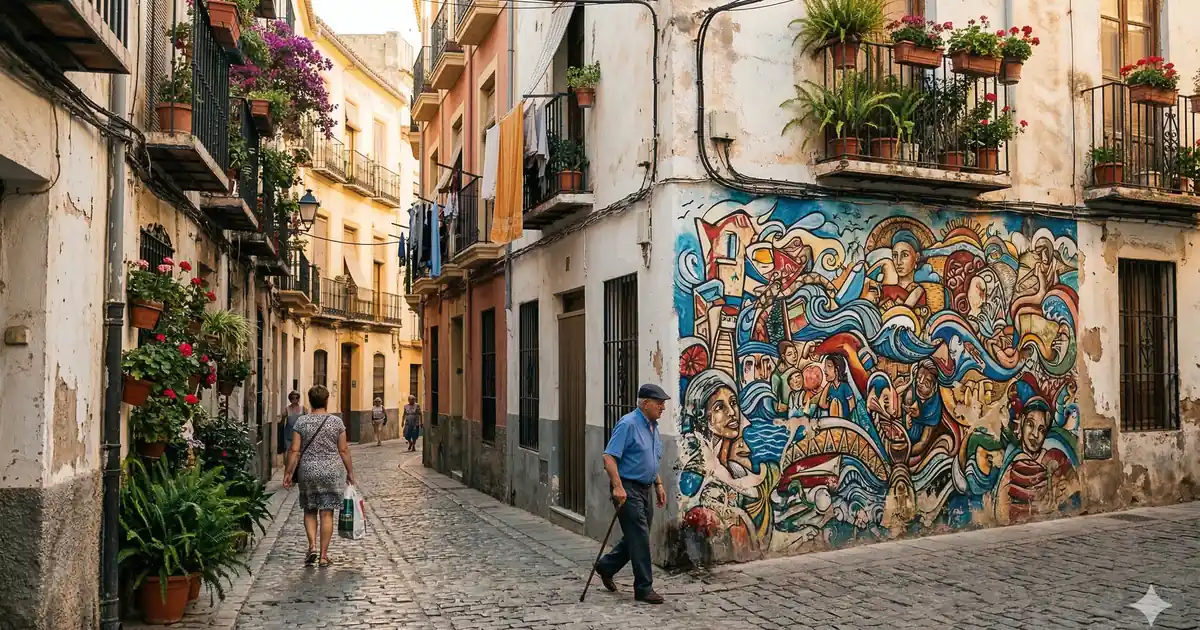
The historic centre is compact. The Alcazaba, Roman Theatre, Picasso Museum, Cathedral, and port all sit within a 1–2km radius – you can cover most of central Malaga on foot without needing a bus or taxi. Wear comfortable shoes with grip; the old town streets are cobbled and slightly hilly around the Alcazaba.
Public Transport
If you'll use buses more than a few times, the 10-ride Multiviajes card cuts the per-ride cost significantly. The CTMAM multi-modal card reduces it further if you're combining bus, metro, and tram across multiple days.
Taxis are metered – a short city journey runs roughly €6–12. Uber and Bolt both operate in Malaga and are useful if you're unsure about the meter or want a price estimate before getting in.
Money and Tipping in Malaga
Cards are widely accepted in shops, hotels, and restaurants. Small cafés, market stalls, and some ticket machines still prefer cash – carry a small amount of coins for these situations, particularly €1 and €2 pieces.
Tipping culture is relaxed in Spain:
- Everyday cafés and bars: No tip expected. Rounding up (€1.30 → €2) is generous enough.
- Tapas bars: €1–2 per person, or round up the total. Leaving small coins is natural.
- Restaurants: 5–10% for good service at a sit-down meal. Not obligatory.
- Taxis: Round up to the nearest euro – no percentage calculation needed.
Language Tips
Spanish is the main language, but Malaga is very English-friendly in the main tourist areas. Staff at central restaurants and hotels usually speak basic English. In smaller neighbourhood bars and shops, a few words of Spanish go a long way.
Useful basics:
- Greeting: "Buenos días" (morning) / "Buenas tardes" (afternoon)
- Table: "Una mesa para dos, por favor" – a table for two, please
- Bill: "La cuenta, por favor"
- Thank you / Please / Excuse me: "Gracias" / "Por favor" / "Perdón"
Attempting even a few words of Spanish is almost always met warmly – locals appreciate the effort and often switch to English immediately.
Useful Apps for Malaga
- Google Maps / Apple Maps: Real-time walking, bus, and metro routes. Download offline maps before arrival – old town alleys have patchy data coverage.
- EMT Malaga / Metro Málaga: Official apps for real-time bus and metro schedules.
- Uber / Bolt: Pre-booked rides with fare estimates – more reliable than street taxis at peak times.
- Airalo / Nomad: eSIM apps for buying a Spanish data plan before you land – useful for short stays.
SIM Cards and Connectivity
Spain has good 4G/5G coverage across Malaga city and the Costa del Sol. Options for staying connected:
Prepaid SIM: Vodafone, Orange, and Movistar sell tourist-friendly prepaid SIMs at the airport and city-centre stores – typically around €10–20 with large data allowances.
eSIM: Global apps like Airalo or Nomad let you activate a Spanish data plan as soon as you land, for roughly €10–20 for 1–4 weeks. Convenient for short stays without needing to find a shop.
What to Pack
Pros
- Comfortable walking shoes with grip – cobbled streets everywhere
- Swimsuit and quick-dry towel – even in spring and autumn
- Light layers – mornings and evenings cooler than midday
- High-SPF sunscreen – UV is strong even in May and October
- One smart-casual outfit – locals dress up more than northern Europe
Cons
- Heavy luggage – old town streets have no lifts or smooth pavements
- Bulky waterproof – a compact packable one is enough
- Too many shoes – one walking pair and one evening pair covers everything
- Excessive cash – cards work almost everywhere in the city centre
A small reusable water bottle is worth packing for summer – staying hydrated matters a lot in the heat and refill points are available across the city.
Customs and Etiquette
Meal times: Lunch is 13:30–16:00, dinner from 20:30. Arriving at a restaurant at 19:00 in summer means eating alone – locals don't show up until 21:00. Smaller shops may close 14:00–17:00 for the siesta lull.
Tapas culture: When sharing plates, offer the last piece rather than taking it. Ordering one at a time and seeing what arrives is more natural than ordering everything upfront.
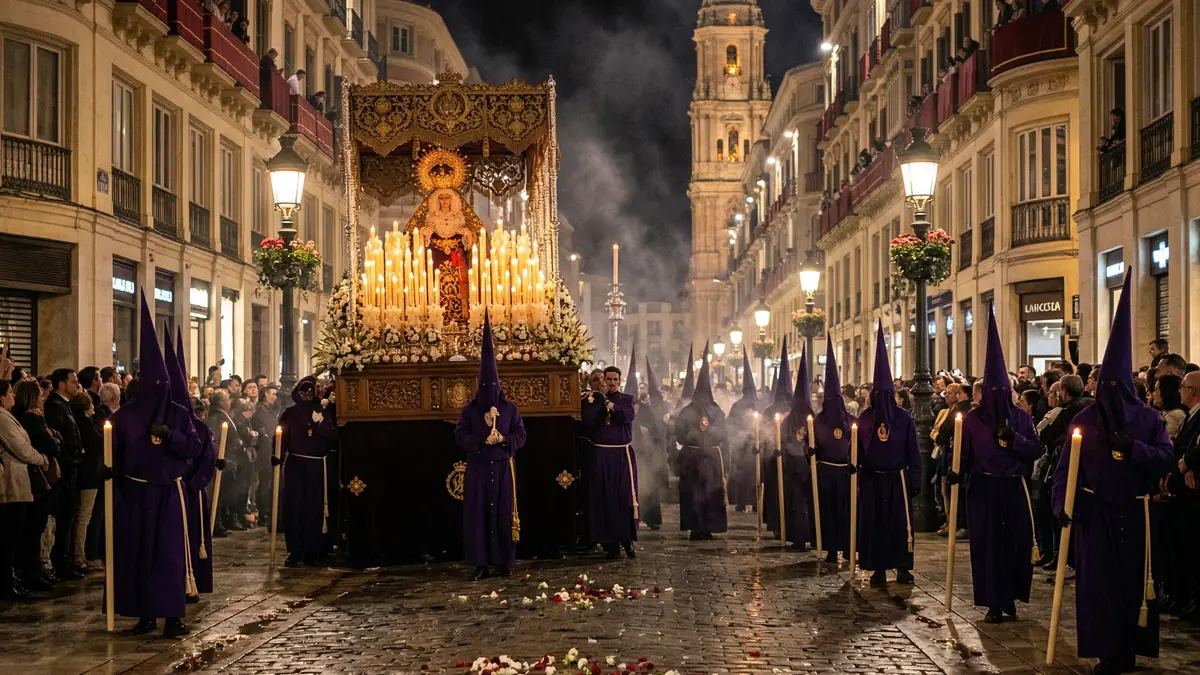
Festivals: During Feria de Málaga (15–22 August 2026), Semana Santa (Easter), or local religious processions, keep a respectful distance from official processions and dress modestly around churches.
Entering shops and bars: A simple "buenos días" when you walk in sets a friendly tone. Staying silent feels rude in local culture – the greeting costs nothing.
FAQ – Malaga Travel Tips
What is the best time to visit Malaga?+
How do I get from Malaga airport to the city centre?+
Do I need cash in Malaga?+
What is the tipping culture in Malaga?+
Is English widely spoken in Malaga?+
How do I get around Malaga city?+
What should I pack for Malaga?+
Ready to Visit Malaga
The practical side of Malaga is straightforward once you know the rhythm – early morning for monuments, midday for the beach or a café, evening for tapas and walking. The rest mostly takes care of itself. For what to actually do once you're there, the things to do guide covers the full picture.
Sources: AENA airport data, EMT Malaga transport info, official tourism listings, personal visits (March 2026).