
Seven days on this coast by car covers far more than beaches: the mountain road to Ronda, the Moorish villages above Nerja, a gorge walkway pinned to a cliff, and Tarifa with Africa 14 km off. The route below runs east from Málaga, turns inland, then finishes at the southern tip of Spain. Three bases, about 450 km, and only two tickets you must buy before you fly.
| Days | Plan | Base | Distance |
|---|---|---|---|
| 1–2 | Málaga city on foot | Málaga | – |
| 3 | Nerja and Frigiliana, east | Málaga | 60 km |
| 4 | Drive west, Mijas Pueblo on the way | Marbella | 60 km |
| 5 | Ronda, inland on the A-397 | Marbella | 60 km each way |
| 6 | Caminito del Rey or Gibraltar | Marbella | 90 or 100 km |
| 7 | Tarifa, then back to Málaga | Tarifa or home | 100 + 100 km |
The A-7 coastal motorway is the spine of the whole thing. The inland roads to Ronda and El Chorro are mountain roads that take longer than the map suggests, and that is the only place the timings get tight.
The two things to book before you leave home
Everything else on this route can be decided the night before. These cannot.
Caminito del Rey. The gorge walkway has a daily visitor cap and the year's tickets are released in a few large batches rather than on a rolling calendar, so popular dates disappear weeks or months ahead. General self-guided entry is €10 and the official guided visit €18, sold at caminitodelrey.info. The Caminito del Rey guide explains the batch system and what still works once your date shows sold out.
The hire car. Book it from Málaga Airport in advance – prices climb sharply close to the date in peak season, and the fuel policy and deposit terms matter more than the headline rate.
Lock those two in, then build the week around them.
Day 1–2: Málaga
Land, collect the car, drive into the city and then leave the car alone for 48 hours. Park at one of the central car parks – street parking in the old town is effectively impossible – and do the city on foot.
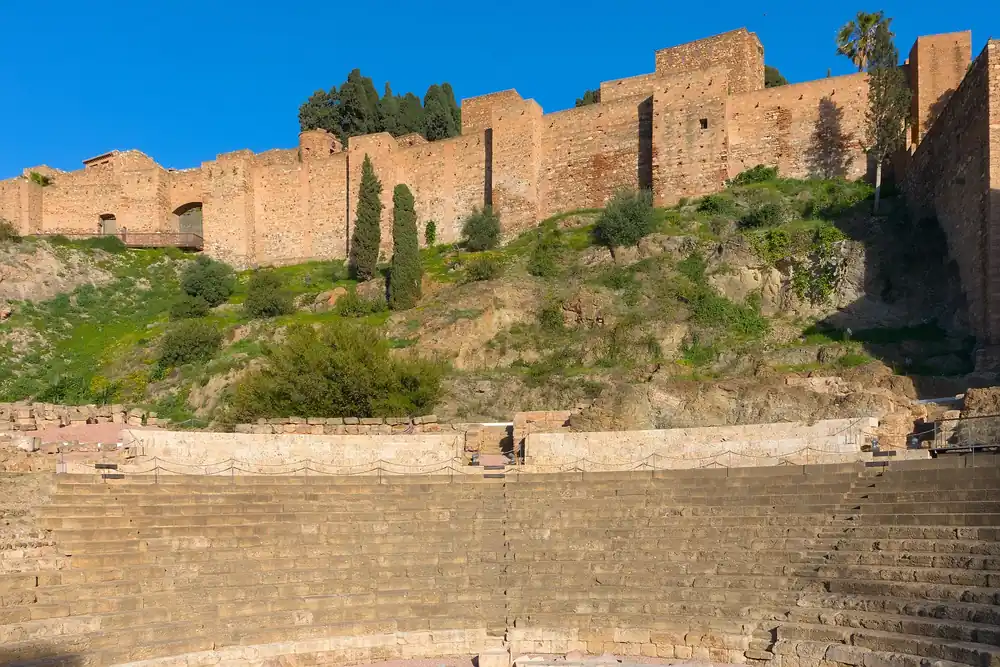
Day 1: the Alcazaba and Roman Theatre first thing while the stone is still cool, the Picasso Museum mid-morning with a pre-booked ticket, lunch somewhere in the old town, then the Centre Pompidou and Muelle Uno in the afternoon.
Day 2: the Carmen Thyssen, Gibralfaro Castle for the view down over the bullring and the port, and the Soho street-art district south of the Alameda.
Stay in the centre or Soho, within walking distance of all of it. Staying near the airport for a city visit is a false economy.
Day 3: Nerja and Frigiliana
East on the A-7, 60 km and about 55 minutes, with the sea in view for most of it.
Frigiliana first, arriving by 09:30. The village sits 7 km above Nerja and holds the most intact Moorish quarter in Andalusia – free to walk, steep, and completely different once the coaches land after 10:00. Two hours is right. Have coffee under the arches before driving down.
Nerja from around 12:00. The Balcón de Europa juts out over the coves, the old town lanes behind it are where lunch is, and Playa de Burriana and Playa de Calahonda below the cliffs are among the best beaches on this coast.
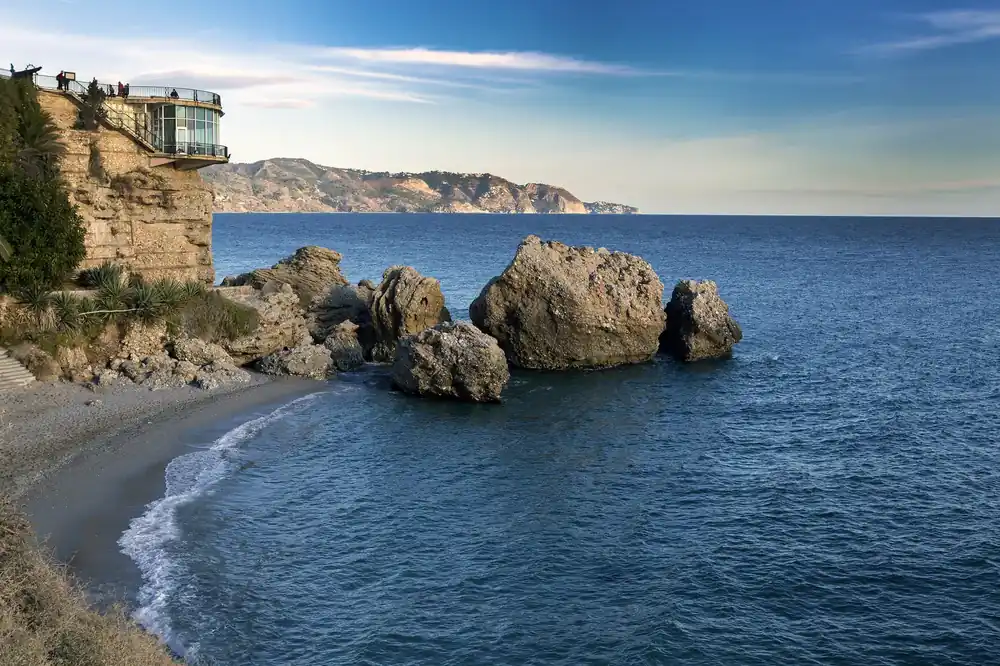
Drive back to Málaga for the night, or push straight on west to Marbella if you would rather have a shorter Day 4. The Nerja and Frigiliana guide has the caves and the full detail.
Day 4: west to Marbella
Málaga to Marbella is 60 km on the A-7 – 50 minutes in light traffic, considerably longer on an August afternoon. The drive runs past Torremolinos, Benalmádena, Fuengirola and Mijas Costa.
Worth one stop: Mijas Pueblo, the white village 5 km up the hill from Fuengirola. An hour covers the main square, the cliff path and the view down to the coast.
Check in at Marbella and leave the evening unplanned. The Casco Antiguo and a walk through Puerto Banús at dusk are both better without an agenda attached.

Day 5: Ronda, and the road that gets you there
The best day of the week, and half of that is the drive. The A-397 climbs from Marbella into the Serranía de Ronda in about 45 minutes, and the views keep improving the whole way up.
Ronda itself: the Puente Nuevo spanning the El Tajo gorge, the Arab Baths, the bullring and its museum, and an old town that rewards wandering. Allow four to five hours minimum. Arrive by 09:00 if you are driving yourself – the tour coaches start landing at about 10:30 and the viewpoints fill quickly.
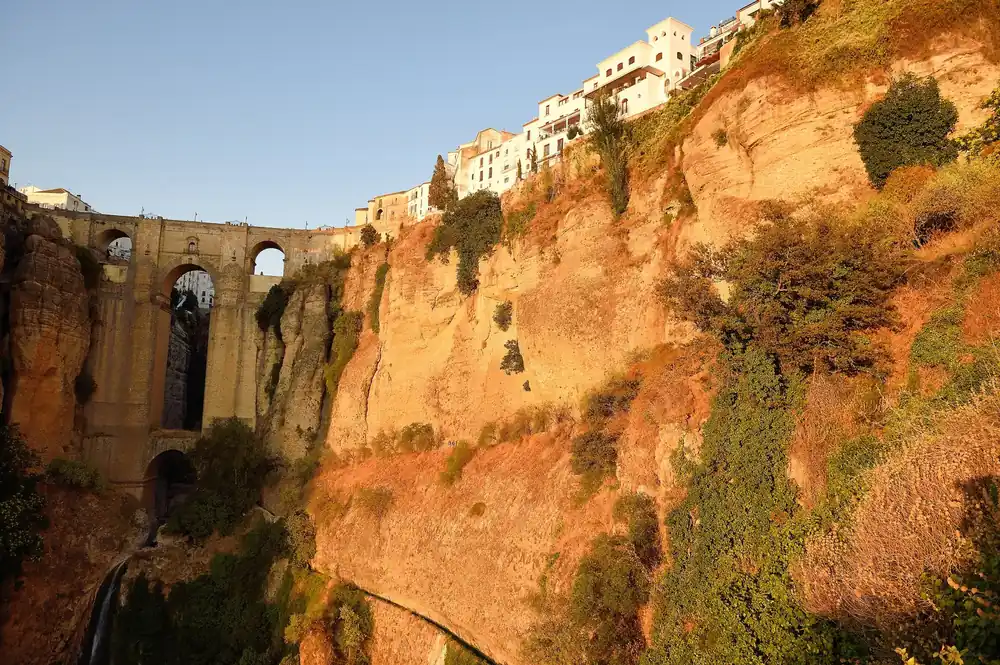
If you would rather not drive a mountain road twice in a day, a private Ronda tour from Marbella handles it and includes the bullring and tapas.
Optional add-on: Setenil de las Bodegas is 15 minutes from Ronda, a village built into and under overhanging rock faces. It adds about two hours and turns Day 5 into a nine to ten hour day.
Drive back down the same road and stop at a mirador for the coast.
Day 6: Caminito del Rey or Gibraltar
Two genuinely different days. Pick one rather than trying both.
Option A: Caminito del Rey
90 km north of Marbella near El Chorro. The 7.7 km boardwalk bolted to the walls of the Gaitanes Gorge, roughly 100 metres above the river, is the most dramatic walk in Andalusia and physically easy – wide, railed and one-way. Allow a full day including the drive, and remember the ticket had to be bought weeks ago.
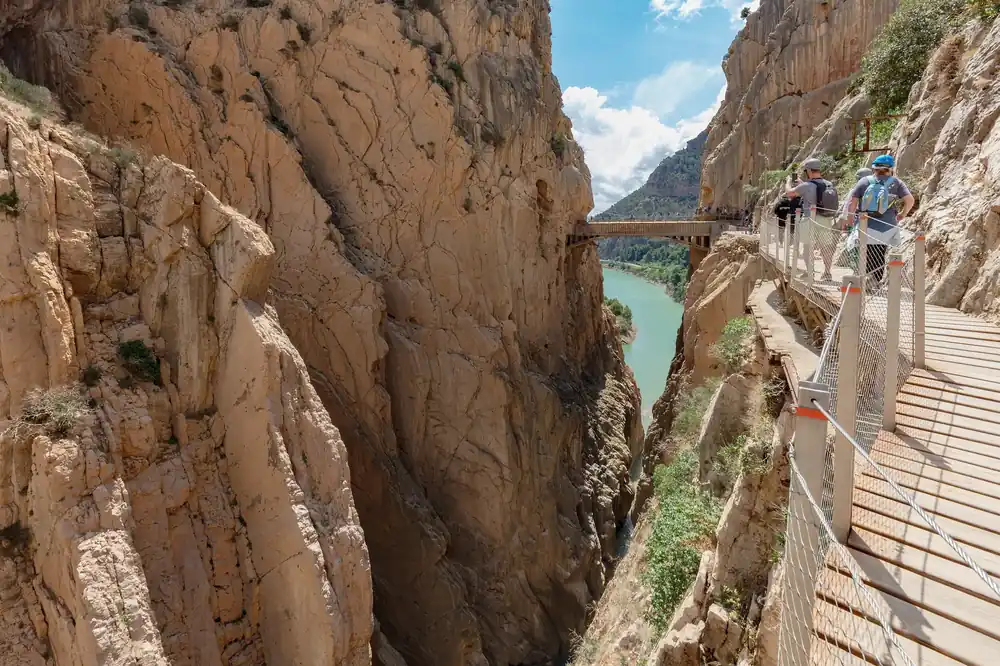
If your date is sold out on the official site, reseller entry-only allocations sometimes have slots inside two weeks at a small markup.
Option B: Gibraltar, now a much faster day
100 km south-west of Marbella, and this one changed in July 2026 in a way that most guides have not caught up with.
Since 15 July 2026, routine passport and customs checks have been removed from the Gibraltar–Spain land border. Full immigration control now happens at Gibraltar's own airport and seaport, jointly staffed with Spain, rather than at the land frontier. In practice you walk or drive across without a passport check and without the 30 to 60 minute summer queue that every older guide – this page included until today – tells you to budget for.
Carry your passport anyway. Spanish officers retain the right to check on public-security and migration grounds, and you are still crossing into a separate jurisdiction with its own currency. Gibraltar uses the pound; euros are accepted almost everywhere at a poor rate.

What that saves is roughly an hour of the day, which is what makes Gibraltar viable as a relaxed Day 6 rather than a scramble. Allow four to five hours including the drive. Park in La Línea and walk across rather than taking the car in – the town is small and its roads are not.
The Upper Rock Nature Reserve is the reason to come: the Barbary macaques, St Michael's Cave, the Great Siege Tunnels and a viewpoint that takes in Spain, Morocco and two seas at once.
One thing to know before you plan around it – the cable car has been closed since November 2025 for a full rebuild and is not expected back before around 2027. The Upper Rock is reached on foot or by licensed taxi tour instead, and the Gibraltar day trip guide covers both.
Day 7: Tarifa, then back
West from Marbella to Tarifa is 100 km and about 90 minutes through Estepona and Algeciras. The stretch along the Strait from Algeciras to Tarifa is one of the best drives in Spain: Africa across the water for most of it, wind turbines on the ridges, kitesurfers below.
Tarifa is the southernmost point of mainland Europe. The old town is compact and genuinely pretty – white Moorish lanes, the castle, the beach – and the wind is relentless, which is why this is the kite and windsurfing capital of Europe. Lunch overlooking the Strait, with Morocco 14 km off and looking closer.
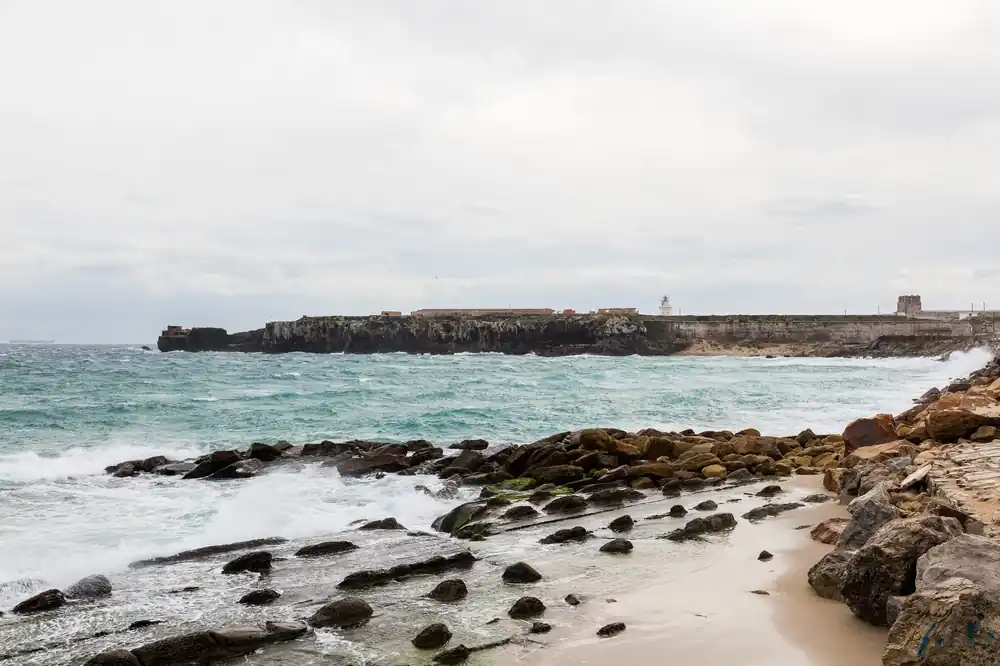
Then back along the A-7 via Estepona and Marbella, 100 km and 90 minutes without stops, to return the car. If your flight is early the next morning, staying in Tarifa the night before makes Day 7 far more relaxed than driving it twice.
Practical notes
The car. An economy car handles every road on this route. The one caveat is the mountain approach to Ronda and El Chorro in winter, where snow above 500 m is possible but rare between March and November. If you would rather not drive on arrival day, a private airport transfer can take you to the first hotel and you can collect the car on Day 3.
Tolls. The A-7 has tolled sections west of Málaga. Budget around €5–10 across the week, more if you use the full toll run in high season. The toll-free A-7 alternative runs parallel and goes through every resort, which in August costs an hour rather than ten minutes.
Petrol. Fill up in Marbella before the inland drives. Stations are sparse on the Ronda mountain road and around El Chorro.
Where to base. Two nights in Málaga and two in Marbella covers the whole route as day trips. Tarifa hotels book out fast in summer, so if you want that final night there, reserve it early.
Is seven days enough?
Yes, and the reason is the three-base structure rather than the number of days. Moving hotel every night on a route this compact wastes two hours a day on packing and check-in for no gain, because Ronda, Caminito del Rey and Gibraltar are all comfortable day trips from Marbella.
What seven days does not stretch to is Seville or Granada. Both are over two hours inland and adding either turns a relaxed week into a driving marathon – they deserve their own trip. The coast, the mountains behind it and the two straits are already more than a week's worth.
Four or five days? Cut both ends rather than compressing the middle. Drop Tarifa and one of Caminito del Rey or Gibraltar, keep Málaga, Nerja and Ronda, and use two bases instead of three. Five days is the point at which Ronda stops feeling rushed.
Ten days or two weeks? Add depth, not mileage. Ten days has room for Seville or Granada as a two-night side trip rather than a day trip, which is the only way either of them really works. Two weeks lets you do both, or simply stop moving for a few days.
Best months are April to June and September to October. Warm enough for the beach, cool enough that Ronda and the inland drives are pleasant, and without the July and August congestion on the coastal road.
FAQ – Costa del Sol road trip
Images: Grenzlandstern / CC BY-SA 4.0 / Wikimedia Commons
Reader Comments 💬
Share your experience or ask a question