Gibralfaro Castle Malaga 2026 — Tickets, Hours, Views & Getting There
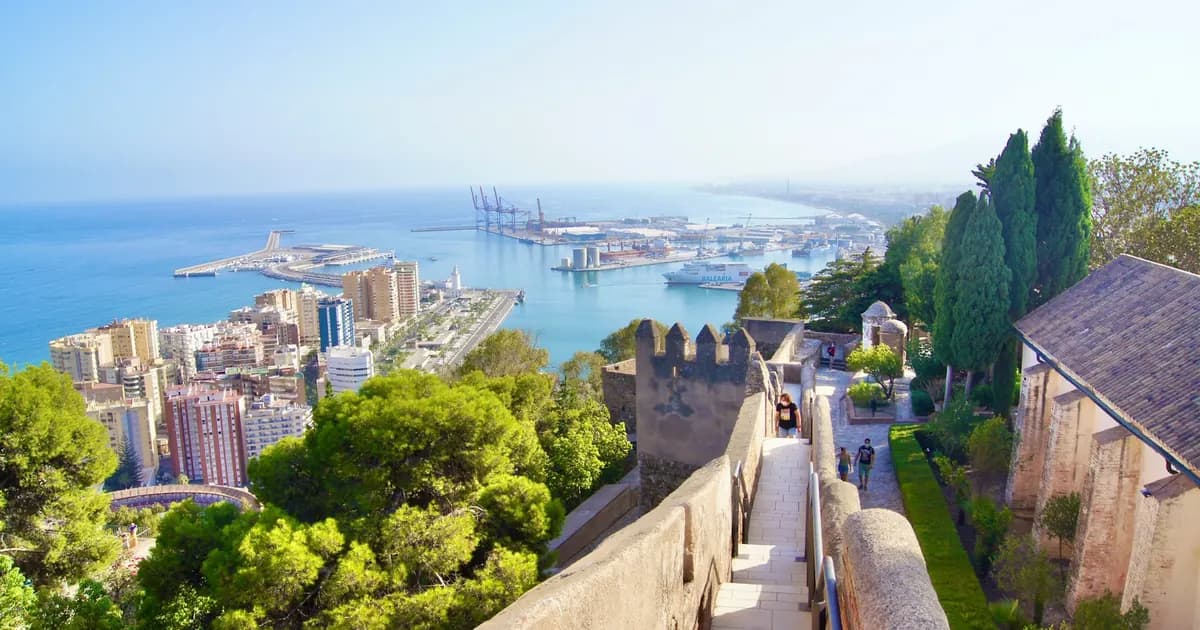
Gibralfaro Castle has the best 360° views in Malaga — the port, the bullring, the Alcazaba below, the Mediterranean stretching south, and on a clear day the mountains of Morocco. It's also free every Sunday afternoon after 2pm, which is the best deal in the city.
The castle sits 130 metres above the old town. Getting up there takes effort. The views make it worth it every time.
Quick Takeaways
- ✓Entry is €7 general. Free every Sunday from 14:00 — the best viewpoint in Malaga for zero cost.
- ✓Combined ticket with Alcazaba costs €10 and is valid for both sites within 48 hours.
- ✓Bus 35 from Plaza de la Marina takes 15–20 minutes. The walk up from the Alcazaba is steep but scenic — 20–30 minutes.
- ✓Winter hours (Nov–Mar): 09:00–18:00. Summer hours (Apr–Oct): 09:00–20:00. Open daily.
- ✓Torre Mayor is the 17m lookout tower — the highest point and the best vantage for photos.
- ✓Go at sunset. The light on the port and city is exceptional and the crowds thin out by late afternoon.
| Ticket | Price | Notes |
|---|---|---|
| 🏆 Combined (Alcazaba + Gibralfaro) | €10 | Valid 48hrs — best value |
| 💰 General entry | €7 | On-site or online |
| 🎯 Reduced (students, 65+, disabled) | €3 | ID required |
| Free | €0 | Every Sunday from 14:00 |
Jump to: Getting There · Opening Hours · Free Entry · What to See · The Views · History · Practical Tips · FAQ
Combine it with the Alcazaba below — the combined ticket saves money and the two sites make a logical half-day.
Getting There
Three options. Each has its case.
Bus 35 — the easy way
Bus 35 from Plaza de la Marina (by the port) runs directly to the castle entrance. Takes 15–20 minutes, runs every 20–30 minutes. Standard city bus fare (€1.40). The easiest option if you're coming from the centre without much energy for hills.
The Walk from the Alcazaba — the scenic way
A steep 20–30 minute uphill path — the Camino de Gibralfaro — connects the Alcazaba to the castle. It's a proper climb with uneven terrain, but the path winds through pine trees with partial views opening up as you go. Do this on the way up, take the bus down.
Walk up via the Camino de Gibralfaro and take Bus 35 back down. You get the scenic climb, the views at the top, and you don't have to negotiate the steep descent on tired legs. The bus stop is right at the entrance.
Taxi
Around €8–10 from the city centre. The sensible choice in July and August when walking uphill in 35°C heat is genuinely unpleasant.
Opening Hours
| Season | Hours | Last entry |
|---|---|---|
| Winter (Nov 1 – Mar 31) | 09:00–18:00 | 17:00 |
| Summer (Apr 1 – Oct 31) | 09:00–20:00 | 19:00 |
Open daily. No closing days.
In summer, the castle stays open until 20:00 — which means you can visit at golden hour (around 19:00 in April/May, 20:30+ in July) and still have time before last entry. Check sunset times for your specific dates and plan accordingly.
Free Entry
Every Sunday from 14:00 — free entry for everyone, no booking required. Just turn up.
This is the single best free thing to do in Malaga if you're there on a Sunday. The views are identical to the paid visit. The castle is slightly busier than on weekday mornings, but not significantly so in the afternoon.
Arrive at 13:50 on Sunday and you'll be first through when the free entry starts at 14:00. By 14:30 there's usually a small queue building — the early arrival advantage is real.
What to See
Torre Mayor
The 17-metre lookout tower at the highest point of the castle. This is where the views are best — a full 360° panorama with nothing blocking the sightlines. Allow time here; most people rush through. Climb is straightforward, no particular fitness required.
The Ramparts & Walls
The defensive walls are largely intact and you can walk along significant sections of them. The combination of the medieval stonework and the views below makes this the most photogenic part of the site. Early morning light hits the walls well if you're after photos.
Airón Well
A 40-metre deep well cut into the rock — one of the more unusual features of the castle. The depth is what strikes you when you look down. Dating from the Nasrid period, it was essential for surviving sieges.
Phoenician Bath Remains
Remnants of a much earlier settlement on this hill — Phoenician baths that predate the castle by over a thousand years. The castle was built on top of a lighthouse site; the baths are evidence of that earlier presence.
The Museum
A small exhibition covering the castle's history — the Nasrid construction, the 1487 siege, the Phoenician origins. Worth 20 minutes if you want context before walking the walls.
The Views
The view from Torre Mayor is the reason most people make the climb. What you can see:
- South: The port, Muelle Uno, the Mediterranean. On a clear day, the Rif Mountains of Morocco are visible on the horizon (about 150km away)
- West: The city centre, the bullring (Plaza de Toros), the Alcazaba directly below
- North: The mountains behind Malaga — the Montes de Málaga
- East: The beach districts, the coastline stretching toward Nerja
The best light for the port and city is in the late afternoon — roughly 16:00–18:00 in winter, 18:00–20:00 in summer. The bullring is particularly photogenic when the sun is low and the shadows are long. Sunset from Torre Mayor is one of the better experiences in Malaga.
History
The castle as it stands was built in the 14th century by Yusuf I, the Nasrid sultan of Granada, primarily to protect and reinforce the Alcazaba below. The name Gibralfaro comes from the Arabic Jebel-Faruk — "mountain of the lighthouse" — because a Phoenician lighthouse stood on this site long before any castle existed.
The most significant moment in the castle's history came in 1487, when the Catholic Monarchs Ferdinand and Isabella laid siege to Malaga during the Reconquista. The siege lasted three months. The city didn't fall by force — it surrendered when the population was reduced to starvation. The fall of Malaga was one of the decisive moments that led to the fall of Granada five years later.
After the Reconquista, the castle gradually lost military significance. By the 19th century it was largely abandoned. The restoration that created the current visitor site happened in the 20th century.
Practical Tips
Shoes: The terrain is uneven throughout — cobbled paths, steep sections, worn stone steps. Trainers or walking shoes. Not the visit for flip-flops.
Water & sun: There's minimal shade on the ramparts. In summer bring water and sun protection — the exposed walls get hot fast.
Wheelchair access: Not fully accessible. Some areas of the ramparts and the Torre Mayor climb are not suitable for wheelchairs or pushchairs.
Combining with the Alcazaba: The combined ticket (€10) covers both sites within 48 hours. The logical order is Alcazaba first (lower, less steep), then Gibralfaro. Walk up via the Camino de Gibralfaro between them — it connects the two sites directly. Full guide: Malaga Alcazaba.
For the full picture on viewpoints across the city — free and paid — the complete Malaga travel guide covers everything. The things to do in Malaga guide puts Gibralfaro in context with everything else worth your time.