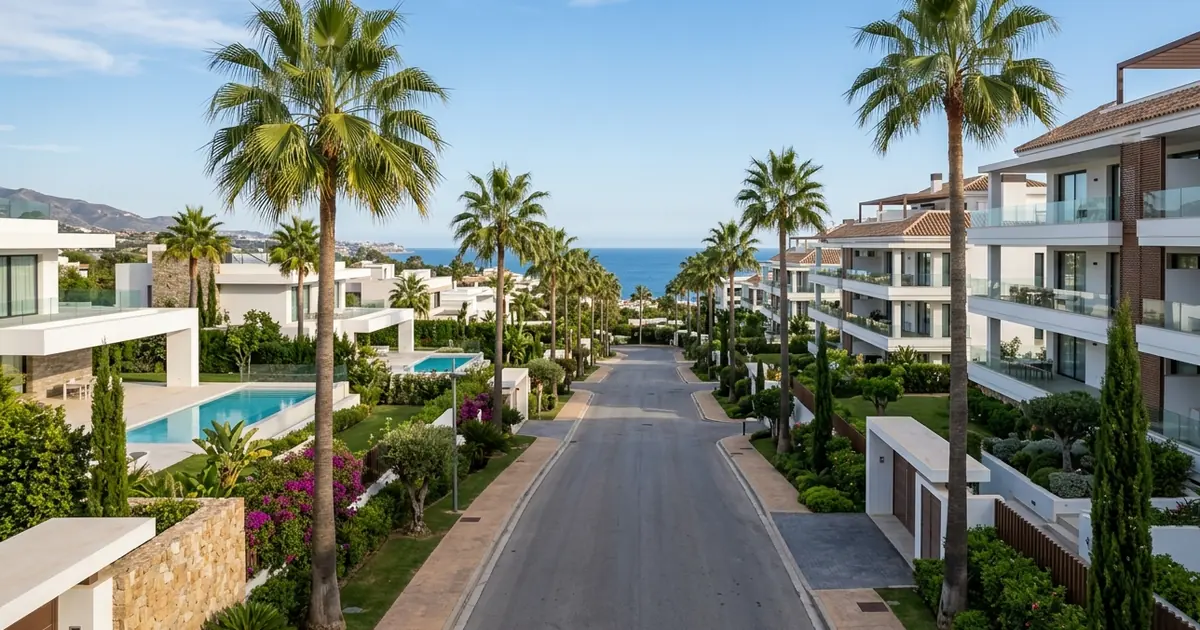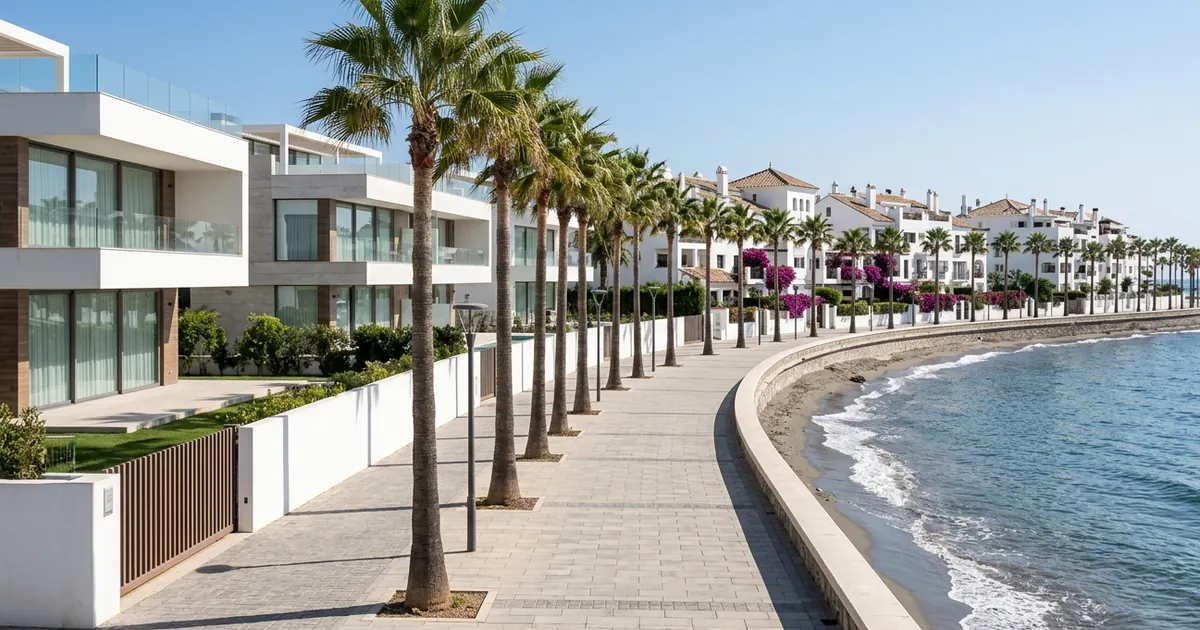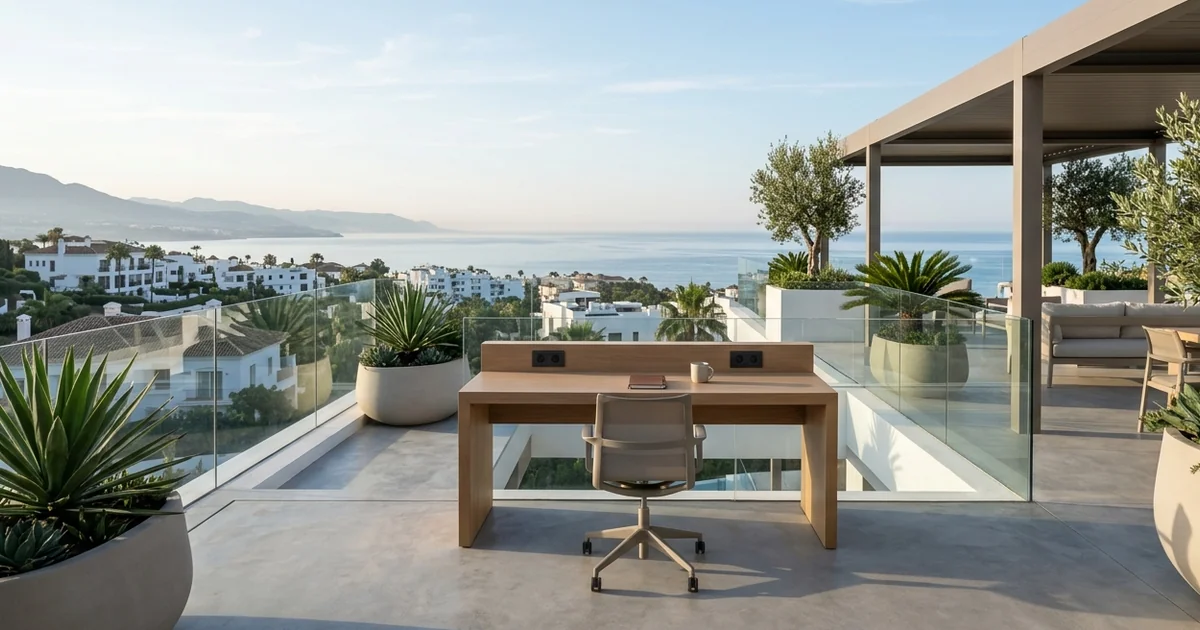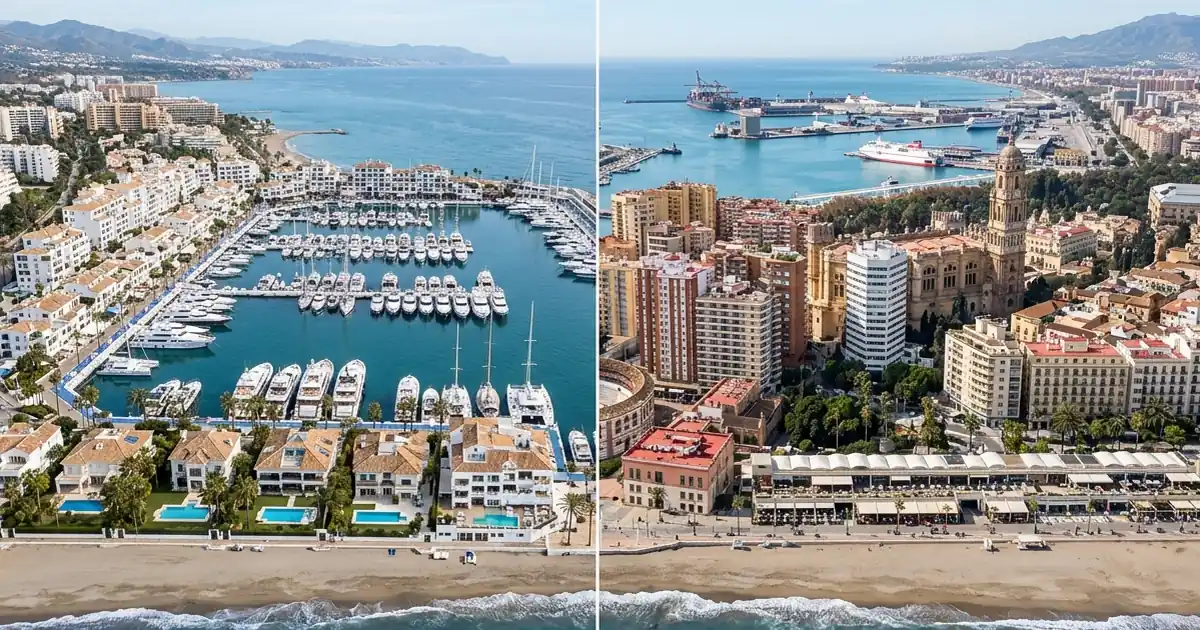
Marbella and Málaga are 60km apart on the same coastline but feel like different propositions for long-term living. For a holiday-focused take, see our Marbella vs Málaga guide. Marbella is a resort town that has grown into a serious expat destination – established, international, expensive and lifestyle-focused. Málaga is a real Spanish city that has reinvented itself over the past decade into one of Europe's more interesting places to live – urban, affordable, culturally rich and increasingly tech-forward.
Neither is objectively better. They suit different people and different priorities. This guide compares them honestly across the factors that matter most when you are actually moving somewhere, not just visiting.
- 01Marbella costs roughly 25–30% more than Málaga for a comparable lifestyle – driven almost entirely by higher rents
- 02Málaga has a significantly stronger tech and startup ecosystem – the better choice for remote workers wanting community
- 03Marbella has more and better international schools – the stronger option for families with children
- 04Málaga has far better public transport – you can live without a car; in Marbella you almost certainly cannot
- 05Both cities have good private healthcare; Marbella's expat-focused clinic infrastructure is more developed
- 06Málaga offers more year-round cultural and social activity; Marbella quietens noticeably October to April
Overall Lifestyle Differences
The clearest way to frame the difference: Marbella is a place where people live well in a resort environment. Málaga is a place where people live in a city that happens to have excellent weather.
In Marbella, daily life is comfortable, car-dependent and heavily oriented around outdoor living, beach access and international community. The lifestyle infrastructure – schools, private healthcare, English-speaking services, golf, restaurants – is excellent. The trade-off is limited cultural depth, a seasonal social calendar and a cost base that assumes a higher income.
In Málaga, daily life feels like a functioning European city. There are universities, a metro, an arts scene, year-round nightlife, authentic Spanish neighbourhoods and a growing international community of remote workers and tech professionals. It is less polished than Marbella but more varied, and considerably more affordable.
Cost of Living Comparison
This is the starkest difference between the two cities.
| Category | Marbella | Málaga city |
|---|---|---|
| 2-bed long-term rental | ~€1,300–2,500/month | ~€1,260–1,420/month |
| Buy price per m² | ~€4,775–5,879 (by area) | ~€3,823 (city average) |
| Monthly costs, couple (comfortable) | ~€2,650–4,800 | ~€2,050–3,730 |
| Menú del día | ~€18–22 | Broadly similar – verify locally |
| Fibre broadband | from ~€18–48/month | Broadly similar |
According to Numbeo's city comparison data, maintaining the same standard of living costs roughly €5,400/month in Marbella versus €4,200/month in Málaga – a gap of around 25–30%. The difference is driven almost entirely by housing. Groceries, utilities and daily expenses are broadly comparable.
The cost gap narrows significantly if you live in San Pedro de Alcántara or Elviria rather than the Golden Mile. But even at Marbella's most affordable end, rents remain above Málaga city averages for equivalent space.
Atmosphere & Culture
Málaga wins clearly on cultural depth. The city has invested heavily in its cultural infrastructure over the past 15 years – the Picasso Museum, the Centre Pompidou Málaga, the Carmen Thyssen Museum, the Alcazaba, a functioning theatre and live music scene. It has genuine Spanish neighbourhood life, authentic tapas bars, a university population and the energy of a city that is growing into itself.
Marbella has charm – the Old Town is genuinely attractive, Plaza de los Naranjos is lovely and there are good independent restaurants throughout. But it is a resort town at its core. Cultural life is limited and largely imported. The social scene revolves around restaurants, beach clubs and private events rather than public cultural life. Outside peak season, Marbella can feel quiet in a way that Málaga never does.
For expats who want to feel embedded in Spanish life, Málaga is the more natural environment. For those who prioritise comfort, international community and outdoor lifestyle over cultural depth, Marbella delivers more of what they are looking for.
Beaches & Weather
Both cities enjoy the same Costa del Sol climate – one of the best in Europe, with mild winters and long, hot summers. Weather is not a meaningful differentiator between them.
Beaches are a different story. Marbella has 27km of coastline with a full beach club infrastructure, quieter coves and a variety of beach environments. Málaga's urban beaches are fine for a swim but are city beaches – crowded in summer, no beach club scene, dark sand.
For expats who prioritise beach lifestyle as part of daily living, Marbella is the better choice. For those who want occasional beach access without organising life around it, Málaga's beaches are adequate and the drive west to better beaches takes 20–30 minutes.
Schools & Families
Marbella is the stronger choice for families with children at international schools. The concentration of British-curriculum schools – Aloha College, Swans International, EIC, Laude San Pedro – is exceptional for a town of this size. The schools have long track records, strong university placement results and established expat parent communities.
Málaga has international school options but a smaller and less developed sector. Families committed to a British-curriculum education will find Marbella's offering significantly stronger.
The practical caveat: school fees add €500–1,170/month per child to the household budget, and the school commute should factor into neighbourhood choice. See our international schools in Marbella guide for detailed school-by-school information.
Remote Work & Tech Scene
This is one of the clearest advantages Málaga holds.
Málaga has actively positioned itself as a tech hub over the past five years. The Málaga Tech Park (PTA) hosts Google, Oracle, Vodafone and dozens of smaller tech companies. There is a functioning startup ecosystem, multiple coworking spaces, regular networking events and a growing community of international remote workers and digital nomads.
Marbella has reliable fibre broadband (300 Mbps–1 Gbps available from ~€18/month) and some coworking options – day passes from ~€20–39, monthly desks from ~€219. It is functional for solo remote work. But the tech community and networking infrastructure is minimal compared with Málaga. For a full breakdown of coworking spaces and costs in Marbella, see our coworking guide. For what Marbella is like in the quieter months, see our Marbella winter living guide.
Choose Málaga if you are a remote worker, digital nomad or tech professional who values community, networking, coworking culture and a growing international tech scene. The PTA ecosystem and concentration of international companies makes Málaga a genuinely interesting base.
Marbella is the weaker choice for remote workers who need a local professional community, regular networking or coworking culture. The infrastructure exists but is minimal – if that matters to your work life, Málaga is the more practical base.
Healthcare
Both cities have good private healthcare. The differences are in infrastructure density and expat orientation.
Marbella has a cluster of private hospitals and clinics specifically oriented towards the international community – Hospital Recoletas Salud Marbella, HC Marbella, Quirónsalud Marbella and Elviria Medical Centre all have English-speaking staff and long track records with expat patients. Private health insurance typically costs ~€80–200/month per person.
Málaga has larger public hospital infrastructure and several private hospitals, but the expat-specific clinic culture is less developed than Marbella's. For routine private healthcare, both cities are well served. For specialist treatment, Málaga's larger hospital infrastructure may be an advantage.
Public healthcare (Seguridad Social) is accessible to registered residents in both cities. Waiting times for specialist appointments can be long in both – most expats rely primarily on private insurance regardless of where they live.
Walkability & Transport
Málaga wins significantly on transport. The city has a metro system, an extensive bus network, a train station connecting to Granada, Seville, Madrid and the broader national rail network, and an airport integrated into the city by a €1.80 train journey. Daily life in Málaga is genuinely manageable without a car.
Marbella has no train station. Bus connections exist along the coast but are limited for practical daily use. A car is effectively essential for most residents – school runs, supermarket trips, visiting friends in neighbouring urbanisations all require driving. This adds roughly €200–350/month in car ownership costs and is a significant practical difference for anyone relocating from a city where they do not own a car.
If you are moving from a city where you do not own a car and do not plan to buy one in Spain, Marbella is a difficult choice. Almost every aspect of daily life outside the immediate town centre requires a car. Málaga is a much more practical option for car-free living.
Property Prices
| Area | Price per m² (2026) |
|---|---|
| Marbella – San Pedro | ~€4,775 |
| Marbella – Nueva Andalucía | ~€5,531–6,612 |
| Marbella – Golden Mile | ~€5,879 |
| Marbella – Puerto Banús | €5,722–9,062 |
| Málaga city average | ~€3,823 |
Málaga city is meaningfully cheaper to buy in than all of Marbella's main areas. The gap has narrowed as Málaga's property market has strengthened, but it remains significant – particularly in prime Marbella zones.
For those considering property investment, both markets have performed well. Marbella attracts a more international buyer profile and has stronger short-term rental demand in prime areas. Málaga's market is driven more by domestic and European buyers and the growing tech professional community.
Property purchase costs in Spain – taxes, notary, legal fees – run roughly 10–13% on top of the purchase price regardless of location. Always instruct an independent Spanish lawyer before signing anything.
Nightlife & Restaurants
Marbella excels in summer – beach clubs, marina dining, Starlite festival, the Puerto Banús scene. It is spectacular from May to October and noticeably quiet from November to April. The restaurant quality at the top end is excellent; the price point is high.
Málaga operates year-round. The tapas bar culture is authentic and affordable, the historic centre has a functioning nightlife scene across all seasons, and the city attracts a mix of locals, students and internationals that keeps things lively in a way that seasonal resorts cannot replicate.
For year-round social life, Málaga is more reliable. For peak-season glamour and beach club culture, Marbella has no real competition on the Costa del Sol.
Who Each City Suits
Marbella suits you if: you have children and want strong British-curriculum schooling; you prioritise beach lifestyle and outdoor living; you want an established international expat community with English-speaking services; you work remotely without needing a local professional network; you are retired and want comfort, safety and year-round sun; your budget is comfortably above €3,000–3,500/month for a couple.
Marbella is the harder choice if: you are on a tighter budget; you want genuine Spanish city life and cultural depth; you need a tech or startup community; you do not want to own a car; you value year-round social and cultural activity over summer-focused lifestyle.
Málaga suits you if: you are a remote worker or tech professional wanting community and networking; you want authentic Spanish city life with good weather; budget is a meaningful consideration; you prefer not to own a car; you want year-round cultural and social activity; you want good transport connections to the rest of Spain and Europe.
Málaga is the harder choice if: you have children committed to a specific British-curriculum school; you want Marbella's beach lifestyle and resort infrastructure; you specifically want the international expat bubble that Marbella provides.
FAQ – Marbella vs Málaga for Expats
Comparing other towns on the Costa del Sol? See our best places to live on the Costa del Sol guide.
Sources: Numbeo Marbella and Málaga city cost-of-living and safety data 2025/26; Idealista asking-price and rental data January–March 2026; Engel & Völkers Marbella 2026 area price index. Costs, school fees and property prices change regularly – verify current figures before making decisions. Information last verified May 2026.