
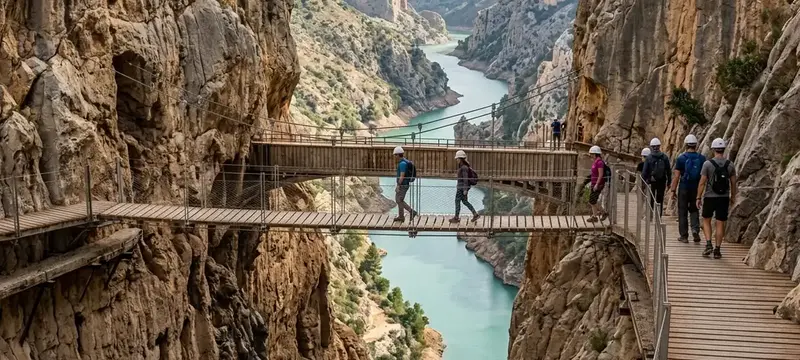
Málaga and Marbella are not the same place. Marbella is a resort town on the coast, inside Málaga province; Málaga is the provincial capital 60 km east of it – which is why one airport, Málaga Airport (AGP), serves both. The road between them takes about 45 minutes. Málaga is the cathedral, the Picasso Museum and a working port; Marbella is Puerto Banús, the Golden Mile and a whitewashed Old Town.
For a trip, Marbella wins on beaches by a distance – 27.9 km of coastline and 24 beaches, against a handful of urban ones in Málaga – and Málaga wins on almost everything else: culture, food, price, and a rail network that reaches the rest of Andalusia. The argument that actually decides where you sleep is the bus between them.
Is Marbella in Málaga, and are they the same place?
Marbella is in Málaga province and is not Málaga. That is the whole answer, and the confusion is a naming one: Málaga is both a city and the province it is the capital of, so an address written "Marbella, Málaga" means the province, in the same way "Brighton, East Sussex" does. Nobody in either place uses the names interchangeably.
| Málaga | Marbella | |
|---|---|---|
| What it is | The provincial capital, a working city | A resort town in the same province |
| Airport | Málaga Airport, 13 km from the centre | Málaga Airport, 60 km away |
| Train station | María Zambrano, mainline and Cercanías | None |
| The draw | Around forty museums, tapas, the port | 27.9 km of coast, 24 beaches, Puerto Banús |
| Old quarter | Roman theatre, Alcazaba, cathedral | Plaza de los Naranjos, Moorish walls |
The practical consequence of sharing an airport is that neither is harder to reach than the other. The consequence of the 60 km between them is everything below.
How long is the bus from Málaga to Marbella?
Both numbers you will see quoted are true, and that is the problem. Avanza runs roughly 130 departures a day between the two cities, and they are not the same journey.
| Service | Journey time | What it is |
|---|---|---|
| Express, city to city | about 45 min | a handful of departures a day |
| L-307 "directo", bus station to bus station | not published by the operator | four departures a day from Málaga |
| Typical stopping service | about 1h 25 to 1h 35 | most of the 130 daily departures |
| Taxi or private transfer | 35 to 50 min | traffic and AP-7 tolls dependent |
Fares run from about €7 one way, rising to around €16 depending on the day and how late you book.
So the honest planning figure is this: unless your outward and return both land on an express, budget close to three hours on the road for a Marbella day trip from Málaga. That is still a perfectly good day out. It is not the same day out as the one you were sold, and if you arrive at the bus station expecting the 45-minute service you have a one-in-several chance of getting it.
The standard advice – base yourself in Málaga and day-trip to Marbella – is still right for a lot of people. It just costs about three hours of the day rather than the ninety minutes the "45 minutes each way" claim implies.
If that day trip is the whole point of basing in Málaga, check the timetable for express departures on your actual dates before you book the hotel. Treat the coast-hopping stopping services as the fallback rather than the plan.
Arriving: the gap is at the airport, not between the cities
This is where the two cities genuinely diverge, and it is a bigger split than the day-trip one.
Into Málaga, the Cercanías C-1 runs from the airport to the city centre for €1.80 in about 12 minutes. The EMT airport bus, line A, is €4.00 flat as of the 2026 fare update. Both are a short walk from arrivals, and the full comparison including night arrivals is in the Málaga airport transfer guide.
Into Marbella, there is no train, because Marbella has no train station. The nearest Cercanías stop is Fuengirola, 27 km away; the nearest mainline station is Málaga María Zambrano, 57 km away. The long-discussed Costa del Sol rail corridor is still at feasibility-study stage, with no operational Marbella stop.
What Marbella does have is a direct airport coach. Avanza publishes the Málaga Airport to Marbella run as direct and around 45 minutes, from €6.33, on several lines leaving from Terminal 3 arrivals. That service is genuinely faster than the city-to-city bus, because the airport is 13 km down the coast from Málaga to begin with – and it is why the airport arrival is the one leg where Marbella does not lose.
By taxi, the official day tariff from Málaga Airport to Marbella is €70, rising to €81 at night and on holidays. Private transfer operators commonly quote €64 to €78 for the same run, 35 to 50 minutes depending on traffic. Drivers pay the AP-7 toll on the way: €5.70 for a car from October to May and €9.25 from June to September.
Beaches: Marbella, and it is not close
Marbella's coast runs 27.9 km with 24 beaches, on the town hall's own figures, and the range within that is the real argument – Cabopino and Artola at the undeveloped end, the beach club strip along the Golden Mile towards Puerto Banús at the other, and wide family sand like Las Chapas in between. Water sports operate from most of them.
Málaga has beaches and they are useful. La Malagueta is walkable from the historic centre, La Misericordia is better and a few kilometres west, and both are dark-sand city beaches that fill up in summer and have nothing like Marbella's beach club infrastructure behind them.
The distinction that matters: Málaga's beaches are somewhere to spend an afternoon between museums. Marbella's are a reason to book the flight. If the sea is the point of the holiday, the Marbella beaches guide is the place to start and this comparison is already over.
Culture and food: Málaga, and that is not close either
Málaga has the Alcazaba, an 11th-century Moorish fortress above a Roman theatre, at €7. It has the cathedral, the Picasso Museum in the palace where the painter's family lived, the Carmen Thyssen, the Centre Pompidou and around forty museums in total, most of them inside a walkable historic centre. The things to do in Málaga guide covers the ones worth the entry fee.
Marbella's Old Town is genuinely good – Plaza de los Naranjos, whitewashed lanes, a 16th-century church, ten Dalí bronzes on Avenida del Mar, and a print museum holding Picasso, Miró and Dalí originals in a converted 15th-century hospital. It is a morning, not a week.
Food splits the same way for a structural reason. Málaga's tapas culture exists because locals eat in it: the bars around the Atarazanas market, the Soho lanes, the espetos grilled over driftwood fires at the Pedregalejo chiringuitos. Marbella's best restaurants are excellent and priced for an international resort audience, and finding an ordinary local meal takes local knowledge that ten minutes inland in Málaga does not require.
What each one costs
The transport numbers above are published and checkable. The accommodation numbers are not, so here is the honest position rather than a confident table.
No verifiable published price comparison exists for hotels in the two cities. The per-night ranges quoted across travel blogs are not sourced from anything – they are estimates copied between sites, and they move with season, event calendar and how far ahead you book.
What can be said with confidence follows from the market structure rather than from a survey. Marbella's hotel stock is weighted heavily towards resorts and the luxury end, so the mid-range is thin and expensive for what it is, and budget stock is limited and usually badly located.
Málaga has genuine choice at every level inside the historic centre, which is why the same money reaches further there. Check your own dates on your own booking site – that is the only figure that applies to you.
The one hard cost gap is the arrival. €1.80 on the train into Málaga against €70 in a taxi to Marbella is a real €68 before you have unpacked, and it repeats every time you want to reach the airport.
Nightlife, and the season nobody warns you about
Marbella's nightlife is beach clubs that run from afternoon into evening, the Puerto Banús bar strip, and Starlite, the summer concert season staged in a quarry above the town. It is expensive and it is spectacular.
The part that catches people out is that most of it is seasonal. Beach clubs and a good share of the Puerto Banús venues shut from roughly November to April. Málaga's bar scene in the Centro Histórico runs all twelve months, which reverses the comparison entirely for a winter trip.
So which one
Four honest profiles, rather than a scorecard.
Book Marbella if the beach is the holiday, if you are travelling with young children who need resort infrastructure, if the budget is generous enough that the price gap is not a factor, or if you are coming between June and September for beach club season. Accept that you will need a hire car or taxis to leave, and plan the airport transfer as a fixed cost.
Book Málaga if you want culture and food alongside the sea, if the budget is a real constraint, if you plan day trips to Granada, Ronda, Seville or Caminito del Rey, if you would rather not drive, or if you are travelling outside high summer.
Book Málaga and day-trip to Marbella if you want both and the beach is a want rather than the reason. Check the express bus timetable first, take the earliest departure, and treat it as a full day rather than an afternoon.
Book Marbella and day-trip to Málaga if the beach is the reason but you want one city day. This works better than the reverse for one specific traveller: someone flying in, because the airport coach lands you in Marbella in about 45 minutes, and the city day can go on a hire car or an express.
Neither city is the wrong choice. The wrong choice is basing in one, planning daily trips to the other, and finding out at the bus station what that actually costs. If the doubt is about Marbella itself rather than the pairing, is Marbella worth visiting takes the reputation and the price question head on.
Which to live in, rather than visit
Long stays reverse most of the weighting above. Beach quality, museum count and day-trip range stop deciding anything; rent, schools, whether you need a car and whether the town still works in February decide everything.
| Marbella | Málaga city | |
|---|---|---|
| 2-bed long-term rental | €1,300–2,500 a month | €1,260–1,420 a month |
| Buy price per m² | €4,775–5,879 depending on area | around €3,823, city average |
| Couple living comfortably | €2,650–4,800 a month | €2,050–3,730 a month |
Numbeo's own comparison puts the gap at roughly 25 to 30 per cent, and it is almost entirely housing – groceries, utilities and daily spending sit close together. Those figures, and the property ones, were compiled from Numbeo, Idealista and Engel & Völkers data in May 2026, and rents on this coast move faster than most guides admit.
- Families: Marbella, clearly. Aloha College, Swans International, EIC and Laude San Pedro give a town this size an unusual concentration of British-curriculum schools, and fees become the household's second-largest line after rent.
- Remote work: Málaga, clearly. The Málaga Tech Park hosts Google, Oracle and Vodafone, and the coworking and networking scene follows from that. Marbella has good fibre and day passes but very little professional community.
- Getting around: Málaga has a metro, a mainline station and an airport 12 minutes from the centre by train, so car-free living is realistic. In Marbella it is not – budget roughly €200–350 a month for running a car.
- The off-season: Marbella quietens noticeably from November to April, with a share of the restaurants and beach clubs shut. Málaga runs the same in January as in July.
The rest of the coast, including the towns between the two, is in the Costa del Sol guide.
Reader Comments 💬
Share your experience or ask a question