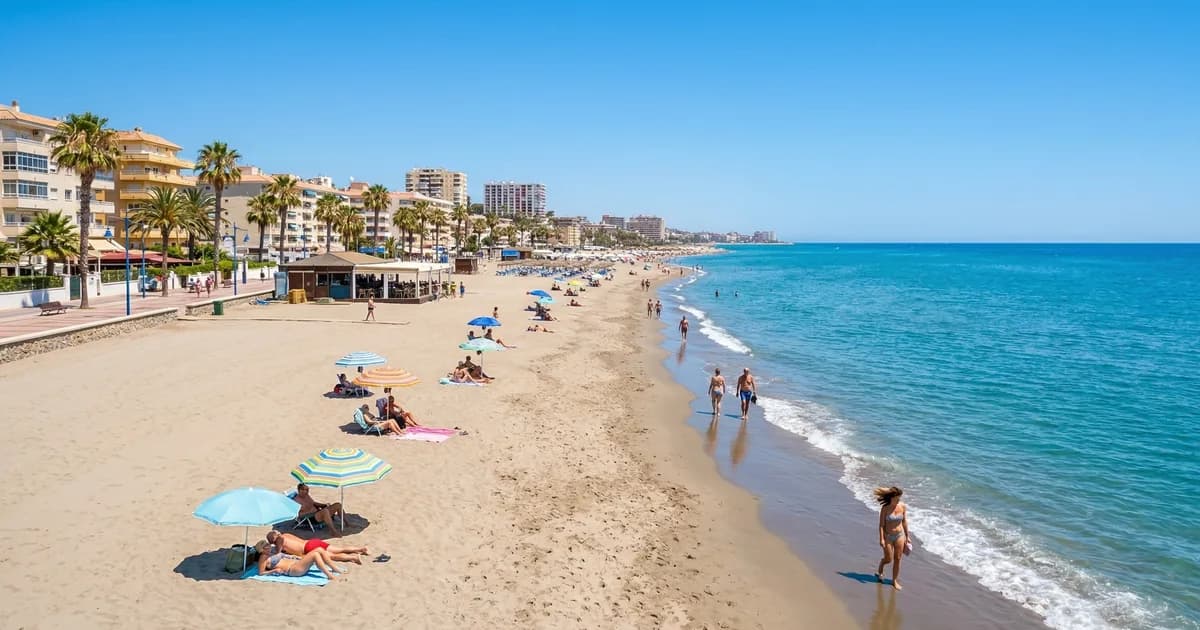
Torremolinos Weather 2026: Best Time to Visit by Month and Season
Torremolinos weather is one of the most reliable on the Costa del Sol – over 300 sunny days a year, mild winters and a sea that stays swimmable well into October. But the best time to visit depends on whether you're chasing peak summer heat, a quieter beach week or the cheapest possible prices. This guide breaks it down by season, with honest notes on crowds, costs and what actually closes. For everything else to plan around your trip, the Torremolinos guide covers the full picture.
Quick Takeaways
- ✓May and October are the best value months – warm, uncrowded, beach facilities open
- ✓July–August: sea peaks at ~22–25°C but prices are typically 50–70% above shoulder rates
- ✓Semana Santa (Easter) causes the biggest price spike outside summer – book 4–6 months ahead
- ✓Winter days average 16–20°C – walkable, restaurants open, beach infrastructure mostly closed
- ✓Lifeguards operate June 1–September 30 only – no official cover outside this window
- ✓Late August brings occasional jellyfish blooms – check the daily beach flag before swimming
Pick your season based on your priorities – here's what Torremolinos actually delivers at each point of the year.
Winter in Torremolinos (December–February)
Torremolinos in winter is not a beach destination – and that's fine. Daytime temperatures sit between 16–20°C, which is genuinely walkable and comfortable for sightseeing. The 7km promenade from Playamar to La Carihuela is busy with locals every morning. Restaurants are open, the Crocodile Park runs year-round, and you'll pay off-peak prices for accommodation – typically 30–50% below shoulder rates.
The trade-offs are real though. Beach sunbed hire stops in October; showers and toilets on the sand operate reduced hours or close entirely November through March. The chiringuitos on La Carihuela mostly shutter until spring. Sea temperatures drop to 15–17°C – cold for most European swimmers. Rainfall peaks at 10–12 days per month in January and December.
Christmas and New Year bring a brief spike in both visitors and prices. January and February are the quietest and cheapest months on the Costa del Sol – a good fit for travellers who want the town to themselves.
Spring in Torremolinos (March–May)
Spring is where Torremolinos starts making a strong case. Temperatures climb from 18–21°C in March to 22–25°C by May. Sea temperatures recover to 16–20°C – still cool for committed swimmers, but manageable. Sunshine hours push to 9–10 per day by May. Rainfall drops steadily through the season, with May averaging just 5–7 rain days.
Beach infrastructure reopens: chiringuitos return, sunbed hire restarts and the promenade shifts gear as tourist numbers build. May in particular hits a sweet spot – warm enough for the beach, uncrowded compared to summer, and priced at shoulder rates. It's the first month where a full beach day is a realistic option for most visitors.
April is a split month: if your dates miss Easter, you get excellent weather and low prices. If they land on Semana Santa, you're in peak conditions. Check the calendar before you book.
Choose this if...
Avoid this if...
Summer in Torremolinos (June–August)
This is peak Torremolinos. Sea temperatures reach 20–25°C, sunshine runs 10–12 hours a day and the beach operates at full capacity – lifeguards on duty, sunbeds end to end, chiringuitos serving until late. If the beach is the primary point of your trip, June through August delivers exactly what you're coming for.
June is the month most visitors underestimate. Temperatures are 25–28°C, the sea is warm enough at 20–22°C and crowds haven't yet hit July levels. It's the best summer month for those who want the full beach experience without the absolute peak.
July and August are a different calculation. Daytime temperatures hit 28–32°C – hot enough that early morning and evening become the most usable parts of the day. Prices run 50–70% above shoulder. The beach fills by mid-morning; arrive before 10am or accept whatever sunbed space is left. Late August brings occasional jellyfish blooms – check the beach flag system before getting in the water.
The Feria de San Miguel runs in late September – not summer, but worth knowing: if your trip extends into early October, the energy from the late-season festivals carries through. Summer itself in Torremolinos is also the season for its nightlife scene, which runs at full pace July through August.
Autumn in Torremolinos (September–November)
September is summer's best-kept secret. Temperatures drop only slightly to 27–30°C, the sea holds at 23–24°C – often warmer than June – and the crowds thin out noticeably after the first week of the month. Lifeguards remain on duty until September 30. Prices ease back towards shoulder rates in the second half of the month.
October is the other standout shoulder month alongside May. Temperatures of 24–27°C, sea still at 22–23°C, and most beach facilities still running into the early part of the month. Crowds are light, prices are back to baseline and the coast has a settled, local feel. It's the best month for day trips from Torremolinos – the weather holds for sightseeing but the summer pressure has lifted.
November marks the transition to winter. Rainfall climbs to 9–11 days per month, sea temperature drops to 19–20°C and the beach infrastructure begins to wind down. It's still walkable and mild – 20–23°C on good days – but the summer version of Torremolinos is firmly over.
Choose this if...
Avoid this if...
When to Avoid Torremolinos
Pros
- May and October: warm, affordable, uncrowded
- June: full summer facilities without peak prices
- September: warmest sea of the year, emptying beaches
- Winter: authentic local atmosphere, very low rates
Cons
- July–August: 50–70% price premium, beaches packed by 10am
- Semana Santa: 40–60% hotel spike, 100,000+ visitors
- Late August: jellyfish blooms possible, check daily flags
- November–January: beach facilities largely closed
Practical Tips
For families travelling during school holidays, July and August are unavoidable – but booking accommodation early makes a significant difference to both price and choice. The best beachfront hotels fill months in advance for August.
If you're flexible, the single best value window is the last two weeks of September or the first two weeks of October: sea temperatures are at their annual peak, prices drop 30–40% from August highs and the beaches are noticeably quieter.
FAQ – Weather in Torremolinos
What is the best time to visit Torremolinos?+
How hot does Torremolinos get in summer?+
Is Torremolinos warm enough to swim in October?+
Does it rain a lot in Torremolinos?+
Is Torremolinos worth visiting in winter?+
When does Semana Santa affect Torremolinos?+
Are there jellyfish in Torremolinos?+
What should I pack for Torremolinos in different seasons?+
Sources: AEMET (Agencia Estatal de Meteorología), Junta de Andalucía, Ayuntamiento de Torremolinos (April 2026).
Read Next
 🍽️ Restaurants
Romantic Restaurants in Torremolinos 2026: Dinners, Sunsets and Evening Walks
Torremolinos has more romantic corners than most visitors expect. Sea-view terraces, candlelit restaurants in the old town and a promenade that transforms at dusk.
 📋 Practical
Torremolinos Practical Guide 2026: What First-Time Visitors Need to Know
The practical information most Torremolinos guides skip – transport that actually works, honest safety notes, common mistakes and what to bring that most people forget.
 📋 Practical
Torremolinos Car Hire 2026: Avoid Local Traps & Book Smart
Hiring a car in Torremolinos town is expensive and choices are limited. Here is the ultimate hack to save money, avoid hidden fees, and park smart.