Marbella vs Malaga 2026: Which Should You Choose?
Marbella vs Malaga is one of the most searched questions on the Costa del Sol — and the honest answer is that they are not competing for the same traveller. Marbella is a glamorous resort town built around luxury beaches, Puerto Banus and the Golden Mile. Malaga is a real Andalusian city: the birthplace of Picasso, home to over 40 museums, and the transport hub that connects the entire coast to the rest of Spain. Both are excellent. They are excellent at completely different things.
If you want beach clubs, luxury resorts and a holiday where the sea is the main event — Marbella. If you want culture, authentic tapas, easy access to Granada and Ronda, and a city that works on a budget — Malaga. If you want both, base yourself in Malaga and take a day trip to Marbella (45 minutes by bus, no car needed).
Jump to: Quick Verdict · Beaches · Culture & Sightseeing · Food & Restaurants · Nightlife · Budget & Cost · Transport & Location · Hotels · Who Should Choose Which · FAQ
Quick Verdict
| Category | Marbella | Malaga | Winner |
|---|---|---|---|
| 🏖️ Beaches | 27km, 24 beaches, beach clubs | 3 urban beaches, dark sand | Marbella |
| 🏛️ Culture | Old Town, Dalí sculptures | Alcazaba, Picasso Museum, 40+ museums | Malaga |
| 🍽️ Food | Upscale dining, tourist prices | Authentic tapas, local gems | Malaga |
| 🎉 Nightlife | Beach clubs, Puerto Banus | Centro Histórico bars & clubs | Tie |
| 💰 Budget | Expensive across the board | Affordable, all price ranges | Malaga |
| 🚆 Transport | No train, car essential | Airport hub, trains to all Spain | Malaga |
| 🏨 Hotels | Luxury resorts, limited budget | Every budget, central options | Malaga |
| 🗺️ Day trips | Gibraltar, Morocco nearby | Granada, Ronda, Caminito | Tie |
| 👨👩👧 Families | Beach resorts, water parks | City experience, museums | Marbella |
| 💑 Couples | Glamour, sunsets, romance | Culture, food, Alcazaba views | Tie |
Beaches
🏖️ Marbella wins — 27 kilometres of coastline vs three urban beaches
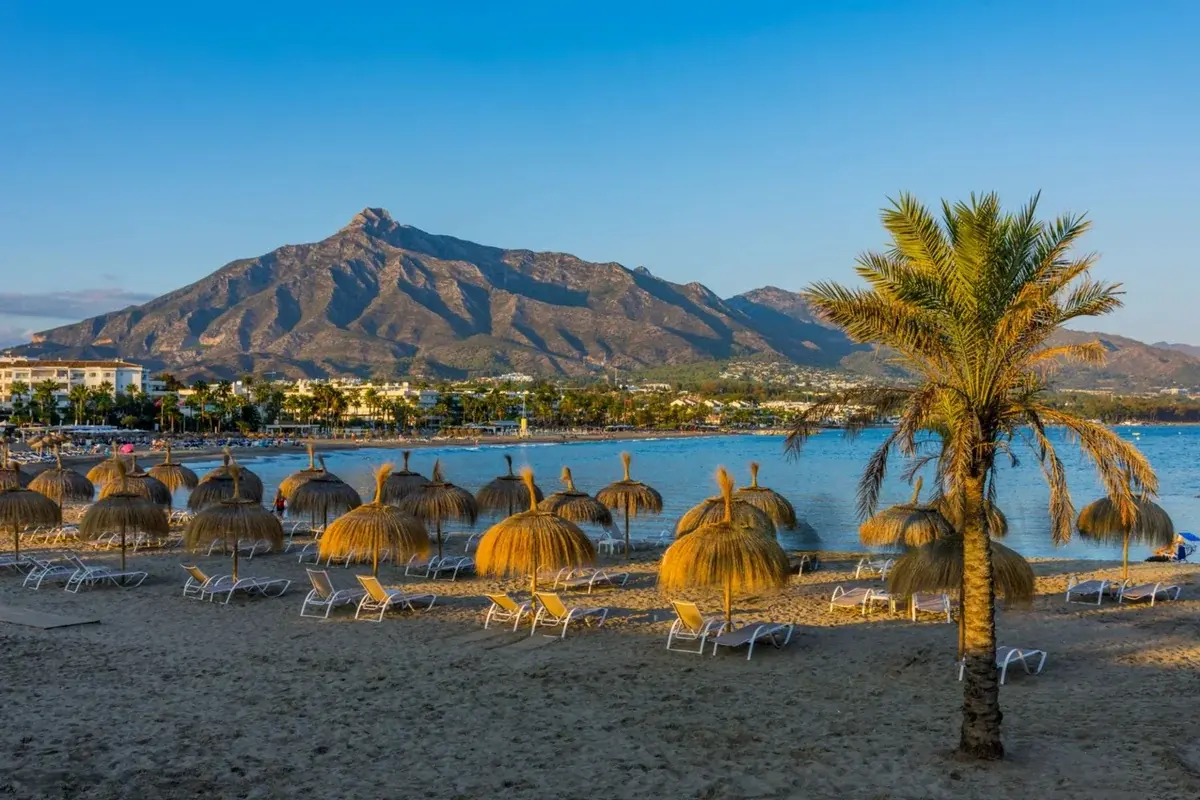
This is the clearest category. Marbella has 27km of coastline, 24 distinct beaches, and a beach infrastructure that Malaga simply cannot match. The beaches range from the exclusive (Nikki Beach, Playa de la Fontanilla) to the genuinely quiet and undeveloped (Cabopino, Playa de Artola). Water sports — paddle surfing, scuba diving, canoeing, jet skiing — are available from most of the major beaches. Beach clubs line the coast from Estepona to Marbella proper, particularly dense along the Golden Mile towards Puerto Banus.
Malaga has beaches — La Malagueta is the main urban beach, walkable from the historic centre — but they are city beaches with dark sand, get extremely crowded in summer, and lack the beach club infrastructure of Marbella. La Misericordia, a few kilometres west, is better but still urban in character. Malaga's beaches are pleasant for an afternoon. They are not a reason to choose Malaga over anywhere else.
The honest verdict: If beaches are the primary reason for your trip, Marbella is not just better than Malaga — it is one of the best beach destinations on the entire Mediterranean. Malaga's beaches are a bonus, not a selling point.
Pro tip: Marbella's best beach for families is Playa de las Chapas — wide, calm, not dominated by beach clubs. The best for a proper beach club experience is Nikki Beach or Ocean Club. The most underrated is Cabopino, a Blue Flag beach backed by umbrella pines, 15 minutes east of Marbella town. See our Marbella beach clubs guide for the full breakdown.
Choose Marbella for beaches. It is not a close competition.
Do not choose Malaga primarily for its beaches — La Malagueta is perfectly fine for a swim but it is a city beach, not a destination beach. If beaches matter most, base yourself in Marbella or anywhere west of Fuengirola.
Culture and Sightseeing
🏛️ Malaga wins — and it is not close
Malaga is one of the most culturally rich cities in Andalusia. The Alcazaba is an 11th-century Moorish fortress with original walls, gardens and cisterns, sitting directly above the Roman theatre — free entry with a card, €3.50 otherwise, and one of the best-value historical sites in Spain. The Málaga Cathedral — known as La Manquita ("The One-Armed Lady") for its missing second tower — is a Renaissance masterpiece. The Picasso Museum occupies the 16th-century Buenavista Palace where the painter's family lived; the birthplace itself is a short walk away on Plaza de la Merced. The Carmen Thyssen Museum, the Centre Pompidou Málaga, the Russian Museum — Malaga has invested aggressively in cultural infrastructure over the past 15 years and the result is a city that punches well above its weight.
Marbella has culture — do not dismiss it entirely. The Old Town (Casco Antiguo) is genuinely charming: whitewashed lanes, Plaza de los Naranjos with its orange trees, the 16th-century church of Nuestra Señora de la Encarnación. Avenida del Mar has 10 bronze sculptures by Salvador Dalí. The Museo del Grabado Español Contemporáneo holds original works by Picasso, Miró and Dalí in a converted 15th-century hospital. But this is a half-day of culture at most. Marbella's attractions are pleasant bonuses to a beach holiday, not reasons to book flights.
Pro tip: Malaga's biggest cultural secret is that many attractions offer free entry on Sundays from 2pm — the Alcazaba, the Roman Theatre, some museums. If you are visiting on a Sunday afternoon, plan around this and you can see three or four major sites for free. See our things to do in Malaga guide for the full list.
Choose Malaga for culture. The Alcazaba, Picasso Museum and Cathedral alone justify the trip. The concentration of world-class museums in a walkable historic centre is rare for a city of this size.
Do not choose Marbella expecting the same depth of cultural experience. The Old Town is beautiful and worth a morning, but it is a complement to a beach holiday rather than a reason for one.
Food and Restaurants
🍽️ Malaga wins — authentic tapas culture vs upscale tourist dining
Malaga's food scene is anchored in genuine Andalusian tapas culture. The streets around the Mercado Central de Atarazanas, the Soho neighbourhood, and the lanes of the historic centre are packed with local bars where a glass of local Málaga wine costs €2 and arrives with a small tapa. The city has Michelin-starred restaurants at one end and €12 menú del día at the other. The fried fish tradition — pescaíto frito — is taken extremely seriously, and the espetos (sardines grilled on bamboo skewers over a beach fire) at the Pedregalejo neighbourhood chiringuitos are unlike anything you will eat elsewhere in Spain.
Marbella has excellent restaurants — the concentration of high-end international dining along the Golden Mile and in Puerto Banus is exceptional — but the price-to-quality ratio shifts considerably once you leave the Old Town. The beachfront and port areas skew towards tourist pricing. Finding a genuinely local meal in Marbella requires knowing where to look; in Malaga, it is almost impossible to avoid.
The Marbella exception: For a luxury dining experience — a long lunch at a Michelin-recommended restaurant, dinner at Nobu or Cipriani in Puerto Banus, a beach club lunch at Puente Romano — Marbella is unbeatable on the Costa del Sol. It just costs three times as much.
Pro tip: In Malaga, eat at the Mercado Central de Atarazanas for breakfast — the market stalls serve fresh fish and seafood from 8am and it is one of the finest food markets in Andalusia. In Marbella, walk 10 minutes from the port into the Old Town for local prices — the restaurants on and around Plaza de los Naranjos are significantly better value than anything on the beachfront.
Choose Malaga for food — authentic, affordable, and genuinely excellent across all price points. The tapas tradition here is real, not performed for tourists.
Do not eat in the tourist zones of either city without checking reviews first. The port area of Marbella and the beachfront strips in both cities charge tourist prices for mediocre food. Ten minutes inland in either direction finds a completely different experience.
Nightlife
🎉 Tie — but completely different atmospheres
Marbella's nightlife is defined by beach clubs that transition from day to night (Ocean Club, Nikki Beach), the bars and clubs of Puerto Banus, and a general atmosphere of glamour and expenditure. Starlite Marbella is one of Spain's most prestigious summer concert and events venues — international artists perform in an extraordinary open-air quarry setting above the city from June to September. The nightlife is excellent but it is expensive and it is primarily resort nightlife rather than local nightlife.
Malaga's nightlife centres on the Centro Histórico — bars on Calle Granada and around Plaza de la Merced that transition from tapas at 9pm to cocktails at midnight, small clubs in the Soho neighbourhood, and a genuine local presence alongside the tourists. It is less glamorous than Puerto Banus and significantly cheaper. The atmosphere is more authentically Spanish — later, noisier, more chaotic, and considerably more fun if that is what you are after.
Pro tip: Marbella's beach club nightlife is largely seasonal — most venues operate May to October only. In winter, Malaga's year-round bar scene is far more active. If visiting in November to March, Malaga has a dramatically more vibrant nightlife than Marbella.
Choose Marbella nightlife for glamour, beach clubs and high-production events. Choose Malaga nightlife for authentic Spanish atmosphere, lower prices and a scene that operates year-round.
Do not visit Marbella for nightlife in November to March — most beach clubs and many of the Puerto Banus bars close for winter. The season is real and significantly affects what is available.
Budget and Cost
💰 Malaga wins decisively — same coastline, very different price points
Marbella is one of the most expensive destinations in Spain. Accommodation costs are high across all categories; budget options are limited and often poor value for location. Dining in the beach club and port areas is priced at international resort rates. Taxis from the airport are expensive. The "affordable Marbella" exists — the Old Town has reasonable tapas bars — but the overall cost of a Marbella holiday is significantly higher than an equivalent holiday in Malaga.
Malaga has accommodation across every price point in genuinely central locations. Budget hostels, mid-range boutique hotels, and luxury options all exist within walking distance of the historic centre and beach. The food is cheaper. The transport is cheaper (airport bus to city centre €3, vs Marbella taxi €70+). The activities are cheaper — most of the best sightseeing is free or under €5.
Approximate cost comparison per person per day:
| Item | Malaga | Marbella |
|---|---|---|
| Budget hotel (central) | €50–80 | €90–140 |
| Mid-range hotel | €90–140 | €160–250 |
| Lunch (menu del día) | €12–15 | €18–28 |
| Beach club entry/minimum | N/A | €30–80 |
| Airport transfer | €3 (bus) | €65–80 (taxi) |
| Evening drinks (2 people) | €15–25 | €35–60 |
Pro tip: The cost difference between Malaga and Marbella is largest in accommodation. A mid-range hotel in Malaga's historic centre at €120/night is equivalent in quality to a Marbella hotel at €200+. If budget matters at all, Malaga is the right base — you can always visit Marbella for a day.
Choose Malaga for budget. It is not marginally cheaper — it is dramatically cheaper across accommodation, food, transport and activities. The experience is not lesser for it.
Do not assume Marbella is unaffordable entirely — the Old Town has genuinely reasonable prices and you can have an excellent day there for €40–50 per person. But building a week's holiday around Marbella on a tight budget is difficult and the compromises show.
Transport and Location
🚆 Malaga wins — airport hub vs no train station
Malaga has one of the best transport positions on the Costa del Sol. Málaga-Costa del Sol Airport is the regional hub — the second busiest in Spain in summer — and a dedicated train runs from the airport to the city centre in 12 minutes for €1.80. Málaga María Zambrano station connects the city to Madrid (2h 30min by AVE), Seville (2h), Granada (1h 45min) and Barcelona. Local Cercanías trains run along the coast to Torremolinos, Benalmadena and Fuengirola every 20 minutes for €2–4.
Marbella has no train station. There has been a proposed rail connection for decades; it does not exist. Getting to Marbella from Malaga airport requires a bus (75 minutes, €12–14) or taxi (€65–80, 45 minutes). Getting from Marbella to Granada requires a car or a bus change. Day trips to Ronda, Seville and beyond are significantly more logistically complex from Marbella than from Malaga.
For day trips: Malaga is the better base for exploring Andalusia. Granada, Ronda, Caminito del Rey, Seville, Nerja — all are straightforward by bus or train from Malaga. From Marbella, the same trips require longer journeys or a rental car. That said, Marbella is closer to Gibraltar and Morocco — see our day trips from Marbella guide for full logistics.
Pro tip: If you want to explore beyond the coast — and you should — base yourself in Malaga. The train connections alone make it a dramatically better hub for Andalusia. If your plan is beach holiday with no day trips, transport matters less and Marbella's isolation is irrelevant.
Choose Malaga as a base if you want to explore Andalusia. The airport connection, the AVE to Granada and Seville, and the coastal Cercanías make it the most connected city on the Costa del Sol.
Do not base yourself in Marbella without a rental car if you plan to do day trips. The bus connections exist but are slow and infrequent. Without a car, Marbella is a beautiful place to stay — and difficult to leave efficiently.
Hotels
🏨 Malaga for value, Marbella for luxury resorts
Marbella's hotel scene is genuinely world-class at the top end. Marbella Club, Puente Romano, Don Carlos Resort and Nobu Hotel are among the finest coastal hotels in Europe — extraordinary properties with private beaches, multiple restaurants and the full resort experience. For a luxury splurge, Marbella has few equals on the Spanish coast. The problem is below this level — mid-range hotels in Marbella are expensive for what they offer, and budget accommodation is limited and often poorly located.
Malaga's accommodation landscape is more balanced. The historic centre has excellent boutique hotels at mid-range prices, several well-positioned luxury options, and a full range of hostels and budget hotels within walking distance of everything. The Gran Hotel Miramar — a Belle Époque palace on the seafront — and the Parador de Málaga Gibralfaro compete with Marbella's best at lower prices. The Soho neighbourhood has produced a cluster of design hotels at genuinely reasonable rates.
Pro tip: The best-value luxury option on the Costa del Sol is the Parador de Málaga Gibralfaro — a government-run historic hotel inside the Gibralfaro castle with unmatched views over the city, port and sea. Rooms start at around €150/night, which is entry-level for equivalent quality in Marbella. Book well in advance as it has only 38 rooms.
Choose Marbella for a true luxury resort experience — private beaches, world-class spas, the full five-star package. Choose Malaga for boutique hotels, better value at every price point, and a central location that lets you walk to everything.
Do not book mid-range hotels in Marbella expecting Malaga-equivalent value. The same €140/night in Malaga gets you a central boutique hotel with breakfast; in Marbella it gets you a functional room a taxi ride from the beach. The gap is real.
🎫 Book a Malaga city tour — walking tours of the historic centre covering the Alcazaba, Cathedral and Picasso's birthplace.
Who Should Choose Which
The definitive guide based on travel style
Choose Marbella if you:
- Want beaches as the primary focus of your holiday
- Are travelling with a family that needs resort infrastructure (pools, kids' clubs, easy beach access)
- Have a generous budget and want the full luxury experience
- Are visiting as a couple for a glamorous, sun-drenched getaway
- Do not plan to do day trips into Andalusia
- Are visiting June–September and want beach club culture
Choose Malaga if you:
- Want a mix of culture, food and beach
- Are on any kind of budget constraint
- Plan to use Andalusia as a base for day trips (Granada, Ronda, Seville)
- Prefer authentic local atmosphere over resort atmosphere
- Are visiting outside peak summer (October–May)
- Do not have or want a rental car
- Are travelling solo or as a couple who enjoy city exploration
The best of both: Base yourself in Malaga, take a day trip to Marbella. The bus from Malaga to Marbella takes 75 minutes and costs €4–6 each way. You get Malaga's cultural richness, transport connections and value — and a full day in Marbella whenever you want sun loungers and Puerto Banus.
Nerja vs Malaga and Nerja vs Marbella: If you are considering Nerja as an alternative — it is a quieter coastal town 55km east of Malaga, better known for the Nerja Caves and the Frigiliana white village nearby. Volume 50 searches a month suggests it is a niche comparison, but the answer is simple: Nerja is slower, quieter and more authentically Spanish than either Marbella or Malaga. Choose it if you want to escape both. See our Nerja and Frigiliana day trip guide for more.
Practical Tips
Getting between Marbella and Malaga: The ALSA bus runs frequently throughout the day, journey approximately 75 minutes, cost €4–6 one way. Taxis cost €65–80. The bus is the obvious choice for independent travellers.
Best time to visit Malaga: Year-round city. Spring (March–May) and autumn (September–November) are ideal for sightseeing — comfortable temperatures, manageable crowds, lower prices. Summer is hot and crowded but everything is open and the beach works.
Best time to visit Marbella: May to October for the full beach and beach club experience. November to April is significantly quieter — many beach clubs and seasonal businesses close, and the resort atmosphere disappears. Marbella in January is peaceful and mild but it is not a beach holiday.
Rental car: Essential for Marbella, optional for Malaga. Malaga's city centre and most major attractions are walkable. Marbella's coast, golf courses and many of the best restaurants require transport.
For a full overview of what is reachable from either city, our day trips hub covers the entire Costa del Sol — Gibraltar, Granada, Ronda, Morocco and more, with exact transport options from both cities.
FAQ
Marbella vs Malaga — which is better? Neither is objectively better — they serve different types of traveller. Malaga wins on culture, food, transport, budget and authenticity. Marbella wins on beaches, luxury accommodation and glamour. The clearest summary: book Malaga as your base and visit Marbella as a day trip. You get both without compromise.
Is Marbella more expensive than Malaga? Significantly. Accommodation in Marbella runs 40–60% higher than equivalent quality in Malaga. Food in the tourist zones is priced at international resort rates. Transport from the airport costs €65–80 by taxi vs €3 by bus in Malaga. Budget travellers will find Malaga dramatically more accessible.
Which is better for families — Marbella or Malaga? Marbella for beach-focused families — the resort infrastructure, calmer beaches, water parks nearby and pool-equipped hotels make it better structured for children. Malaga works well for older children interested in history and culture, and is more convenient logistically. For young children whose priority is beach and pool, Marbella.
Which has better nightlife — Marbella or Malaga? Different types. Marbella has glamorous beach clubs (Ocean Club, Nikki Beach), the Puerto Banus bar scene and Starlite events venue — seasonal, expensive, spectacular. Malaga has year-round authentic Spanish nightlife in the historic centre — cheaper, more local, operating 12 months a year. Marbella in summer; Malaga year-round.
Is Malaga worth visiting or should I go straight to Marbella? Malaga is worth visiting in its own right — it is one of the most underrated cities in Spain. The Alcazaba, Picasso Museum, Cathedral and tapas scene alone justify a two to three day stay. Many visitors fly into Malaga airport and transfer directly to resorts without spending time in the city — this is a genuine mistake.
Nerja vs Marbella — which should I choose? Completely different experiences. Nerja is a quiet coastal town 55km east of Malaga, best known for the Nerja Caves and proximity to Frigiliana. It is smaller, cheaper and more authentically Spanish than Marbella. Choose Nerja for caves, white villages and a genuinely local Costa del Sol experience. Choose Marbella for beaches, luxury and resort infrastructure. See our Nerja and Frigiliana guide.
Can I visit both Marbella and Malaga in one trip? Yes — easily. Based in Malaga, Marbella is a 75-minute bus ride away. Based in Marbella, Malaga is the same. Many visitors spend 4–5 nights in Malaga and take a day trip to Marbella (or vice versa). The two complement each other well precisely because they are so different.
You Might Also Like
Explore More of Costa del Sol
Discover our guides for the Costa del Sol — from Málaga to Marbella and beyond.