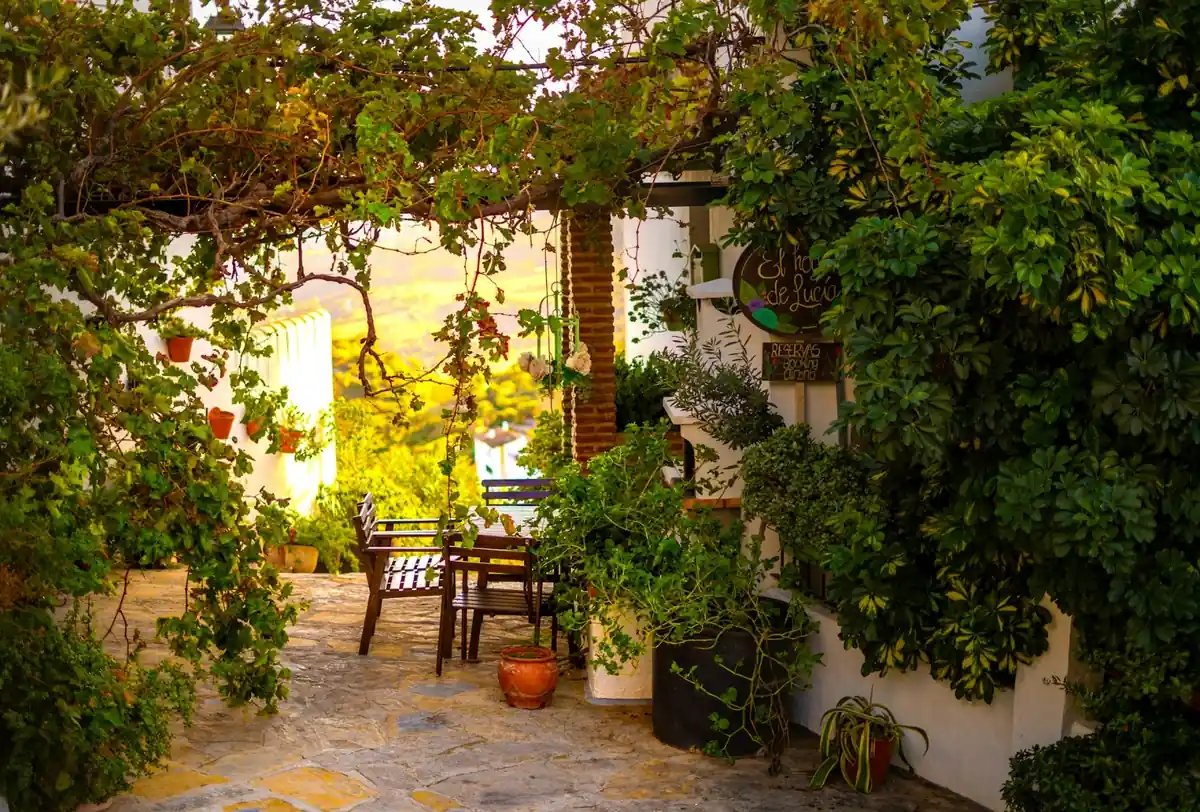
Manilva and Casares Day Trip 2026: Vineyards, Roman Baths & a White Village Above the Costa del Sol
A day trip to Manilva and Casares from the Costa del Sol is the answer to a question most visitors never think to ask: what is within 30 minutes of this coastline that nobody else is visiting? The answer, consistently, is these two. Manilva has Roman sulphur baths that have been in continuous use for over two thousand years, a vineyard producing one of Andalusia's most distinctive wines on a hillside above the Mediterranean, and a marina so relaxed it makes Puerto Banús look like a theme park. Casares, 15 kilometres inland, is one of the most dramatic villages in Spain — whitewashed houses stacked almost vertically on a limestone cliff, a Moorish castle at the top, and on clear days a view south that takes in Gibraltar and the mountains of Morocco simultaneously.
Combined in a single day, they offer something the main Costa del Sol circuit cannot: the actual Andalusia, 25 minutes from your sunbed, completely uncrowded, and entirely free of tour buses. Perfect for a day trip from Estepona, from Marbella or even from Malaga — these two villages are the Costa del Sol's best-kept secret.
Jump to: Getting There · Manilva Village · Baños de la Hedionda · Puerto de la Duquesa · Casares · Casares Castle · Practical Tips · FAQ
| From | Drive to Manilva | Drive to Casares | Full Day Return |
|---|---|---|---|
| Estepona | ~20 min | ~35 min | Easy half day or full day |
| Marbella | ~35 min | ~50 min | Comfortable full day |
| Fuengirola | ~50 min | ~1h 05min | Full day |
| Malaga | ~1h 10min | ~1h 25min | Long but manageable full day |
Getting There
🚗 A car is essential — but the drive is half the experience
This is one of the few day trips from the Costa del Sol where public transport genuinely does not work well enough to recommend it. A single bus line — the L-77 from Estepona — serves Casares twice daily. Miss the return, and you are stranded. Manilva is served by coastal buses, but the village itself sits 3km inland from the coast and the connections between Manilva, the Roman baths and Casares require either a car or significant waiting.
Rent a car, leave early, and treat the drive itself as part of the day. The A-7 coastal road west from Marbella towards Manilva passes through some of the least developed coastline remaining on the Costa del Sol — low cliffs, scrub, the strait opening out ahead. The inland turn towards Casares on the MA-8300 climbs through olive groves and vineyards with the sea behind you and the white dot of the village appearing on the ridge ahead as you approach. This is the approach that travel writers mean when they describe Andalusia as cinematic.
Parking in Manilva village: Small free car park at the village entrance. The village is walkable from there.
Parking in Casares: A signposted car park sits just below the village. Do not attempt to drive into the upper streets — they are genuinely too narrow for most rental cars and the consequences of meeting oncoming traffic on a blind bend 200 metres above a valley floor are not pleasant to contemplate.
Pro tip: Do Casares first, before the afternoon heat sets in — the climb to the castle is steep and exposed. Manilva and the Roman baths work well in the afternoon when the light is lower and the marina is coming alive for the evening.
Manilva Village
🍇 Things to do in Manilva: vineyards, Roman history and a town that most tourists overlook entirely
Manilva pueblo — the original hilltop village, distinct from the coastal resort of Sabinillas and the marina at La Duquesa — sits 3km inland from the coast on a low ridge surrounded entirely by Moscatel grape vines. The vineyards here date to Roman times and have been in continuous cultivation for most of the intervening two thousand years. This is not a marketing claim — the Romans built sulphur baths here, pressed grapes here, and left behind coins and ceramics that are now displayed in the small archaeological museum inside the Castillo de la Duquesa on the coast.
The village itself is small, quiet and genuinely uncrowded. The parish church of Santa Ana, an 18th-century structure built by the villagers themselves, anchors the centre. A section of original Roman aqueduct survives at the foot of the village — two arches, stone, largely unannounced and easy to walk past without realising what they are. Look for them on the lower road before you reach the main square.
The wine: NILVA Enoturismo operates vineyard tours and tastings from a bodega at the edge of the village. It is rated 4.9 out of 5 from 84 reviews on TripAdvisor — exceptional for any attraction anywhere, remarkable for a small family winery on the western Costa del Sol. The tasting involves four wines from Moscatel grapes grown on the surrounding hillside, paired with local charcuterie, with a view south over the vines to the Mediterranean. Booking in advance is essential as groups are small and spaces fill quickly.
Pro tip: The Moscatel grape produces a wine that is simultaneously sweet and mineral — unlike anything made in the Rioja or Ribera del Duero. The dessert wine paired with local chocolate at the end of the NILVA tasting is the single best €5 you will spend on the Costa del Sol. Buy a bottle to take home — it does not travel far commercially and you will not find it in supermarkets back home.
🎫 Book the NILVA vineyard tour from Manilva — small group tasting with tapas overlooking the Mediterranean. Book well in advance.
Wine enthusiasts, food lovers, and anyone who finds a 4.9-rated experience at €30 per person more appealing than a €90 guided bus tour to somewhere they have already seen on Instagram. The NILVA tasting is genuinely one of the best-value experiences on the entire Costa del Sol.
Visitors who need a packed itinerary of big-ticket sights. Manilva village is small and gentle — two hours maximum including the wine tour. If you need the Alhambra-scale experience every day, this is not the right day trip.
Banos de la Hedionda
♨️ Julius Caesar's sulphur baths — still working after 2,000 years
The Baños de la Hedionda are natural sulphur springs located in a rocky gorge just outside Manilva, technically within the Casares municipality although the exact boundary has been disputed for centuries. The baths are among the best-preserved Roman spa facilities in Andalusia — stone channels, natural plunge pools, the sulphurous water still flowing at the same temperature it did when Roman soldiers bathed here in the first century BC.
The Julius Caesar connection is supported by historical records: Caesar is documented as having camped in this area during his campaigns, and the sulphur water was used medicinally across the Roman world. The story most often repeated locally involves a dog with a skin condition plunging into the pool and emerging cured — Caesar reportedly observed this and directed his soldiers to do the same. True or not, the baths have been in continuous use for somewhere between 2,000 and 2,500 years. Very few things anywhere in the world can claim that.
What to expect: The baths are accessible via a short walk through a limestone gorge with natural rock walls and vegetation. The sulphur smell is significant — the name "Hedionda" translates roughly as "the stinky one," which is accurate and should be considered before wearing your best clothes. The water is cool in the pools and the setting is extraordinary — shaded, quiet, ancient. Locals use the mud as a skin treatment and emerge looking somewhat alarming but apparently feeling excellent.
Practical: No entry fee. Bring old swimwear you do not mind smelling of sulphur afterwards. The path from the road is short but uneven — closed shoes recommended.
Pro tip: Visit the baths in the morning before the day heats up — the gorge is shaded but the path from the road is exposed. The baths are busiest on summer weekends when local families come specifically for the mud and water. Weekday visits are quieter and the experience is more atmospheric.
History enthusiasts, wild swimmers, and anyone who wants to do something genuinely unusual on a Costa del Sol holiday. Bathing in Roman sulphur springs that Julius Caesar used is not something that appears on most people's itineraries — which is exactly why it should be on yours.
Visitors with sensitivity to strong smells or those expecting a polished spa experience. The Hedionda is a natural site, not a wellness resort — the sulphur smell is pervasive and the pools are basic. That is entirely the point, but it is worth knowing before you go.
Puerto de la Duquesa
⚓ The marina that the guidebooks forgot — and all the better for it
Puerto de la Duquesa is the marina at the foot of Manilva municipality, positioned between Estepona and Sotogrande on a stretch of coastline that development somehow missed. It is consistently awarded a Blue Flag for beach quality. It has a castle — the Castillo de la Duquesa, built in 1767 on top of a Roman settlement to defend the coast from pirate raids, now housing the small archaeological museum — sitting at the end of the promenade like a footnote to the rest of the marina.
The marina itself is relaxed, genuinely local in atmosphere, and significantly less expensive than Puerto Banús or the Marbella harbours. Seafood restaurants line the waterfront serving the same freshly caught fish as anywhere on the Costa del Sol at considerably lower prices. The beach at Sabinillas — Playa de Sabinillas — is a five-minute walk east of the marina: long, clean, Blue Flag awarded and quiet by Costa del Sol standards even in summer. It is one of the least crowded beaches on the entire coast relative to its quality, simply because most visitors do not know it exists.
Time needed: 1–1.5 hours for the marina, castle and a coffee or lunch on the waterfront.
Pro tip: The Castillo de la Duquesa is free to enter and the archaeological museum inside is small but excellent — Roman coins, ceramics and artefacts from the Castillejos de Alcorrín Neolithic site nearby, all found within a few kilometres of where you are standing. Most visitors walk past the castle entirely. Go inside.
Anyone who wants a relaxed lunch stop between Manilva and Casares without the prices and crowds of the main Marbella marinas. Puerto de la Duquesa is the Costa del Sol as it was thirty years ago — unhurried, affordable and genuinely pleasant.
Visitors looking for high-end dining, luxury yacht spotting or the social spectacle of Puerto Banús. La Duquesa is deliberately the opposite of all of that. It is better for it, but know what you are coming for.
Casares
🏰 Sugar-cube houses on a clifftop — the most dramatic village within an hour of the coast
Casares, Spain, is the closest pueblo blanco to the Costa del Sol and, for many people who have seen all the famous ones, the most quietly impressive. It sits 15 kilometres inland from Estepona on a limestone outcrop at 435 metres above sea level — whitewashed houses stacked so steeply on the cliff face that the upper windows of one street look directly down onto the rooftops of the street below. The approach road offers the defining view: the entire village visible as a white mass against the grey rock, the castle at the summit, the Mediterranean behind you as you climb.
The village was declared a Historic-Artistic Site by the Spanish government — one of the designations that limits development and preserves the character of the streets. It shows. The lanes are original width, the houses are original proportions, and there are no souvenir shops selling plastic flamenco dancers near the main square.
What makes Casares different from the other white villages: three things. First, it is genuinely uncrowded — tour buses do come, but in far smaller numbers than Ronda or Mijas. Second, the birthplace of Blas Infante is here — the lawyer and intellectual considered the father of Andalusian nationalism, executed by Franco's forces in 1936. His statue stands in the Plaza de España and his house is marked on the main street. Third, the views from the castle are among the best from any accessible point on the Costa del Sol.
Plaza de España: Start here. The Carlos III fountain in the centre has supplied the village with fresh mountain water since the late 18th century — still functioning, still drinkable. The bars around the perimeter serve the best value coffee and tapas you will find anywhere near the coast. Sit for twenty minutes and watch the village pace of life before climbing towards the castle.
The streets: Wander uphill from the plaza without a specific route. The lanes between the Plaza de España and the castle are the best part of Casares — narrow, shaded, occasionally opening to unexpected views of the valley below or the coast beyond. There are griffon vultures nesting in the cliffs above the village; look up.
Pro tip: The best photograph of Casares is not from inside the village but from the Mirador Cancho Andares on the road just outside town — a natural viewpoint on the cliff above the village that takes in the entire white mass of Casares against its limestone backdrop, with the castle visible at the top and the Mediterranean coast as a blue line in the distance. Park on the approach road and walk five minutes uphill. Worth it entirely.
Everyone who visits the western Costa del Sol and has a car. Casares is one of the genuinely great Andalusian villages — comparable to Frigiliana in its beauty and significantly less visited. The 35-minute drive from Marbella is the single best decision most visitors to the western Costa del Sol fail to make.
Visitors with significant mobility difficulties — the streets from the plaza to the castle are steep and cobbled, with no accessible alternative route to the upper village. The castle itself requires a committed climb. The lower village and plaza are accessible.
Casares Castle
🗺️ Moorish walls, eagles overhead — and two continents visible from the top
The Castillo de Casares occupies the highest point of the limestone crag on which the village is built — a Moorish fortification erected in the 12th century on the foundations of an earlier Roman structure, on the foundations of an even earlier Iberian settlement before that. The walls are largely intact. The interior is open ruins — chambers, archways, the remains of a cistern — with a small chapel, the Ermita de la Vera Cruz, surviving in better condition than the surrounding fortifications.
The views from the castle terrace are the reason to climb. To the south, on a clear day, the Rock of Gibraltar is visible — the distinctive flat-topped profile unmistakable on the horizon, approximately 40 kilometres away. Beyond Gibraltar, the mountains of the Rif in northern Morocco form a dark line above the strait. You are looking at two continents simultaneously from a Moorish castle on a Spanish cliff. This is, objectively, an extraordinary thing to be doing on a Tuesday afternoon in Andalusia.
The griffon vultures that nest in the cliffs below the castle are a constant presence — large, unhurried, riding the thermals that rise from the valley floor. On windy days they pass close enough to the castle walls that you can hear the sound of air through their feathers.
Time needed: 30–45 minutes for the castle and views. The climb from the plaza takes approximately 15 minutes at a steady pace.
Entry: Free.
Pro tip: The best Gibraltar view from the castle is from the southern corner of the outer wall, looking past the chapel. Bring binoculars if you have them — on a clear morning the Rock is not just visible but detailed, and the Spanish coastline curving west towards Tarifa is laid out below like a map. Our Gibraltar day trip guide covers the Rock in full if you want to combine both on a two-day western Costa del Sol itinerary.
History enthusiasts, photographers, and anyone for whom standing on a Moorish castle with Gibraltar and Morocco visible simultaneously is a genuinely compelling experience. The castle is free, uncrowded and one of the best viewpoints within 90 minutes of Malaga.
Visitors in a hurry or those with limited time who have not factored in the 15-minute climb. Do not rush the castle — give it 45 minutes minimum. The views require sitting with them for a while.
Practical Tips
The car is non-negotiable. There is no practical way to combine Manilva village, the Roman baths, Puerto de la Duquesa and Casares in a single day without a car. The L-77 bus from Estepona to Casares runs twice daily and leaves you stranded if you miss it. Rent a car for the day from Malaga Airport or any major Costa del Sol town — it is the single biggest investment that improves this day trip.
Suggested itinerary — full day:
- 9:00am — Casares: arrive early, climb to the castle before the heat
- 11:00am — Drive down to Manilva, walk the village and Roman aqueduct
- 12:30pm — Baños de la Hedionda (allow 45 minutes)
- 2:00pm — Lunch at Puerto de la Duquesa marina
- 4:00pm — NILVA vineyard tour and tasting (pre-booked)
- 6:00pm — Return to Costa del Sol base
Suggested itinerary — half day (from Estepona):
- 9:30am — Casares: village and castle
- 12:00pm — Manilva village and aqueduct
- 1:30pm — Lunch at Puerto de la Duquesa, return by 3pm
What to wear: Closed shoes for the Casares castle climb and the Roman baths path. Old swimwear if you plan to use the Hedionda pools. The castle terrace is exposed and the wind can be significant even in summer.
When to go: March to June and September to November. The castle climb in July or August midday heat is punishing. The vineyards are at their most beautiful in late summer just before the September harvest — the Fiesta de la Vendimia grape festival in early September is worth timing a visit around if you can.
Discover more of what is reachable from the Costa del Sol on our day trips hub — Manilva and Casares are two of the closest and least visited destinations, but the list of extraordinary days within reach is long.
FAQ
Are Manilva and Casares worth visiting as a day trip from the Costa del Sol? Yes — particularly if you have already done Ronda, Mijas and the main coastal towns and want something genuinely different. The best things to do in Manilva include the Roman sulphur baths, the NILVA vineyard tasting and the original hilltop village with its 2,000-year-old aqueduct. Casares Spain offers a Moorish castle, views to two continents, and streets unchanged in character for centuries — with no tour groups. Between them they are the answer to the question "what is near here that nobody else is visiting?"
Do I need to book anything in advance for this day trip? The NILVA vineyard tour in Manilva requires advance booking — it is a small-group experience and fills quickly, particularly on weekends. Everything else — the Roman baths, Casares village, the castle — is free, open access and requires no booking. The baths have no opening hours; the castle has no entry fee.
How long do I need in Casares? Minimum two hours to do the village and castle justice — 30 minutes in the plaza and lower streets, 15 minutes climbing to the castle, 45 minutes at the top, 15 minutes descending. Three hours allows for a coffee stop and proper exploration of the upper lanes. The village rewards slow wandering rather than a checklist approach.
Can I see Gibraltar from Casares? Yes, clearly on most days. The Rock of Gibraltar is approximately 40 kilometres south of Casares and is visible from the castle terrace — the distinctive flat-topped profile stands out against the horizon. On very clear days the Moroccan coastline is also visible behind it. The southern corner of the outer castle wall gives the best view. See our Morocco day trip guide if the proximity to Africa makes you want to cross the strait.
What is the best white village near the western Costa del Sol? Casares and Ronda are the two strongest answers. Casares is closer, less crowded and more intimate. Ronda has the gorge, the bridge and more to see across a full day. Our Ronda day trip guide covers it in full — combining both Casares and Ronda on consecutive days makes for the best two-day introduction to the western Costa del Sol's interior.
Is the NILVA vineyard tour worth doing? Yes — it is rated 4.9 out of 5 from 84 reviews, which is exceptional. The tasting includes four wines from grapes grown on the surrounding hillside, local tapas, and a view over the vines to the Mediterranean. The Moscatel dessert wine paired with chocolate at the end of the tasting is the highlight. It costs approximately €30 per person and takes around two and a half hours. Book it as an anchor for the day and build the rest of the itinerary around it.
You Might Also Like
More Day Trips from the Costa del Sol
Explore all our day trip guides with driving times from every major city.